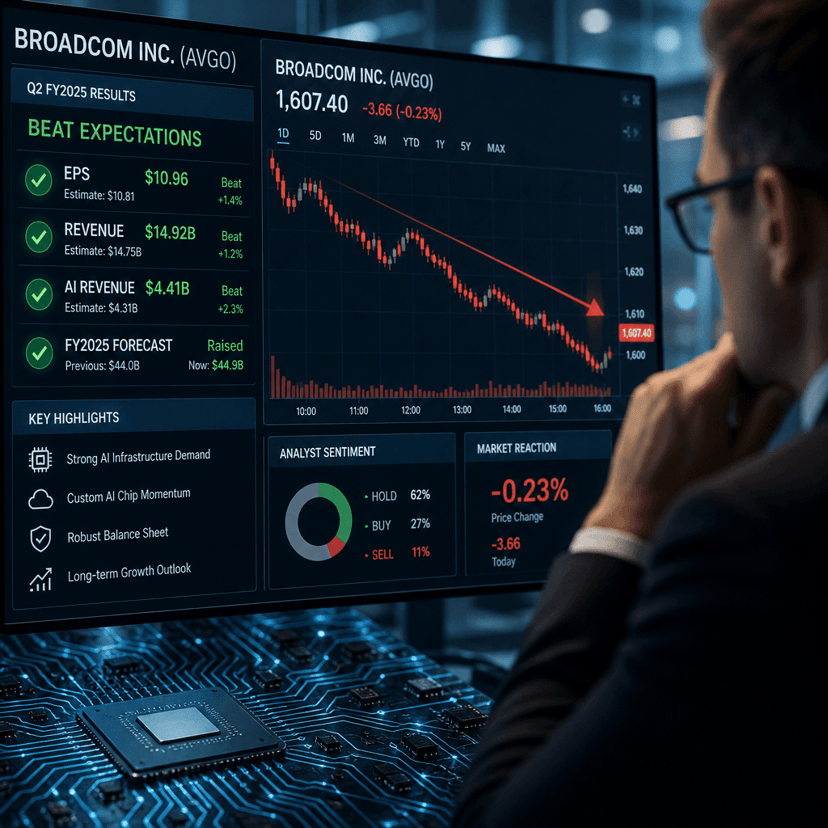
Astera Labs shares plunged 10% in after-hours trading despite beating Wall Street's consensus estimates for Q4 2025, as investors reacted to the sudden announcement that CFO Mike Tate will step down next month. The semiconductor company, which specializes in AI infrastructure connectivity solutions, delivered stronger-than-expected results but couldn't overcome concerns about leadership stability during a critical growth phase. The stock movement underscores how executive departures can overshadow even positive financial performance in today's volatile chip market.
Astera Labs just learned that beating Wall Street estimates isn't always enough. The semiconductor company's shares tumbled 10% in after-hours trading Wednesday, even after reporting Q4 2025 results that topped consensus forecasts. The culprit? CFO Mike Tate's surprise announcement that he'll be stepping down next month sent investors scrambling for the exits.
The reaction reveals how fragile confidence has become in the AI infrastructure chip sector. While Astera Labs technically beat the Street's numbers, the company appears to have fallen short of more aggressive revenue expectations from some analysts who had been betting on accelerated growth. That gap, combined with the leadership shakeup, proved toxic for the stock.
"We've been preparing for this shift since Q2," Tate might have said during the earnings call, but the timing couldn't be worse. Astera Labs went public less than two years ago and has been riding the wave of AI data center buildouts. The company's connectivity solutions - the specialized chips that help AI accelerators communicate faster - have become critical infrastructure as Nvidia, AMD, and others race to dominate the AI computing stack.
The CFO departure raises questions about what's happening behind the scenes. In the semiconductor industry, where visibility into supply chains and customer demand cycles can make or break quarterly guidance, losing your top financial executive during an earnings season isn't just inconvenient - it's a red flag. Investors are now wondering whether Tate's exit signals internal disagreements about the company's financial outlook or strategy.
This comes at a particularly sensitive moment for AI chip makers. After months of explosive growth driven by generative AI infrastructure spending, investors have started demanding proof that the boom can sustain itself. Astera Labs competes in a crowded field of connectivity and interconnect specialists, all vying for sockets in the same hyperscale data centers being built by Amazon, Microsoft, Google, and Meta.
The fact that the company beat consensus but apparently missed some higher-bar estimates suggests analysts may have gotten ahead of themselves. This pattern has played out across the semiconductor sector in recent quarters. Companies deliver solid results but get punished because whisper numbers or bullish sell-side forecasts had run too hot. For a relatively young public company like Astera Labs, that gap between expectations and reality can be brutal.
Wall Street has been particularly unforgiving of any signs of deceleration in AI infrastructure spending. When Nvidia reported record revenues but offered guidance that disappointed the most optimistic bulls, its stock took a hit despite fundamentals that would have been celebrated a year earlier. Astera Labs is experiencing a similar dynamic, compounded by the CFO transition.
The leadership change also puts pressure on CEO Jitendra Mohan to quickly name a replacement who can reassure investors about the company's financial strategy and visibility. In semiconductor markets, where customer conversations about future orders drive forward guidance, having a steady hand managing investor relations and financial planning is crucial. Any extended gap in CFO leadership could create additional uncertainty.
For Astera Labs, the path forward requires executing flawlessly while managing the CFO transition. The company's technology remains critical to AI infrastructure - its smart cable modules and retimers solve real bottleneck problems in high-speed data transmission. But in today's market, great products aren't enough if investors lose confidence in leadership stability or growth trajectories.
The 10% drop also reflects broader anxiety about semiconductor valuations. After extraordinary runs in 2023 and 2024, chip stocks have faced increased volatility as investors debate whether AI spending will maintain its torrid pace or start to normalize. Any company that stumbles on execution, guidance, or leadership immediately gets reassessed through that cautious lens.
The Astera Labs earnings reaction is a reminder that in today's semiconductor market, beating estimates is table stakes - what really matters is execution consistency, leadership stability, and managing expectations. As the company navigates this CFO transition, investors will be watching closely to see whether the revenue miss against bullish forecasts represents a one-time expectations mismatch or signals something more concerning about AI infrastructure spending trends. For now, the market has rendered its verdict: even strong results can't overcome uncertainty about who's steering the financial ship.