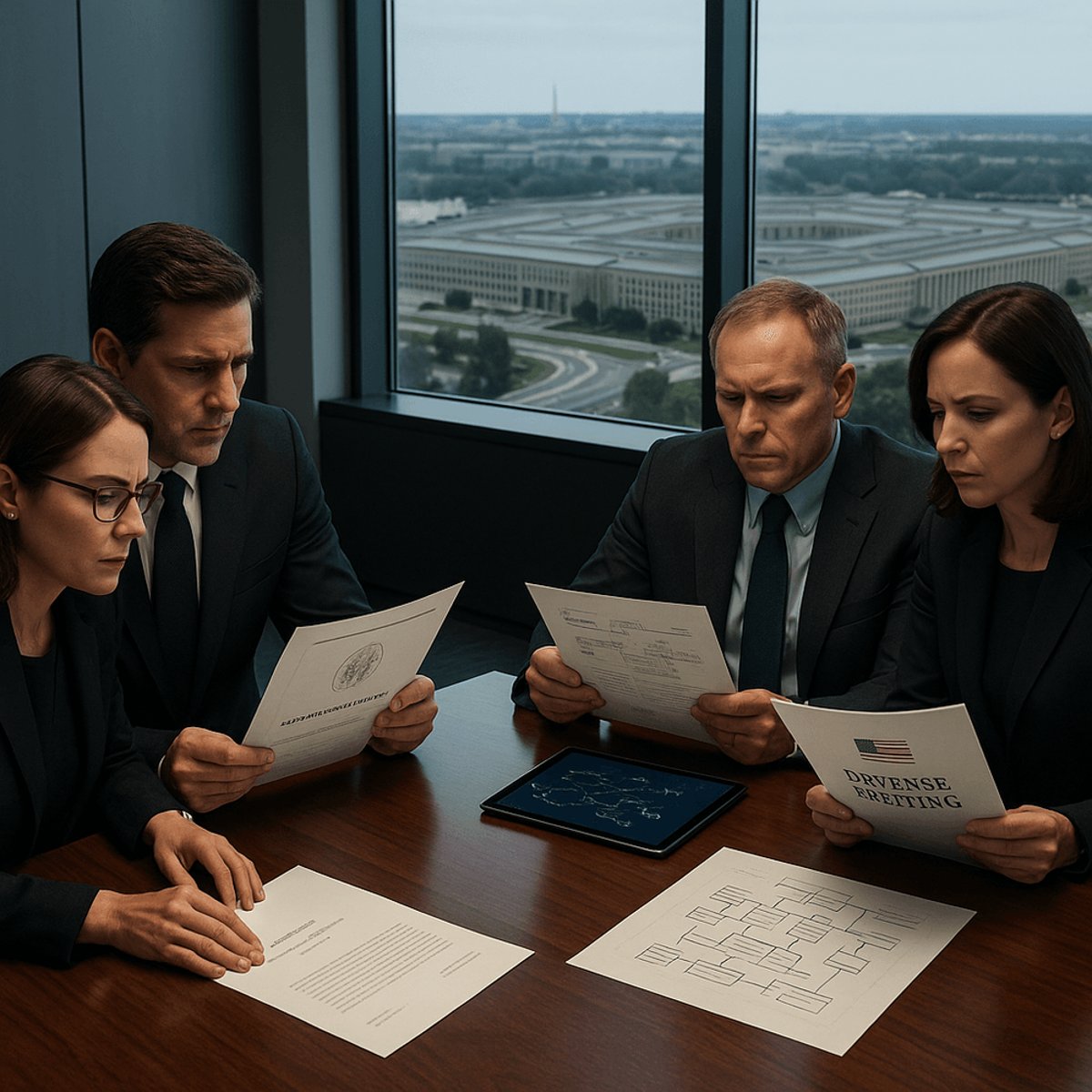
The tech industry's most powerful trade group just fired a warning shot at the Pentagon. The Information Technology Industry Council sent a letter to Defense Secretary Pete Hegseth expressing concern over recent supply chain risk designations - a carefully worded intervention that arrives days after Anthropic was flagged as a potential threat to military procurement. While the ITI's letter doesn't name the AI company directly, the timing signals growing corporate anxiety over how the Defense Department categorizes AI partners.
The Information Technology Industry Council is bringing institutional firepower to what's become the tech sector's latest flashpoint with Washington. The trade group's letter to Pete Hegseth lands at a critical moment - just days after Anthropic found itself designated as a supply chain risk by the Defense Department, a label that could freeze the AI company out of lucrative military contracts.
The careful choreography here tells you everything. ITI's letter reportedly doesn't mention Anthropic by name, but the subtext is unmistakable. When one of the industry's most prominent lobbying organizations takes the unusual step of writing directly to the Defense Secretary about procurement policies, it's because major players feel threatened.
And those players have good reason to worry. Anthropic's supply chain designation represents a new front in the ongoing battle over AI governance and national security. The company - backed by Google with a $2 billion investment and supported by Amazon Web Services infrastructure - suddenly finds itself in regulatory crosshairs at exactly the moment when defense AI contracts are exploding in value.
The ITI represents virtually every tech giant with skin in the AI game. Microsoft, Meta, Nvidia - companies that have collectively poured billions into AI development and increasingly depend on government contracts to justify those investments. When the Pentagon starts slapping supply chain risk labels on AI firms, it sends shockwaves through boardrooms across Silicon Valley.
What makes this particularly thorny is the precedent it sets. If Anthropic - a company founded by former OpenAI executives with explicit focus on AI safety - can be designated a supply chain risk, where does that leave other AI companies? The designation criteria remain murky, creating uncertainty that tech executives absolutely hate.
The lobbying push also reveals deepening fault lines over AI regulation. Defense officials increasingly worry about foreign influence, data security, and the concentration of AI capabilities in private companies with global operations. Tech companies counter that overly restrictive policies will handicap American AI leadership and push innovation overseas. It's a familiar playbook, but with stakes that feel genuinely higher given AI's military applications.
Hegseth now finds himself caught between competing pressures. The Defense Department wants maximum flexibility to restrict vendors it views as risky. The tech industry wants clear, predictable rules that don't arbitrarily shut companies out of the market. And Congress is watching closely, with multiple committees investigating both AI safety practices and procurement processes.
The timing couldn't be more sensitive for Anthropic specifically. The company recently closed a major funding round and has been aggressively pursuing enterprise customers, including government agencies. A supply chain risk designation doesn't just block Defense Department contracts - it creates reputation damage that ripples across the entire customer base. Other agencies and private sector clients start asking questions.
For the ITI, this represents a test of its lobbying muscle at a moment when tech's influence in Washington faces unprecedented skepticism. The organization needs to demonstrate it can protect members' interests without appearing to prioritize profits over national security - a needle that's becoming harder to thread as AI capabilities advance.
What happens next will likely set the template for how the government categorizes AI vendors going forward. If Hegseth responds to the ITI's pressure by loosening designation criteria, it signals tech industry concerns carry weight. If he doubles down, it suggests a new era of stricter oversight regardless of corporate pushback.
This isn't just about one AI company or one letter. It's about who gets to shape the rules for the most consequential technology of our time - and whether traditional tech industry lobbying still works in an era where AI has genuine national security implications. The ITI's carefully worded intervention shows corporate America recognizing that the old playbook might not be enough anymore, even as it tries one more time to make it work. How Hegseth responds will tell us whether the Pentagon is willing to stand firm against an industry that's used to getting its way.