Canva just crossed a massive milestone that signals how AI is reshaping the creative software market. The design platform hit $4 billion in annual revenue while monthly active users jumped 20%, growth the company attributes largely to its AI-powered tools and an unexpected traffic source: large language models are now referring users directly to Canva. It's a vindication of the company's AI-first pivot and a warning shot to Adobe's dominance in creative software.
Canva is riding the AI wave all the way to the bank. The Australian design platform just notched $4 billion in annual revenue, a milestone fueled by double-digit user growth that the company directly links to its aggressive AI tool rollout. Monthly active users climbed 20% over the past year, with adoption of AI-powered features like text-to-image generation and automated design suggestions driving much of that expansion.
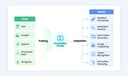
But here's where it gets interesting - Canva is benefiting from an entirely new distribution channel that didn't exist two years ago. Large language models from OpenAI, Google, and Anthropic are actively referring users to the platform when people ask chatbots for design help. "Create a presentation" or "design a logo" prompts increasingly result in LLM responses that point users directly to Canva, creating an organic referral pipeline that's growing without the company spending a dollar on acquisition.
This LLM referral phenomenon represents a fundamental shift in how users discover software. Instead of Google searches or social media ads, AI assistants are becoming the new gatekeepers of software distribution. For Canva, it's free marketing from the world's most sophisticated AI systems - and it's working. The company told TechCrunch that this referral traffic has become a measurable growth driver, though they declined to share specific conversion numbers.
The revenue milestone comes as Canva continues to push deeper into enterprise territory, competing head-on with Adobe's Creative Cloud. While Adobe still dominates with professional designers, Canva has captured the massive market of non-designers who need quick, professional-looking content. The company's AI tools lower the skill barrier even further, letting users generate sophisticated designs with simple text prompts - exactly the kind of capability that LLMs understand how to recommend.
Canva's AI suite now includes features that would've required Adobe expertise just two years ago. Magic Write creates marketing copy, Magic Design generates complete layouts from text descriptions, and Background Remover handles image editing that once demanded Photoshop skills. These tools don't just attract new users - they increase engagement among existing ones. Power users are spending more time in the platform, creating more designs, and converting to paid plans at higher rates.
The competitive pressure on Adobe is mounting. While Adobe has rolled out its own AI features like Firefly for generative image creation, Canva's freemium model and lower learning curve give it advantages with the massive SMB market. Adobe reported 11% revenue growth last quarter - solid, but not the explosive 20% user expansion Canva is posting. The design software market is splitting into two camps: professionals who need Adobe's depth, and everyone else who increasingly chooses Canva's speed and simplicity.
Investors are taking notice. Canva was last valued at $26 billion in a 2021 funding round, but industry observers suggest the $4B revenue milestone could support an even higher valuation if the company pursued an IPO. With profitability reportedly achieved last year and growth accelerating rather than slowing, Canva has options. The company has been tight-lipped about IPO plans, but crossing the $4B revenue threshold puts it in rarefied air - and makes a public debut increasingly plausible.
The LLM referral angle also hints at future business model possibilities. Could Canva eventually pay for premium placement in AI assistant responses? Might OpenAI or Google create affiliate programs where they take a cut of conversions from their referrals? The mechanics of AI-driven software discovery are still being invented, and Canva is benefiting from being the default design recommendation before these systems get formalized - and potentially monetized.
What's clear is that AI isn't just a feature set for Canva - it's become the company's growth engine and its ticket to challenging incumbents. The platform's ability to make design accessible to non-designers was always its core promise. AI supercharges that mission while simultaneously creating new distribution channels through LLM recommendations. It's a virtuous cycle that's pushing Canva deeper into enterprise accounts while expanding its consumer base.
The next test comes as every software company rushes to add AI features. Canva's head start matters, but Adobe, Microsoft Designer, and emerging AI-native design tools are all fighting for the same users. The company that best integrates AI while maintaining ease of use wins the next decade of creative software. Right now, with $4 billion in revenue and 20% user growth, Canva is winning that race.
Canva's $4 billion revenue milestone isn't just about hitting a big number - it's proof that AI is fundamentally changing who can create professional design work and how software gets discovered. The combination of AI-powered features lowering the skill barrier and LLMs actively recommending the platform creates a growth flywheel that traditional software companies can't easily replicate. Adobe remains the professional standard, but Canva is rapidly becoming the default for everyone else. As AI assistants become the primary way people discover and use software, being the recommended solution for design tasks might matter more than any marketing campaign. The creative software wars just got a lot more interesting.