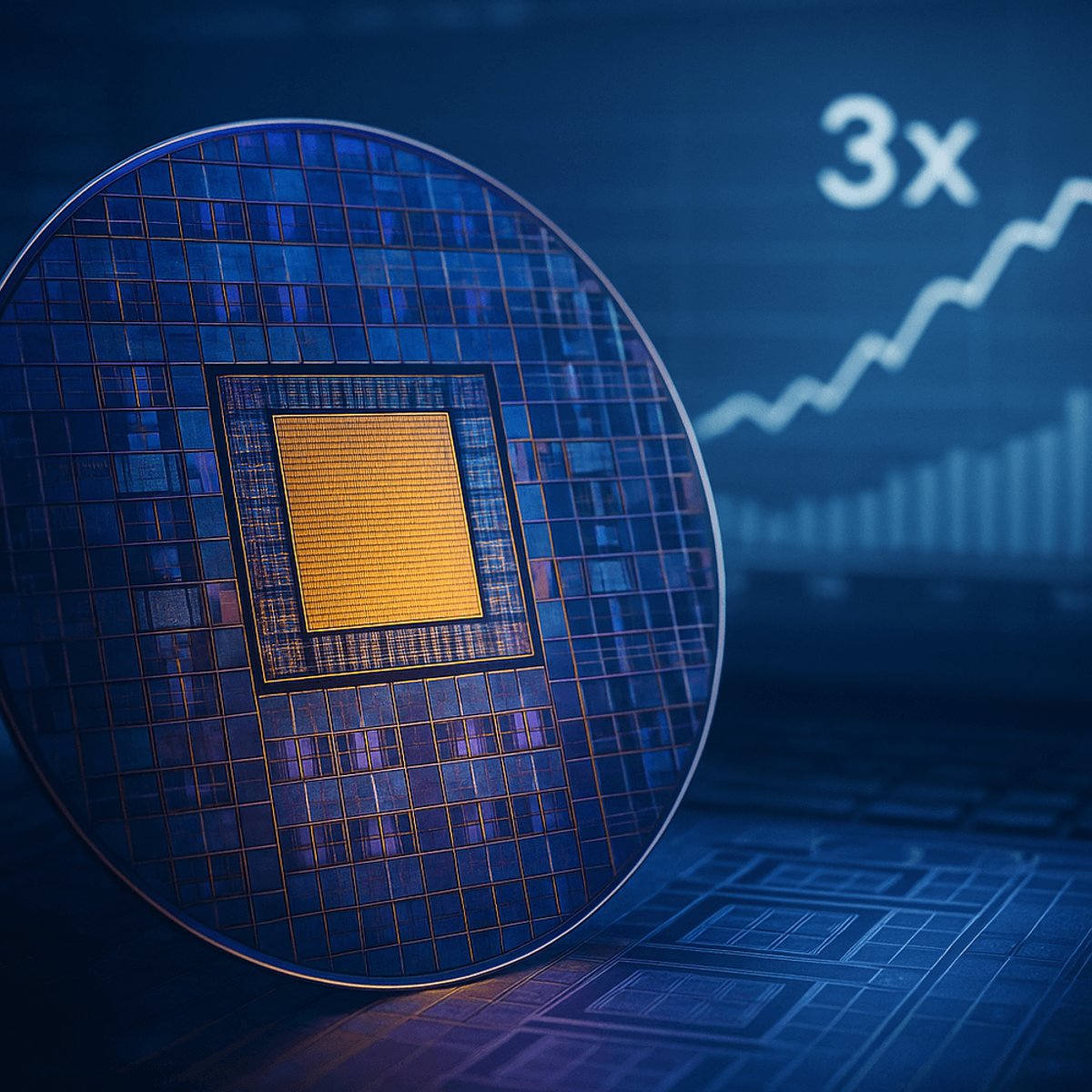
Cerebras Systems, the AI chipmaker building wafer-scale processors to challenge Nvidia's dominance, is set to file for an initial public offering as soon as today with a valuation potentially three times higher than its last private funding round in 2025, according to people familiar with the matter reported by CNBC. The move marks a pivotal moment for the AI infrastructure market as investors hunt for alternatives to Nvidia's near-monopoly on AI training chips.
Cerebras Systems is making its boldest bet yet. The Sunnyvale-based AI chipmaker plans to file paperwork for a public offering as soon as today, positioning itself to ride the AI infrastructure boom straight to the public markets. According to people familiar with the situation who spoke to CNBC, the company could command a valuation three times higher than what it achieved in its 2025 private funding round.
The timing couldn't be more deliberate. While Nvidia continues printing money with its H100 and upcoming Blackwell chips, enterprises are increasingly anxious about supply constraints and single-vendor dependence. Cerebras has spent years positioning its wafer-scale engine technology as a fundamentally different approach to AI training and inference, one that processes entire neural networks on a single massive chip rather than distributing workloads across multiple GPUs.
The valuation jump signals investor confidence in alternative AI chip architectures. Though Cerebras hasn't disclosed the specific numbers, a 3x increase suggests the company has demonstrated meaningful traction with customers willing to bet on non-Nvidia infrastructure. The AI chip market has become one of the most closely watched sectors in tech, with Microsoft, Google, and Amazon all developing custom silicon to reduce reliance on external suppliers.
Cerebras' wafer-scale approach represents a radical departure from conventional chip design. Instead of cutting silicon wafers into hundreds of individual chips, the company builds processors that span an entire 12-inch wafer, creating what it claims is the largest chip ever built for commercial use. The CS-2 system, its current flagship product, packs 850,000 cores and 40 gigabytes of on-chip memory, enabling it to handle large language model training without the communication overhead that plagues multi-GPU setups.
But going public means exposing financials to scrutiny. Cerebras will need to demonstrate not just technological differentiation but sustainable revenue growth and a path to profitability. The AI chip market remains brutally competitive, with Nvidia's CUDA ecosystem creating powerful switching costs and startups like Groq, SambaNova, and Graphcore all vying for the same customers. Public investors will want to see customer diversification, recurring revenue models, and evidence that wafer-scale technology can scale beyond early adopters.
The broader IPO market for AI infrastructure companies has been mixed. While software-focused AI startups have commanded astronomical private valuations, hardware plays face higher capital requirements and longer sales cycles. Cerebras will be watched as a bellwether for whether public markets are willing to fund capital-intensive semiconductor startups challenging entrenched incumbents.
Industry dynamics favor challengers right now. Enterprise AI spending continues accelerating, with Gartner projecting the AI chip market to exceed $70 billion by 2027. Hyperscalers are diversifying their chip portfolios, and regulatory scrutiny around Nvidia's market dominance has intensified. Cerebras enters public markets at a moment when customers are actively seeking alternatives, even if they're not ready to abandon Nvidia entirely.
The IPO filing will reveal crucial details about Cerebras' business model, customer concentration, and competitive positioning. Investors will scrutinize gross margins, research and development spending as a percentage of revenue, and the company's ability to compete on performance-per-dollar against Nvidia's latest offerings. The success or failure of this public debut could shape investor appetite for the next wave of AI chip startups waiting in the wings.
What happens next depends on market conditions and investor reception. If Cerebras can articulate a compelling growth story backed by solid financials, it could validate the broader thesis that AI infrastructure markets have room for multiple winners. A stumble, however, might reinforce the narrative that Nvidia's moat remains impenetrable and that alternative architectures face an uphill battle in converting technical innovation into market share.
Cerebras' IPO filing represents more than just another tech company going public. It's a test of whether public markets believe AI infrastructure can support multiple winners or whether Nvidia's dominance proves too formidable to challenge. The 3x valuation increase signals private investors see something compelling, but public scrutiny will demand proof that wafer-scale technology can translate into sustainable business outcomes. For an industry hungry for alternatives to Nvidia's near-monopoly, Cerebras' public debut will offer critical insights into whether chip architecture innovation alone can crack open one of tech's most lucrative and concentrated markets.