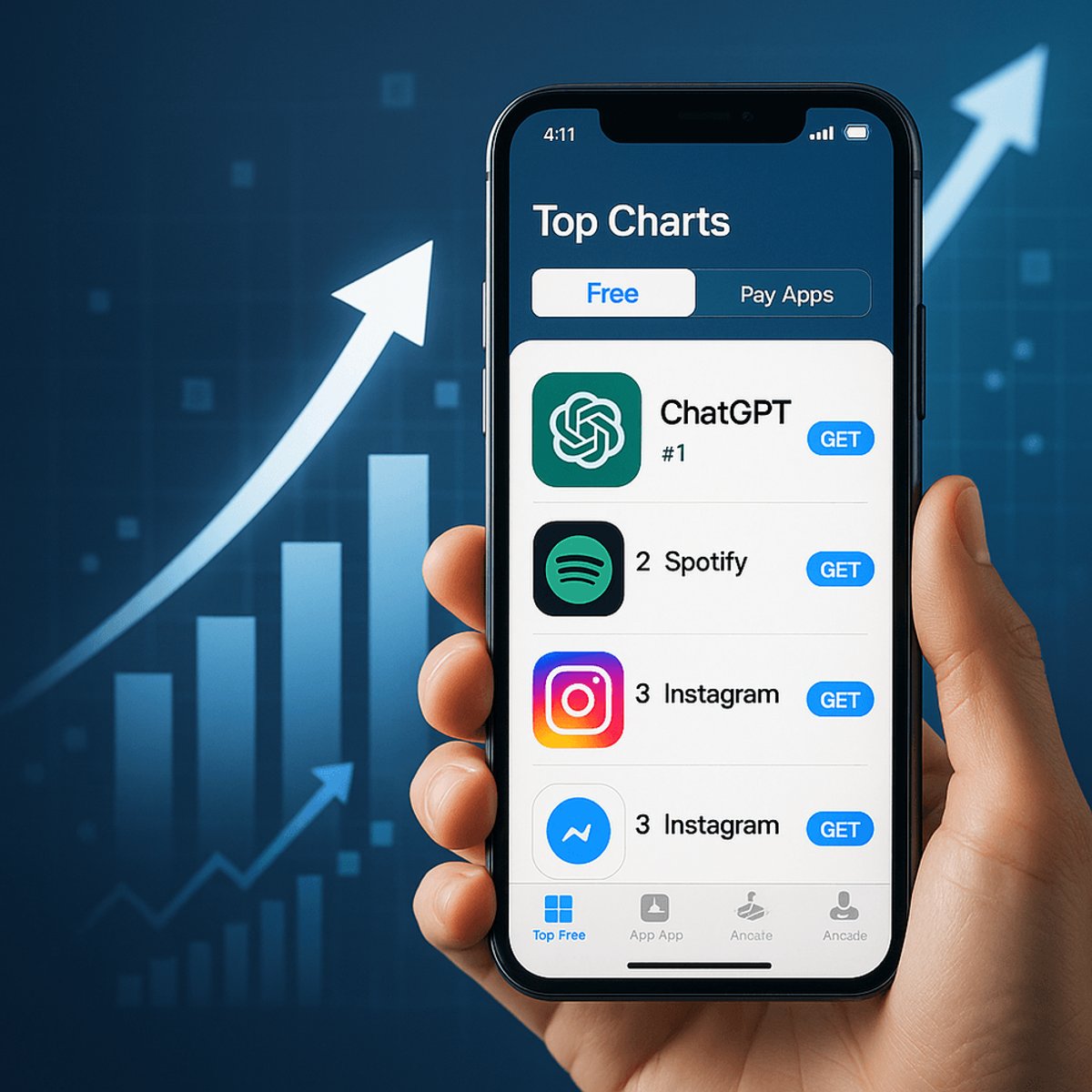
OpenAI's ChatGPT just claimed the top spot on Apple's 2025 US App Store download rankings - a historic first that signals AI has officially entered the mainstream. The achievement comes as the AI chatbot outpaced social media giants like TikTok and essential utilities like Google Maps, marking a seismic shift in how Americans interact with technology.
Apple just dropped its annual App Store rankings, and the results tell a story that would have seemed impossible just two years ago. OpenAI's ChatGPT claimed the #1 spot for most downloaded free iPhone app in the US for 2025, marking the first time an AI application has topped Apple's year-end charts.
The milestone represents a dramatic leap from ChatGPT's #4 ranking in 2024, when Chinese shopping app Temu held the crown. Even more striking - the AI chatbot didn't crack the top ten in 2023 despite launching on iPhone in May to what TechCrunch called a "strong debut" with over 500,000 installs in its first six days.
The full top ten reads like a who's who of digital essentials: ChatGPT leads, followed by Meta's Threads, Google, TikTok, WhatsApp, Instagram, YouTube, Google Maps, Gmail, and Google's own Gemini AI assistant rounding out the list. That ChatGPT beat out social networking stalwarts and daily-use utilities like Google Maps speaks to how deeply AI has woven itself into American digital habits.
For Google, the implications run deeper than rankings. With ChatGPT users increasingly turning to conversational AI for answers traditionally sourced through search, the app's dominance signals a potential crack in Google's mobile search fortress. When people reach for ChatGPT before Google Maps or Gmail, it suggests a fundamental shift in information-seeking behavior.
The writing was on the wall earlier this year. ChatGPT became the most-downloaded app globally in March, overtaking entertainment giants like TikTok and Instagram. That global surge has now translated into sustained US dominance throughout 2025.
Apple's broader rankings reveal interesting patterns across device categories. On iPad, YouTube holds the top free app spot with ChatGPT at #2, while creativity app Procreate dominates paid iPad apps. Gaming remains fragmented - Block Blast! topped free iPhone games while Minecraft claimed the paid game crown across both iPhone and iPad.
The competitive landscape in AI apps tells its own story. While ChatGPT dominated overall downloads, Google's Gemini managed to squeeze into the top ten at #10, suggesting the search giant isn't ceding AI territory without a fight. Meanwhile, Meta's Threads at #2 shows social platforms are holding their ground even as AI reshapes user attention.
For OpenAI, this moment represents validation of their consumer strategy. The company's focus on mobile accessibility and user-friendly interfaces has clearly paid dividends, transforming what was once a niche developer tool into America's most-wanted app. The success also provides crucial user data and engagement metrics as OpenAI prepares for intensifying competition from tech giants.
Looking at paid apps, the rankings skew more traditional - work scheduling app HotSchedules tops the list, followed by VPN tool Shadowrocket and creative app Procreate Pocket. It's a reminder that while free AI tools capture headlines, users still pay for specialized productivity and creative software.
The gaming charts offer their own insights into American preferences. Block Blast! and Minecraft's dual dominance across free and paid categories respectively shows puzzle games and sandbox creativity remain compelling. Meanwhile, the presence of newer titles like Pokémon TCG Pocket at #5 in free games demonstrates how established franchises can still break through in crowded mobile gaming.
ChatGPT's rise to #1 represents more than app store rankings - it's a cultural inflection point where AI stops being futuristic and starts being fundamental. As Americans increasingly turn to conversational AI for daily tasks, from writing emails to answering complex questions, we're witnessing the early stages of how artificial intelligence will reshape not just our apps, but our relationship with information itself. The real question isn't whether AI will dominate our digital lives, but which companies will control that transformation.