The AI infrastructure gold rush just got a major new player. Armada, a startup building modular data centers designed for AI workloads, closed a $230 million funding round at a $2 billion valuation with BlackRock joining as a new investor. The company plans to use the capital to open a manufacturing facility in Arizona with industrial giant Johnson Controls, betting that prefabricated data centers can solve the bottleneck choking AI expansion. It's a massive vote of confidence in modular infrastructure as tech giants scramble to secure compute capacity.
Armada just landed one of the biggest infrastructure bets of the year. The modular data center builder closed a $230 million funding round at a $2 billion valuation, with BlackRock – the world's largest asset manager – coming in as a new investor. The move signals Wall Street's growing conviction that solving AI's infrastructure bottleneck won't come from traditional construction timelines.
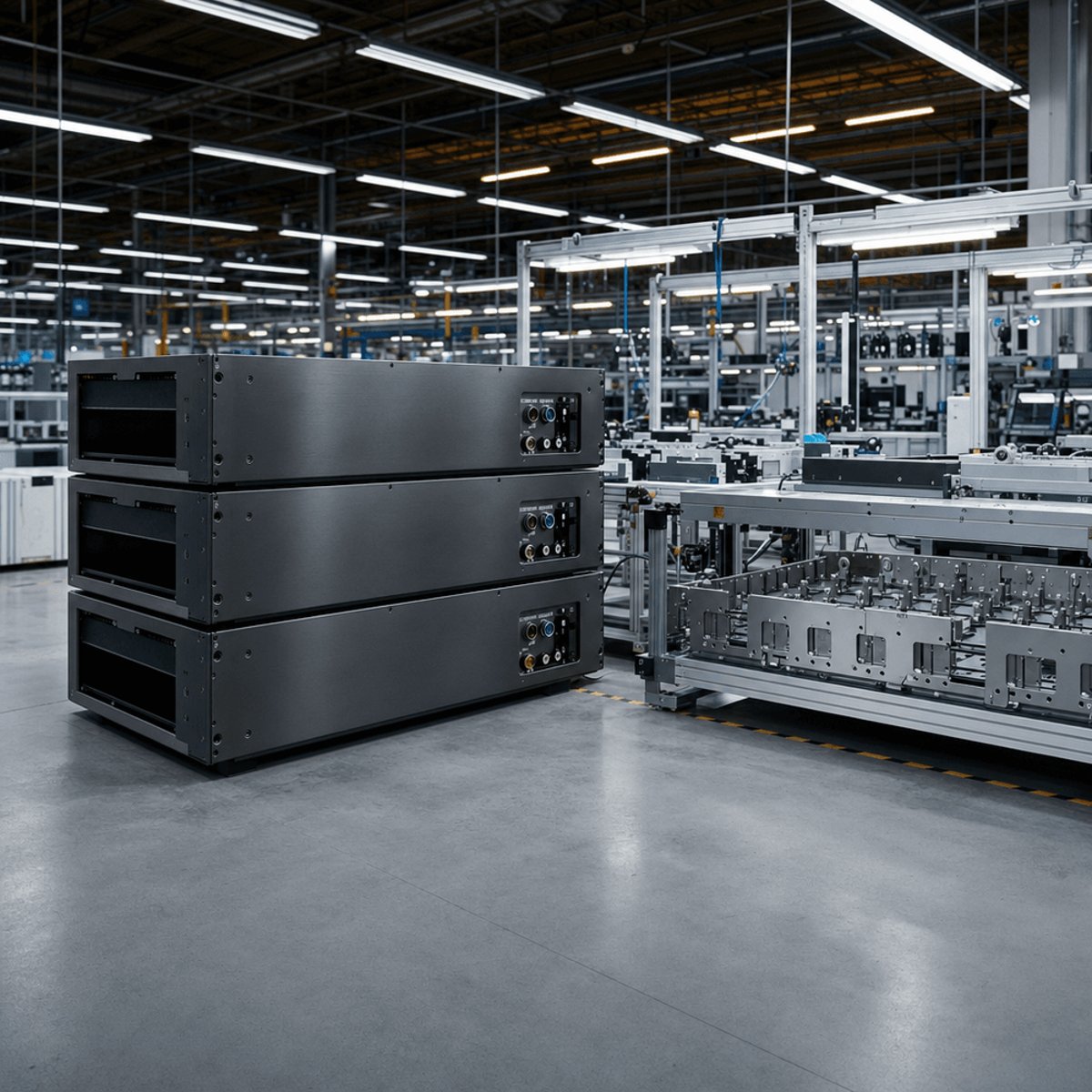
The capital injection comes as Johnson Controls, the building technology and industrial equipment giant, joins both as an investor and manufacturing partner. Armada plans to open a dedicated factory in Arizona to mass-produce its prefabricated data center modules, essentially treating compute infrastructure like automotive manufacturing. The partnership gives Armada access to Johnson Controls' supply chain expertise and cooling technology – critical for AI chips that generate unprecedented heat loads.
Armada's pitch is simple but compelling: traditional data centers take two to four years to build, while their modular approach can deploy capacity in six to nine months. That speed matters enormously right now. Microsoft, Google, and Amazon are all racing to secure compute capacity for AI training and inference, but construction bottlenecks and power constraints have created a seller's market for anyone who can deliver capacity faster.
The modular approach works by building standardized "pods" in a factory setting, complete with cooling systems, power distribution, and server racks, then shipping them to sites where power and connectivity are already available. Think of it like LEGO blocks for data centers – each module slots together, and capacity can scale incrementally rather than requiring massive upfront construction. For AI companies burning through compute budgets, that flexibility is worth a premium.
BlackRock's involvement is particularly telling. The firm manages over $10 trillion in assets and has been methodically building exposure to AI infrastructure through everything from chip fabrication to power generation. Backing Armada suggests BlackRock sees modular data centers as a strategic chokepoint in the AI supply chain, not just another real estate play. The firm's infrastructure investment arm has been aggressive about deploying capital into tangible assets that benefit from AI growth without the volatility of software valuations.
The Arizona factory also taps into broader industrial policy trends. With CHIPS Act incentives flowing and states competing for manufacturing jobs, Armada's domestic production story resonates with both investors and policymakers. Arizona has already attracted major semiconductor fabs from TSMC and Intel, creating a cluster of advanced manufacturing that Armada can plug into for talent and supply chain synergies.
Competition in the modular data center space is heating up. Several startups are chasing similar models, while established players like Schneider Electric and Vertiv have launched prefab offerings. But Armada's combination of software-defined infrastructure management and factory production appears to have resonated with institutional investors looking for scalable deployment models. The $2 billion valuation puts Armada in rare territory for an infrastructure hardware company, reflecting expectations that AI compute demand will continue outstripping supply for years.
The Johnson Controls partnership brings another advantage: energy efficiency. Data centers already consume roughly 2% of global electricity, and AI workloads are far more power-hungry than traditional computing. Johnson Controls specializes in building automation and advanced cooling systems, technologies that could help Armada differentiate on power usage effectiveness – a key metric for data center operators facing sustainability scrutiny and rising energy costs.
Timing matters here. We're still in the early innings of AI infrastructure buildout, but the window for capturing market share is narrowing as hyperscalers start locking in long-term capacity agreements. Armada needs to prove it can manufacture at scale, deliver on deployment timelines, and maintain margins in what will inevitably become a more competitive market. The Arizona factory is the test case for whether modular data centers can truly industrialize.
What makes this round particularly significant is the investor mix – combining BlackRock's financial firepower with Johnson Controls' operational expertise. That's not typical venture capital. It suggests Armada is positioning itself less as a tech startup and more as an industrial manufacturer serving a multi-decade infrastructure upgrade cycle. The $230 million should provide runway to scale production before needing to tap public markets or pursue acquisition conversations.
Armada's $230 million raise at a $2 billion valuation marks a turning point for AI infrastructure – institutional capital is now flowing toward the picks and shovels of the AI boom, not just the models themselves. With BlackRock's backing and Johnson Controls' manufacturing muscle, Armada has the resources to prove whether factory-built data centers can actually scale fast enough to meet demand. The Arizona facility will be the critical test. If Armada can deliver on deployment speed and efficiency promises, expect more infrastructure players to adopt similar industrial approaches. The bottleneck choking AI progress might not be algorithms or chips – it might just be construction timelines, and that's a problem modular manufacturing could actually solve.