China's brain-computer interface race just got a new contender. Gestala, a freshly launched startup based in Chengdu with offices in Shanghai and Hong Kong, plans to access the brain using ultrasound technology instead of surgical implants. The company arrives weeks after OpenAI backed Sam Altman's ultrasound-focused BCI venture Merge Labs, signaling a major shift in how the industry thinks about accessing neural activity without cutting into skulls.
Gestala just stepped into the brain-computer interface arena with a bold pitch - access the entire brain without surgery. The Chinese startup, cofounded by Phoenix Peng and gaming mogul Tianqiao Chen, wants to use focused ultrasound to both stimulate and eventually read neural activity, positioning itself as a noninvasive alternative to companies like Neuralink that require drilling into the skull.
The timing couldn't be more pointed. Earlier this month, OpenAI announced a major investment in Merge Labs, another ultrasound-focused BCI startup cofounded by Sam Altman. The simultaneous emergence of two ultrasound ventures suggests the industry is betting hard on this approach as the next evolution beyond electrodes and surgical implants.
Peng, who previously ran Shanghai-based NeuroXess developing traditional brain implants, left that company last year to pursue what he sees as a more ambitious vision. "The electrical brain-computer interface only records from a part of the brain, for instance, the motor cortex," Peng told Wired. "Ultrasound, it seems like, can provide us with the capability to access the whole brain."
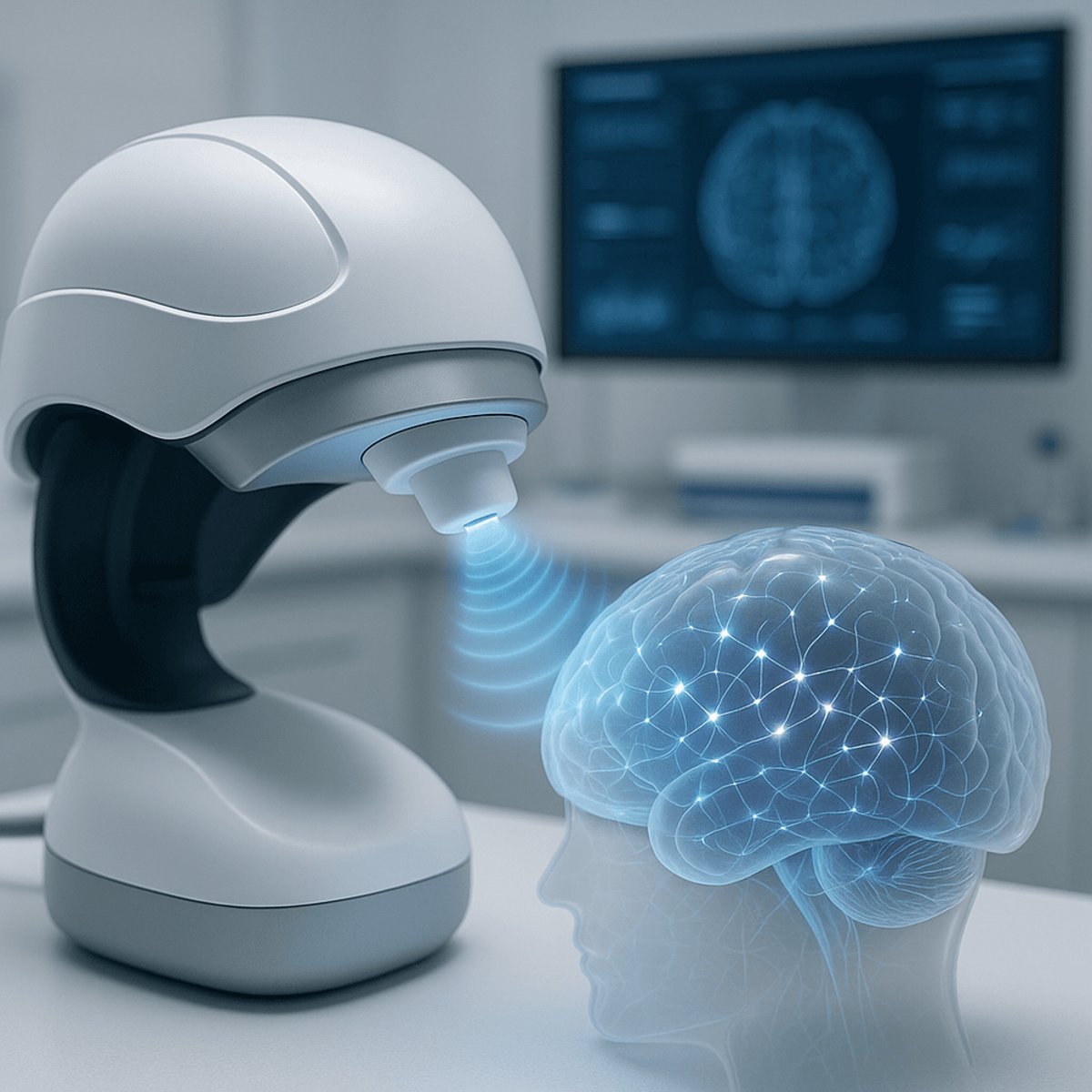
The company's first product will be a stationary benchtop machine for treating chronic pain in clinical settings. The science here is already validated - pilot studies show that focused ultrasound targeting the anterior cingulate cortex can reduce pain intensity for up to a week. Gestala is already in talks with Chinese hospitals interested in testing the technology, according to Peng.
But the real ambition lies in generation two: a wearable helmet patients could use at home under medical supervision. Gestala plans to expand beyond pain management into depression, mental illness, stroke rehabilitation, Alzheimer's treatment, and sleep disorders. The ultimate goal is a closed-loop system that detects abnormal brain states and delivers therapeutic stimulation automatically.
Here's where it gets technically hairy. While delivering focused ultrasound to specific brain regions is relatively straightforward - the FDA has already approved focused ultrasound for Parkinson's tremors, uterine fibroids, and certain tumors - reading information back out through the skull is exponentially harder. Unlike traditional BCIs that pick up electrical signals from neurons, ultrasound-based interfaces measure changes in blood flow, which are slower and more diffuse than electrical activity.
Maximilian Riesenhuber, who co-directs Georgetown University's Center for Neuroengineering, laid out the challenge bluntly. "The skull weakens and distorts ultrasound signals, and so far, researchers have only been able to interpret neural activity with ultrasound by removing a portion of the skull to create a 'window' into the brain," he told Wired.
That's a problem that neither Gestala nor Merge Labs has solved yet. The best demonstrations to date still require cranial implants made of materials more transparent to ultrasound than bone. And blood flow changes lag behind neural firing by seconds, making real-time applications like synthesized speech potentially impractical.
Still, Peng insists the focus isn't on sci-fi enhancement scenarios but "healthier neural functions." That's a pointed contrast with Merge Labs, whose website teases applications like deepening human connection and expanding what we can "imagine and create alongside advanced AI." Riesenhuber wasn't buying the hype: "I don't expect people to be interfacing with ChatGPT based on functional ultrasound neuroimaging anytime soon."
Gestala's other cofounder brings serious resources to the table. Tianqiao Chen founded online gaming giant Shanda Interactive Entertainment and now runs the California-based Tianqiao and Chrissy Chen Institute, which funds neuroscience research. The company's name references Gestalt psychology and its principle that "the whole is greater than the sum of its parts" - a fitting metaphor for trying to access entire brain networks instead of isolated regions.
The startup emerges as China's BCI industry accelerates rapidly, with government backing and growing private investment. While the country lags behind the US in invasive BCI development, the ultrasound approach could let Chinese companies leapfrog surgical techniques entirely if the technical challenges can be solved.
For now, Gestala is taking the pragmatic route: start with clinically proven pain treatment, build revenue and data, then tackle the harder problems of reading neural activity and expanding to other conditions. It's the same staged approach that helped Neuralink get its first human implant approved, just without the surgery.
Whether ultrasound can truly deliver on its promise to access the whole brain remains an open question. But with both Chinese and American startups now racing down this path, backed by major tech investors, we're about to find out if the noninvasive BCI revolution is real or just hype.
Gestala's ultrasound approach represents a genuine technical fork in the BCI road - one that could either unlock whole-brain access without surgery or hit a wall of physics that keeps it confined to narrow medical applications. The company's staged strategy starting with validated pain treatment gives it runway to tackle harder problems, but the skull interference issue that's stumped researchers for years won't vanish just because two well-funded startups are now attacking it. What's clear is that the BCI industry is no longer assuming invasive implants are the only path forward, and China's growing technical ambitions mean the next breakthrough might not come from Silicon Valley.