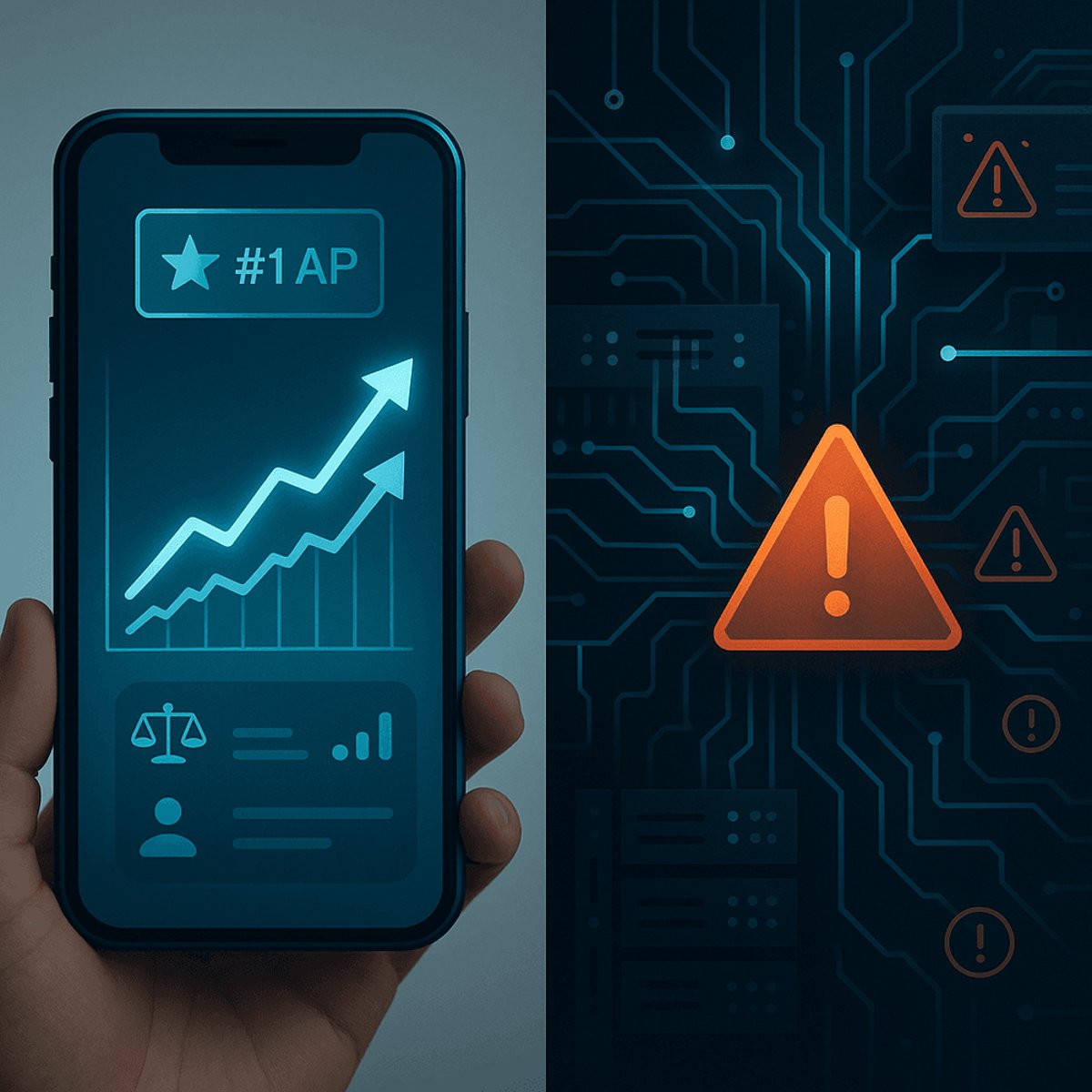
Anthropic's Claude AI assistant rocketed to the top free app on Apple's App Store Monday, even as the service grappled with elevated error rates that left users frustrated. The surge comes after the AI startup publicly clashed with the Department of Defense over controversial limits on military use of the technology, sparking a wave of downloads from users rallying behind Anthropic's stance on ethical AI development.
Anthropic's Claude AI assistant is having a moment - and not entirely a good one. The app shot to the top of Apple's App Store free downloads chart Monday afternoon, driven by a groundswell of support after the company drew a hard line against Pentagon requests to loosen restrictions on military applications of its technology. But the viral success came with growing pains, as users reported widespread service disruptions and error messages.
The clash with the Department of Defense centers on Anthropic's acceptable use policy, which currently restricts deployment of Claude for weapons development and certain military intelligence operations. According to sources familiar with the discussions, Pentagon officials approached Anthropic seeking modifications that would allow broader defense applications, similar to agreements already in place with OpenAI and Google. Anthropic declined, reinforcing its position that Claude should not be used for developing autonomous weapons systems.
The company's stance resonated across social media, with tech workers and AI ethics advocates championing Anthropic's decision. Downloads of the Claude mobile app spiked dramatically, propelling it past longtime chart-toppers and positioning the AI assistant as a viral phenomenon. It's a remarkable turn for an enterprise-focused AI company that's generally stayed out of the consumer spotlight dominated by ChatGPT and Google's Gemini.
But the infrastructure wasn't ready for prime time. Users flooding to try Claude encountered what Anthropic acknowledged as "elevated errors" across both the mobile app and web platform. The service disruptions included failed message sends, slow response times, and intermittent outages - exactly the kind of reliability issues that can dampen viral momentum. The timing couldn't be worse, as first impressions matter enormously in the crowded AI assistant market.
The incident reveals the double-edged sword of viral adoption in the AI industry. While companies compete fiercely for user attention and market share, the computational demands of large language models mean that sudden traffic spikes can overwhelm even well-resourced platforms. Anthropic has raised over $7 billion in funding, including major investments from Google and Amazon, yet still struggled to maintain service quality during the surge.
The Pentagon controversy also highlights a growing divide in the AI industry over defense work. OpenAI reversed its earlier prohibition on military applications last year, signing contracts with the Department of Defense for cybersecurity and other non-offensive applications. Microsoft, which has invested billions in OpenAI, already works extensively with defense agencies. Google faced internal revolt in 2018 over Project Maven, a Pentagon AI initiative, and eventually decided not to renew the contract - though the company still pursues other government work.
Anthropic's firm stance sets it apart in this landscape, potentially appealing to enterprise customers concerned about AI ethics and responsible development. The company was founded by former OpenAI executives who left over disagreements about the pace and direction of AI development, with a stated mission to build "safe, beneficial AI." This latest episode reinforces that brand identity, even as it complicates potential government revenue streams.
The App Store surge also represents a strategic shift for Anthropic, which has primarily focused on enterprise clients and API access rather than consumer-facing applications. Claude has powered products for companies like Slack and Notion, but hasn't achieved the household-name status of ChatGPT. The viral moment could accelerate consumer adoption - if the company can stabilize its infrastructure and convert curious downloaders into regular users.
Industry observers note that reliability will be critical. The AI assistant market is intensely competitive, with users quick to abandon platforms that don't deliver consistent performance. OpenAI's ChatGPT has experienced similar outages during periods of high demand, but has generally maintained strong user retention. Google's Gemini benefits from integration across the company's ecosystem, providing multiple access points even when individual services falter.
The technical challenges also underscore broader questions about AI infrastructure and scaling. Even well-funded startups face difficult tradeoffs between model capability, response speed, and service reliability. As AI assistants become more sophisticated and handle longer conversations with more context, the computational costs multiply. Managing that efficiently while maintaining uptime requires significant engineering resources and cloud infrastructure investments.
For now, Anthropic finds itself in an enviable but precarious position - atop the App Store charts with a wave of goodwill from its principled stance, but struggling to deliver the seamless experience those new users expect. How the company navigates this moment could define its trajectory in the consumer AI market.
Anthropic's viral moment crystallizes the tensions facing AI companies as they navigate ethics, scale, and commercialization. The company's refusal to bend on defense restrictions won public support and drove unprecedented consumer interest, but the resulting infrastructure strain exposed readiness gaps. Whether this translates to sustained growth depends on Anthropic's ability to stabilize service quality while maintaining the principled approach that sparked the surge. In an industry where trust and reliability matter as much as capability, this week may prove a defining test of whether ethical positioning can coexist with mainstream success.