Corning just dropped a bombshell that reshapes the AI infrastructure spending landscape. CEO Wendell Weeks disclosed to CNBC's Jim Cramer that the company has locked in agreements with two unnamed hyperscalers - each valued higher than the company's already staggering $6 billion Meta deal. The revelation suggests over $12 billion in additional committed spending on fiber optic infrastructure, signaling an unprecedented build-out race among cloud giants scrambling to support AI data center demands.
Corning CEO Wendell Weeks just confirmed what Wall Street suspected but couldn't quantify - the AI infrastructure arms race is far bigger than anyone publicly acknowledged. In a candid interview with Jim Cramer, Weeks revealed the glassmaker has inked two separate deals with unnamed hyperscalers that individually eclipse the company's headline-grabbing $6 billion agreement with Meta.
The math is staggering. If each mystery deal exceeds $6 billion, Corning's total committed hyperscaler revenue now sits north of $18 billion - all flowing from the physical infrastructure backbone needed to power AI training clusters and inference workloads. "The investment story looks even sweeter," Weeks told Cramer, in what might be the understatement of the earnings season.
While Weeks didn't name names, the suspect list is short. Amazon Web Services, Google Cloud, and Microsoft Azure dominate the hyperscaler landscape, and all three have been in a public spending spree on data center capacity. Microsoft alone committed to $80 billion in fiscal 2025 AI infrastructure investments during its January earnings call. Amazon's capital expenditures hit $75 billion in 2024, with CEO Andy Jassy signaling that number would climb in 2025 to support AI demand.
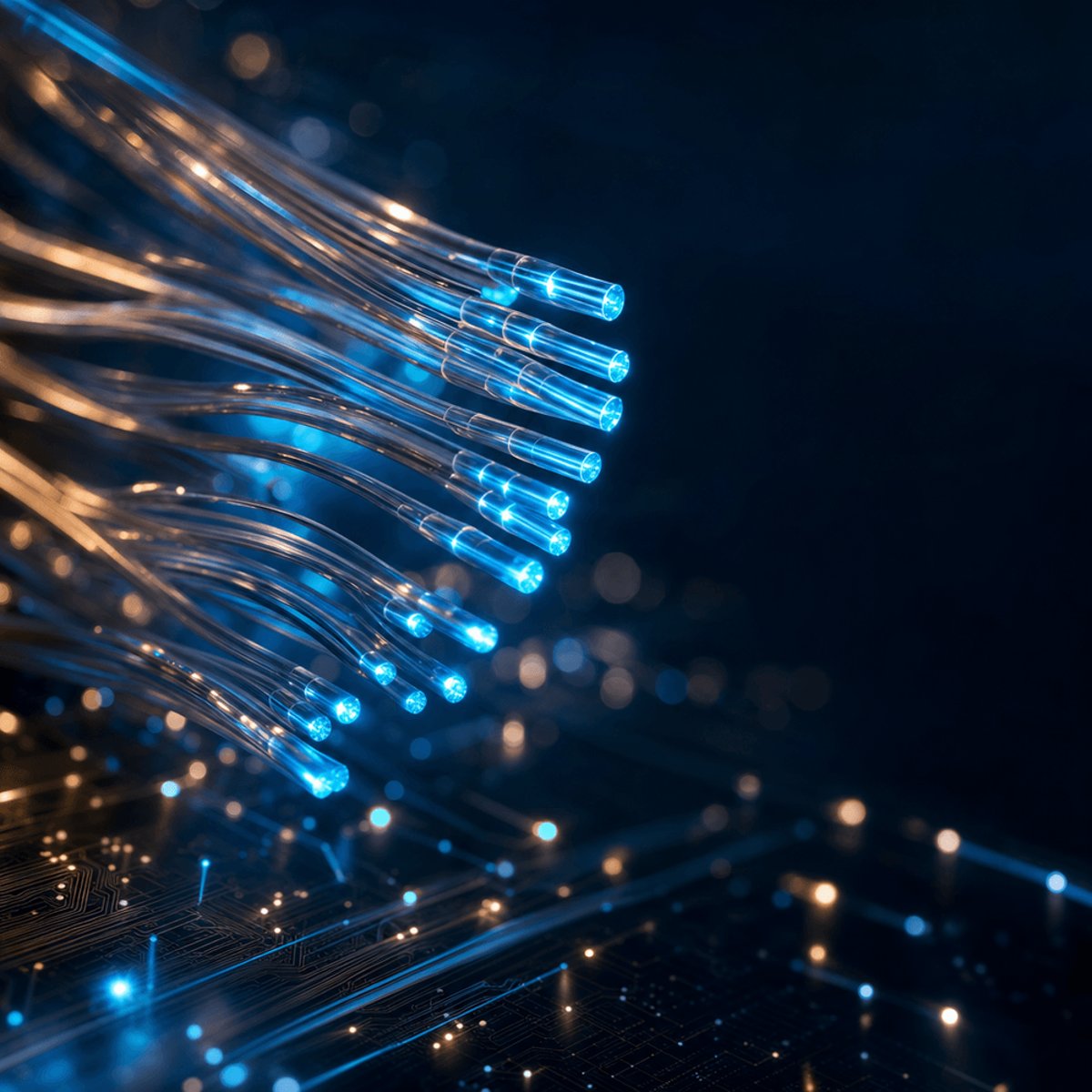
Corning's fiber optic cables are the literal wiring that connects GPU clusters inside data centers and links facilities across regions. As AI models balloon in size - OpenAI's rumored GPT-5 reportedly requires 10x the compute of GPT-4 - the connectivity demands multiply exponentially. A single large language model training run can span tens of thousands of GPUs communicating constantly, creating bandwidth requirements that legacy networking simply can't handle.
The Meta deal, announced earlier this year, already represented a watershed moment. That $6 billion contract spans multiple years and covers Corning's specialty fiber optic solutions designed for hyperscale environments. Now we know Meta's commitment was just the opening salvo. Two competitors felt compelled to match or exceed that investment, suggesting a fierce competition for AI supremacy is playing out in infrastructure procurement offices.
Industry analysts have been tracking the build-out through equipment orders and construction permits, but CEO confirmations of this magnitude are rare. Hyperscalers typically keep infrastructure spending details vague in public filings, lumping costs into broad capital expenditure categories. Weeks' disclosure offers a rare window into the scale of private negotiations happening behind closed doors.
The timing makes strategic sense. Nvidia is shipping its next-gen Blackwell GPUs throughout 2026, and every major cloud provider is racing to deploy them. But GPUs are worthless without the networking infrastructure to connect them. Corning's advantage lies in its proprietary glass formulations and manufacturing scale - competitors can't quickly replicate 170 years of materials science expertise.
For the broader tech ecosystem, Corning's revelation confirms that AI infrastructure spending isn't slowing despite some analyst predictions of an investment plateau. While software valuations have cooled and some AI startups face funding crunches, the hyperscalers are doubling down on physical capacity. That divergence suggests the giants expect AI workloads to grow faster than current utilization rates indicate.
What remains unclear is the timeline for these deployments. Corning's fiber production requires significant lead time, and installing cables across massive data center campuses takes months. If these deals are structured like the Meta agreement, revenue will flow over 3-5 years, providing Corning predictable income but also locking hyperscalers into long-term capacity commitments they can't easily unwind.
The competitive implications are profound. Whichever hyperscalers secured these deals gain a structural advantage in AI training capacity for years to come. Rivals who waited or negotiated smaller commitments may find themselves capacity-constrained as demand surges. In an industry where milliseconds of latency matter, having the newest, fastest fiber infrastructure isn't a luxury - it's table stakes.
Corning's bombshell disclosure transforms how we understand the AI infrastructure race. Over $18 billion in committed fiber optic spending from just three customers signals that hyperscalers see no near-term ceiling on AI capacity needs. For investors, it's a rare datapoint confirming that physical infrastructure spending remains robust even as AI software valuations face scrutiny. For competitors, it's a warning - the giants are locking in multi-year capacity advantages that will be nearly impossible to match. And for the broader tech industry, it confirms what insiders already suspected: the real AI arms race isn't happening in model architectures or algorithms, but in the unsexy cables and glass that make those models possible. Watch for Corning's next earnings call for hints about whether additional hyperscaler deals are in the pipeline, and pay attention to capital expenditure guidance from AWS, Google Cloud, and Azure for clues about which two companies just committed over $12 billion to their networking future.