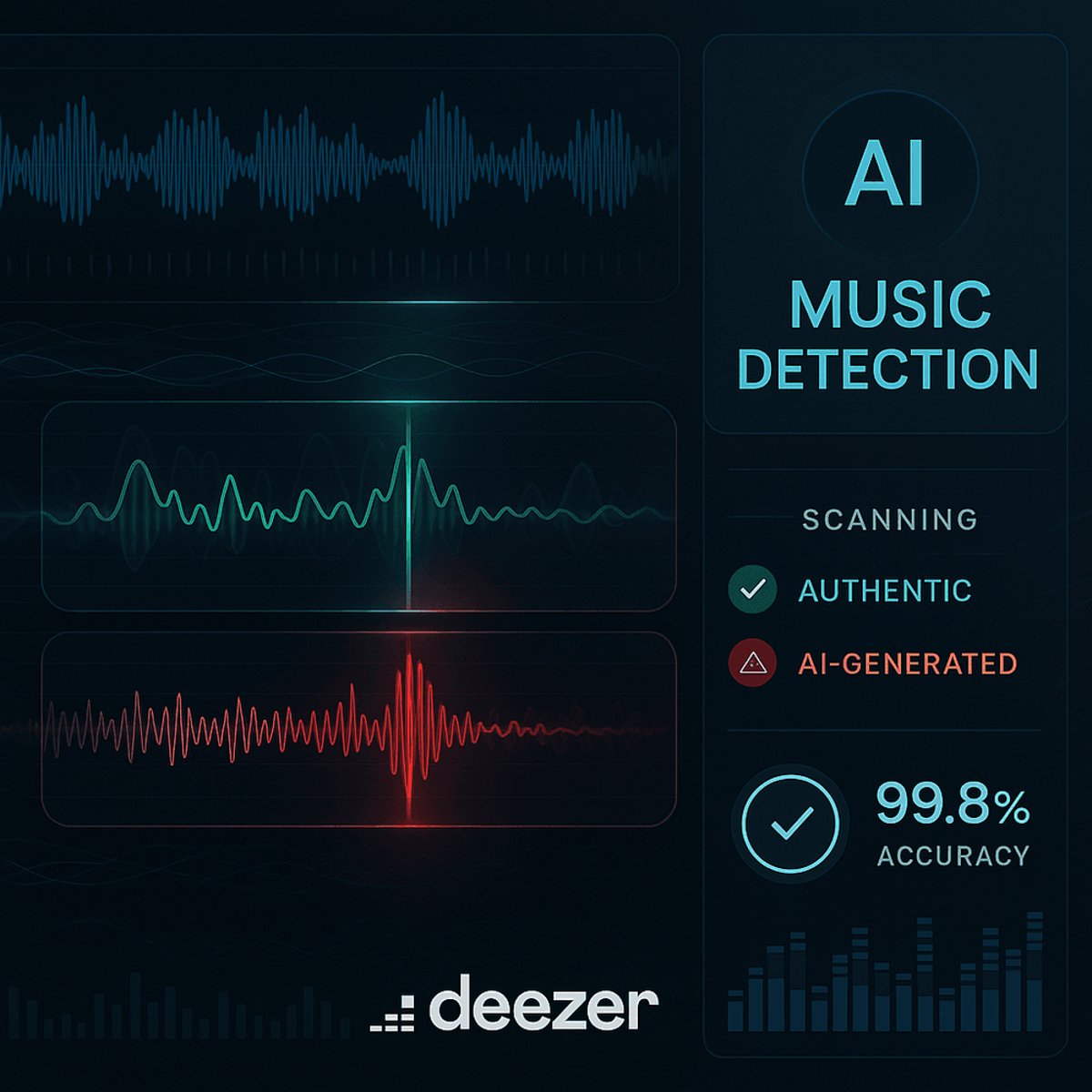
Deezer just turned its AI music detection system into an enterprise product, opening the technology to rival streaming platforms in a move that could reshape how the industry handles AI-generated content. The French streaming service reports that 85% of AI-generated track streams are fraudulent, with 60,000 AI tracks flooding its platform daily - nearly triple the volume from last June. It's a striking pivot: instead of hoarding competitive advantages, Deezer's betting that standardizing detection across the industry serves everyone better than keeping the tech in-house.
Deezer is trying to turn the music industry's AI problem into everyone's solution. The streaming platform announced Thursday it's making its AI detection tool available to competitors, a year after launching the technology to automatically flag and demonetize fully AI-generated tracks on its own service.
The numbers explain the urgency. Deezer now processes 60,000 AI-generated tracks daily, with its detection system having identified 13.4 million songs to date. That's a 200% jump from June 2025, when AI music made up 18% of daily uploads at around 20,000 tracks. More troubling: the company reports 85% of streams from these AI tracks are fraudulent, designed to game streaming payouts rather than reach actual listeners.
"There has been great interest" in the tool, CEO Alexis Lanternier told TechCrunch, with several companies completing successful tests. One confirmed partner is Sacem, the French rights management organization representing over 300,000 music creators and publishers, including David Guetta and DJ Snake. The company wouldn't disclose pricing, saying only that costs vary based on deal structure - a B2B SaaS approach that could generate a new revenue stream while solving an industry-wide crisis.
The technology claims 99.8% accuracy in identifying tracks from major generative models like Suno and Udio, according to a Deezer spokesperson. Once detected, tracks get tagged for listeners, excluded from algorithmic and editorial recommendations, demonetized, and removed from royalty pools. It's a comprehensive approach that addresses both transparency and economics, ensuring human artists aren't competing with synthetic music for payouts.
The fraud problem isn't theoretical. In 2024, a North Carolina musician was charged by the Department of Justice with creating AI-generated songs and using bots to stream them billions of times, allegedly stealing more than $10 million in royalties. Meanwhile, AI acts like The Velvet Sundown have racked up millions of legitimate streams, blurring the line between creative experimentation and system exploitation.
Competitors are scrambling for their own solutions. Bandcamp took the nuclear option earlier this month, banning AI-generated music outright. Spotify, which dominates streaming with over 600 million users, updated its AI policy last September to label tracks, reduce spam, and prohibit unauthorized voice clones - but hasn't deployed detection technology at Deezer's scale.
The major labels, surprisingly, are moving the opposite direction. Universal Music Group and Warner Music Group both struck licensing deals with Suno and Udio last fall, settling copyright lawsuits and embracing AI music generation when it compensates artists. That creates a complicated landscape: some AI music is licensed and legitimate, while other tracks are fraudulent cash grabs, with detection systems needing to distinguish between them.
Deezer's approach sidesteps that complexity by focusing on fully AI-generated content, not AI-assisted production. The tool doesn't flag tracks where AI enhanced human vocals or helped with mixing. It targets synthetic songs created entirely by algorithms, which the company argues should be transparently labeled and excluded from artist-focused discovery and payment systems.
The platform has positioned itself as the industry's ethical standard-bearer on AI. In 2024, it became the first streaming service to sign the global statement on AI training, joining actors Kate McKinnon, Kevin Bacon, and Kit Harington in pushing for consent-based use of copyrighted material. Now it's extending that stance into enterprise infrastructure.
Whether competitors will adopt the tool remains unclear. Spotify has the resources to build its own detection system. Apple Music hasn't publicly addressed AI content at scale. Amazon Music and YouTube Music face the same flood of AI uploads but haven't announced comprehensive responses. Deezer's bet is that the problem is too big and too technical for every platform to solve independently.
The move also creates an interesting competitive dynamic. By licensing detection technology, Deezer could generate B2B revenue while standardizing how the industry handles AI content, potentially setting the technical and ethical frameworks everyone else follows. It's a play for influence as much as income, positioning a smaller streaming service as the infrastructure provider for a problem that affects giants.
Deezer's decision to share its detection technology signals a shift from competitive moats to collaborative infrastructure in streaming. With AI tracks tripling in six months and fraud rates hitting 85%, the industry needs standardized solutions more than proprietary advantages. Whether rivals like Spotify and Apple Music adopt the tool or build their own, the pressure is mounting to address AI content systematically. The question isn't whether streaming platforms will implement detection - it's whether they'll license Deezer's version or scramble to catch up independently. Either way, the era of untagged, unregulated AI music flooding streaming services is ending.