Disney just escalated its war against AI companies using its characters without permission. The entertainment giant sent a cease and desist letter to Character.AI last week over unauthorized use of copyrighted characters, marking another front in Hollywood's battle to protect intellectual property from AI scrapers. With Disney already suing Midjourney and Character.AI scrambling to remove the disputed bots, this represents a crucial test case for how AI companies can use branded content.
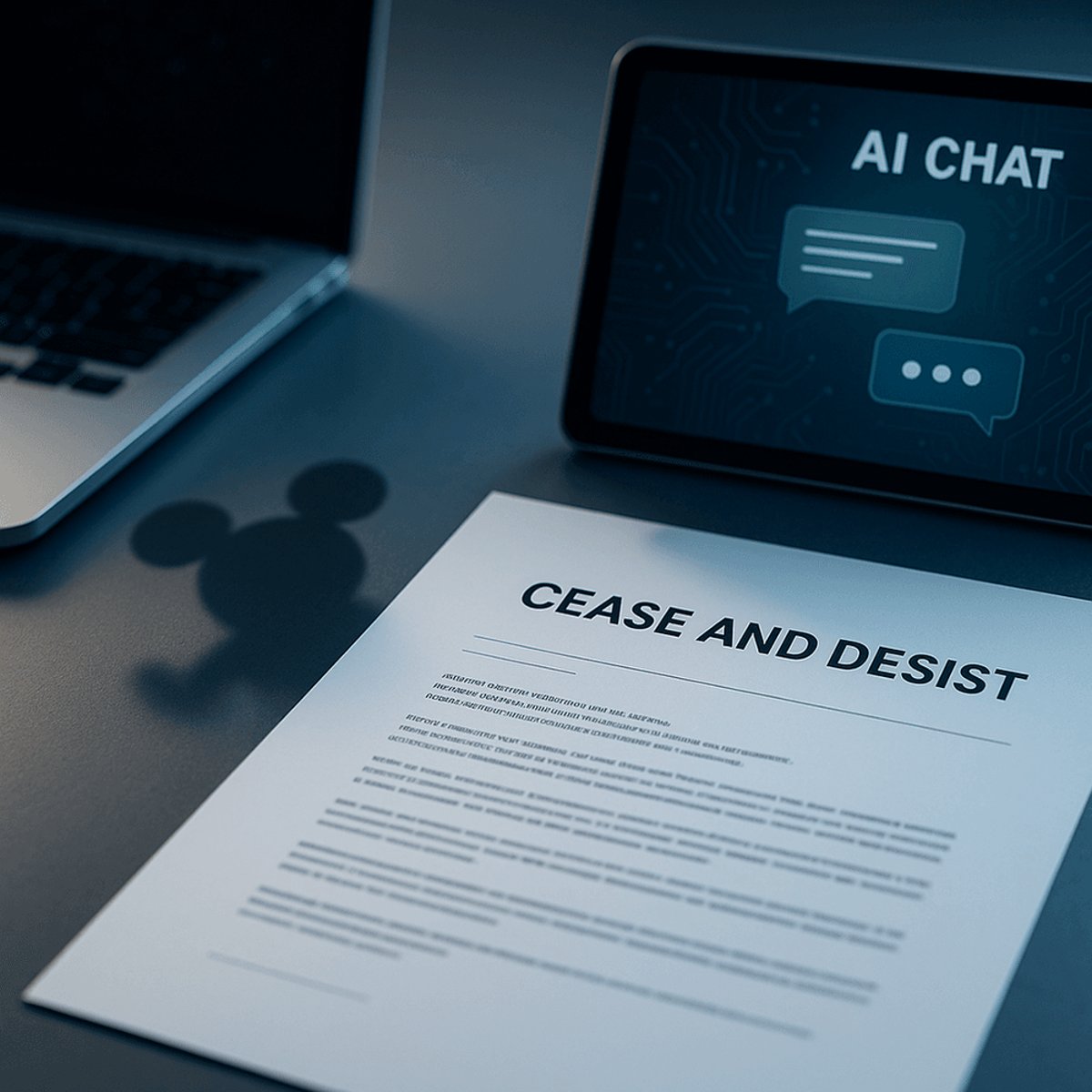
Disney isn't playing games when it comes to protecting Mickey Mouse and friends from AI copycats. The entertainment powerhouse fired off a cease and desist letter to Character.AI last week, demanding the AI startup stop letting users create chatbots based on Disney's copyrighted characters without authorization, according to CNBC reporting.
The move caught Character.AI off guard, but the company quickly capitulated. A spokesperson told CNBC they've already removed the disputed characters and acknowledged "it's always up to rightsholders to decide how people may interact with their IP." The admission reveals how precarious AI companies' positions have become when major studios start wielding legal muscle.
But Character.AI isn't backing down entirely. The company's trying to flip the script, positioning itself as a potential partner rather than a pirate. "We want to partner with the industry and rightsholders to empower them to bring their characters to our platform," the spokesperson said, pitching a vision where IP owners could "create controlled, engaging and revenue-generating experiences from deep fandom for their characters."
The cease and desist represents Disney's latest salvo in what's becoming an industry-wide crackdown on AI companies that help themselves to copyrighted content. Disney's already locked in an ongoing legal battle with Midjourney, the AI image generator that allegedly churned out unauthorized versions of characters from Cars, Toy Story, Shrek, and The Avengers. That lawsuit could set crucial precedent for how courts handle AI-generated content that mimics copyrighted material.
Character.AI's business model makes it particularly vulnerable to these attacks. The platform lets users create and chat with AI-powered characters, and many gravitate toward familiar faces from pop culture. One chatbot that landed the company in hot water was "Daenerys Targaryen" from Game of Thrones - part of a wrongful death lawsuit filed by the family of 14-year-old Sewell Setzer III, who allegedly became addicted to the app before taking his own life.
The legal pressures are mounting across the entire AI sector. Earlier this month, Anthropic agreed to pay $1.5 billion to settle a class action lawsuit with authors who claimed the company illegally scraped their books from pirated databases to train its AI models. The settlement signals that AI companies can't simply grab whatever content they want and claim fair use.
For Character.AI, the Disney dust-up comes at a particularly sensitive time. Google inked a $2.7 billion licensing deal with the startup this year and hired its founders, essentially acquiring the company's talent while licensing its technology. The arrangement gives Character.AI access to Google's resources but also puts more scrutiny on how it handles content rights.
The Disney warning shot also exposes a fundamental tension in the AI world. These companies built their models by ingesting massive amounts of internet content, often without explicit permission from creators. Now that the technology has proven commercially viable, content owners are demanding their cut - or at least control over how their characters and creations get used.
Industry observers expect more studios to follow Disney's playbook. The House of Mouse has some of the most valuable and recognizable IP in the world, from Marvel superheroes to Star Wars characters to classic animated films. If Disney can establish that AI companies need explicit permission to use these characters - even in chatbot form - it could force a fundamental reckoning across the industry.
Disney's cease and desist to Character.AI marks a turning point in the AI industry's relationship with intellectual property. As more entertainment giants follow suit, AI companies will need to choose between expensive licensing deals or building entirely original content libraries. The days of freely scraping copyrighted material for AI training appear to be ending, replaced by a new reality where content creators hold the cards. For consumers, this could mean fewer familiar characters in AI apps but potentially higher quality, officially licensed experiences.