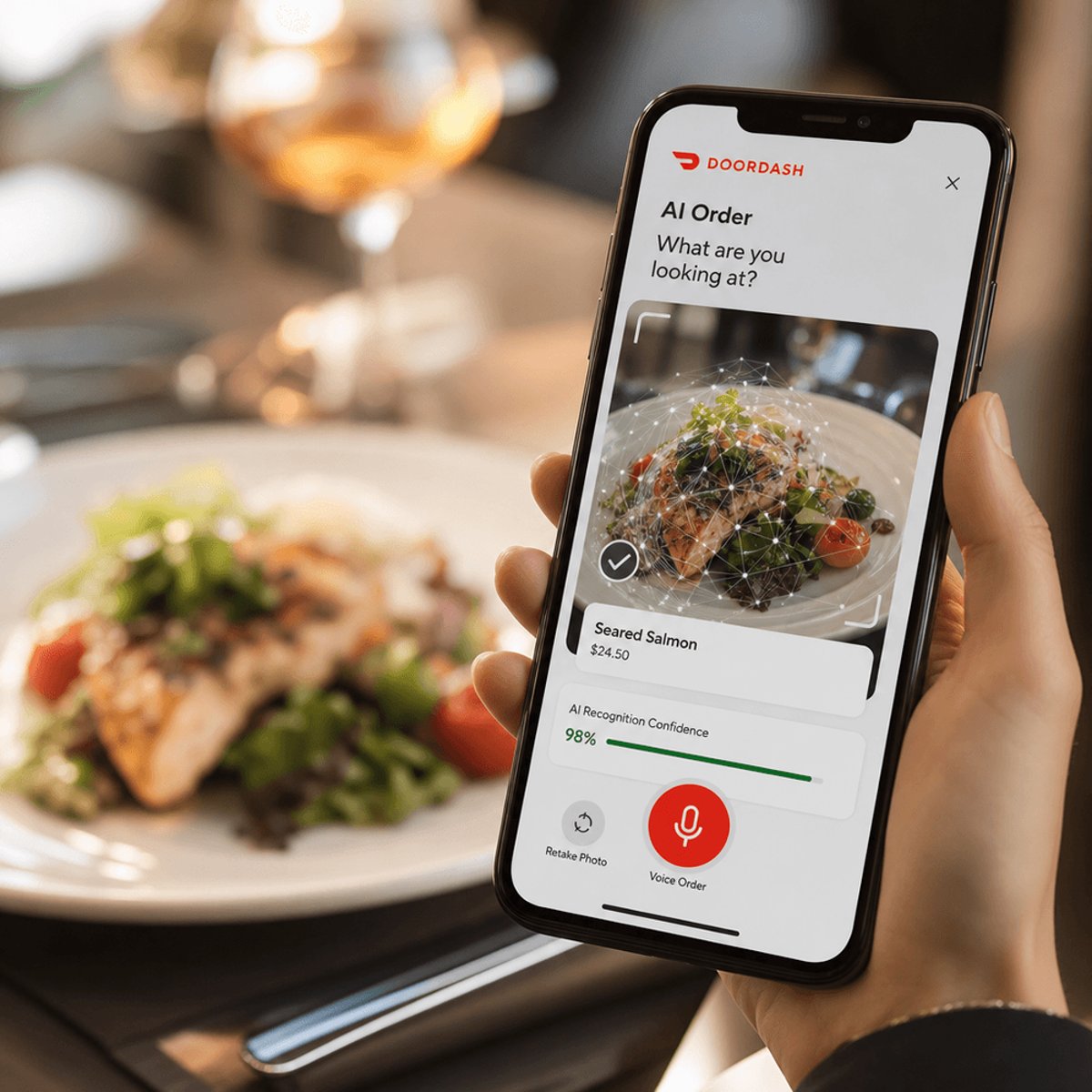
DoorDash is betting AI can eliminate the friction of food ordering entirely. The delivery giant just rolled out new features that let customers snap a photo of a dish or describe what they're craving in plain English, then watch as algorithms handle the rest - from finding matching menu items to booking restaurant reservations. It's the latest salvo in the AI arms race transforming how Americans eat, putting DoorDash squarely in competition with everyone from Uber Eats to OpenAI's rumored food ordering ambitions.
DoorDash is making its biggest AI push yet, introducing features that fundamentally change how customers interact with its platform. Instead of scrolling through endless menus, users can now snap a photo of food they want - whether from a restaurant window, social media post, or their own kitchen - and let DoorDash's image recognition algorithms find matching dishes from nearby restaurants. The company's also rolling out natural language ordering, where typing "I want spicy noodles under $15" triggers AI to curate options and streamline checkout.
The timing isn't coincidental. Food delivery platforms are locked in a brutal war for retention, with average order values stagnating and customer acquisition costs climbing. AI represents the next battleground - whoever makes ordering effortless wins more frequent purchases. Uber Eats has been testing similar visual search features, while smaller players like Grubhub scramble to keep pace with generative AI investments.
What sets DoorDash apart is the reservation integration. The AI doesn't just handle delivery orders - it can now book tables at restaurants based on conversational requests like "find me a romantic Italian spot for Friday at 8pm." That expansion beyond delivery signals DoorDash's ambition to own the entire dining decision-making process, not just the last-mile logistics. It's a direct challenge to OpenTable, which has dominated restaurant reservations for years but lacks DoorDash's delivery data and customer relationships.
The technical lift here is substantial. Photo-based ordering requires computer vision models trained on millions of dish images, then matched against DoorDash's catalog of restaurant menus - which change constantly. Natural language processing has to parse ambiguous requests, understand dietary restrictions, and translate vague preferences into specific menu items. The reservation system needs real-time integration with restaurant booking APIs and availability calendars.
DoorDash hasn't disclosed which AI models power these features, but the company's been hiring aggressively from Meta and Google AI teams over the past year. Industry insiders suggest the platform likely combines proprietary computer vision models with fine-tuned large language models for the conversational interface. The photo recognition probably builds on transfer learning from existing image classification systems, customized for food-specific attributes like cuisine type, preparation style, and presentation.
For restaurants, this creates both opportunity and anxiety. AI-driven discovery could surface smaller establishments that previously got buried in search results. But it also hands DoorDash even more control over the customer relationship - restaurants become interchangeable suppliers of "spicy noodles under $15" rather than distinct brands customers actively seek out. Some restaurant groups are already negotiating for guarantees that AI recommendations won't systematically favor competitors willing to pay higher commission rates.
The consumer behavior implications run deeper than convenience. Photo-based ordering taps into impulse psychology - seeing food triggers cravings more powerfully than reading menu descriptions. If DoorDash can convert those spontaneous "that looks amazing" moments into instant purchases, average order frequency could spike significantly. That's the same mechanic driving Instagram shopping and TikTok commerce - visual discovery compressed into frictionless transactions.
Competitive pressure is about to intensify dramatically. Amazon has been quietly testing food delivery in select markets with Alexa voice ordering. Apple keeps expanding restaurant integrations in Maps. And persistent rumors suggest OpenAI wants to layer food ordering capabilities into ChatGPT's expanding commercial features. DoorDash moving first with multimodal AI gives it a head start, but the window won't stay open long.
The rollout appears staged rather than universal - typical for DoorDash's product strategy. Early access will likely go to high-value customers in major metros, then expand based on performance data. The company's probably watching conversion rates obsessively, comparing AI-initiated orders against traditional browse-and-search behavior. If photo ordering converts even marginally better, expect aggressive promotion and interface redesigns that prioritize the camera button over menu browsing.
DoorDash's AI ordering features represent more than incremental improvement - they're a fundamental rethinking of how people decide what to eat. By collapsing the gap between inspiration and transaction, the company's betting it can increase order frequency and customer lifetime value enough to justify the substantial AI development costs. The real test comes when competitors launch equivalent features, likely within months. At that point, the question shifts from whether AI ordering works to whether DoorDash built enough of a data moat and habit formation to maintain its market lead. For now, the company's moved first in making food delivery feel less like browsing a database and more like having a personal assistant who just gets it. That's worth watching closely, because this same AI-powered commerce pattern will ripple across every other consumer category where decision fatigue creates purchasing friction.