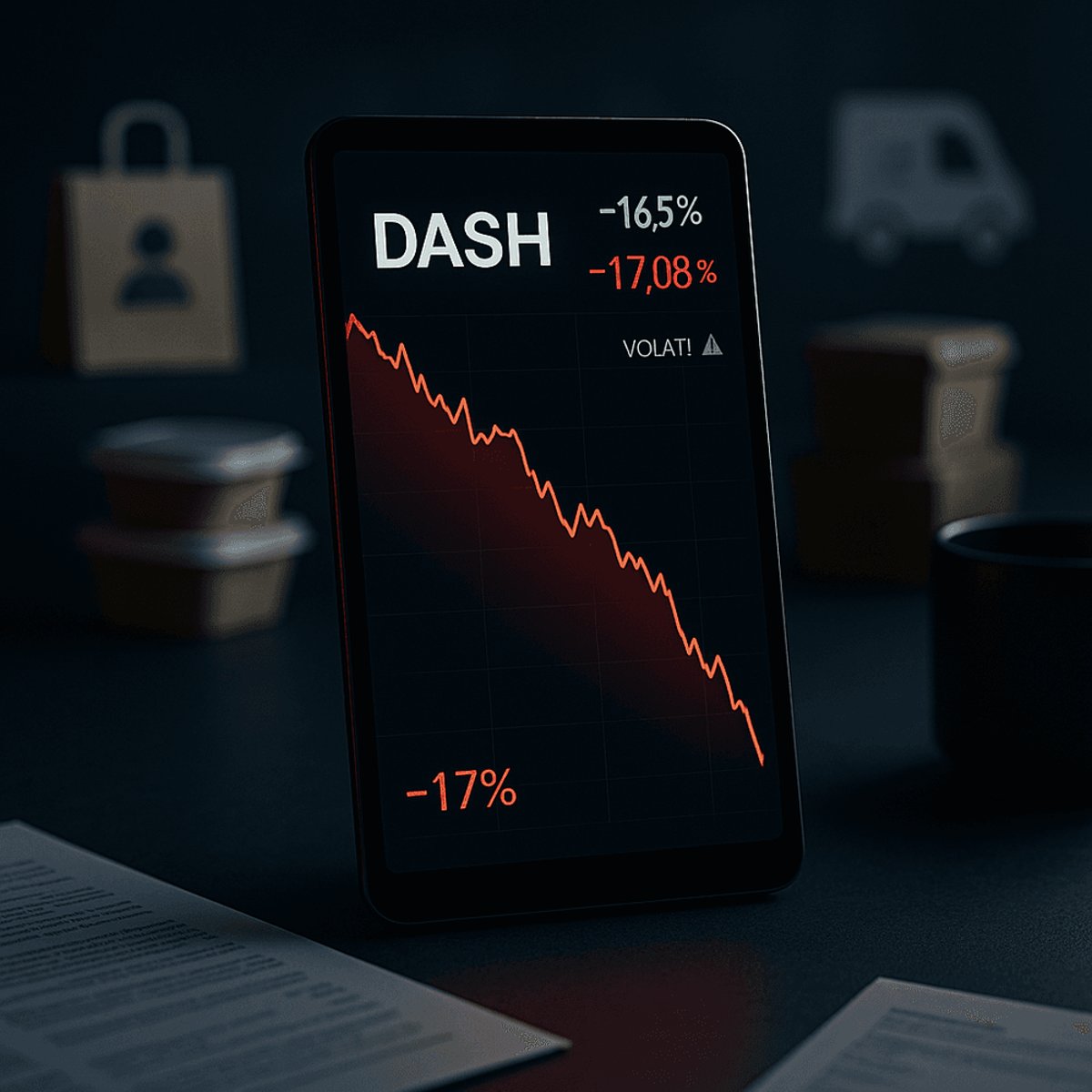
DoorDash just experienced its worst trading session ever, with shares plummeting 17% as investors revolted against the company's aggressive spending strategy. The food delivery giant's stock dump came after revealing plans to spend hundreds of millions more on autonomous delivery and global expansion, following a $5.1 billion acquisition spree that's raised serious questions about profitability priorities.
DoorDash just delivered its shareholders the worst trading day in company history. The food delivery platform's stock cratered 17% as investors sent a clear message: they're not buying CEO Tony Xu's billion-dollar spending spree anymore.
The carnage started during DoorDash's earnings call when executives revealed plans to shell out "several hundred million dollars" next year on new product initiatives like autonomous delivery robots and a global tech stack overhaul. Coming on the heels of a massive acquisition binge that's already cost the company over $5 billion this year, Wall Street finally said enough.
"Our track record in investing in the areas that we currently have operating have suggested that we've had some success in repeating this playbook, and we're doing this now for future growth," Xu told analysts, according to CNBC's earnings coverage. But investors aren't convinced this playbook still works in today's economic climate.
The numbers tell a mixed story. DoorDash's third-quarter revenue jumped 27% to $3.45 billion, beating Wall Street's $3.36 billion estimate. But earnings per share of 55 cents fell well short of the 69 cents analysts expected, according to LSEG data. More troubling for investors, the company's fourth-quarter EBITDA guidance of $710-$810 million came in below the $806.8 million consensus.
This year's spending spree reads like a tech acquisition fever dream. DoorDash dropped $1.2 billion on restaurant booking platform SevenRooms and then followed up with a $3.9 billion purchase of British delivery firm Deliveroo. The company also launched its autonomous delivery robot "Dot" and rolled out new DashMart fulfillment services.
While DoorDash battles Uber and other competitors for market share, the timing couldn't be worse. Consumer discretionary spending is showing cracks, and investors are increasingly skeptical of growth-at-all-costs strategies that defined the pandemic era. The question now is whether DoorDash's aggressive expansion will pay off or if it's burning cash just as the economy shifts.
Wells Fargo analyst Ken Gawrelski struck a cautiously optimistic tone despite the stock massacre. "In our view, this is one of the best operational management teams in the sector and longer duration investors are likely to remain supportive through this period," he wrote in a research note. "However, given inconsistent disclosure, we believe patience may be required."
That patience is being tested. DoorDash expects Deliveroo to contribute just $45 million to adjusted EBITDA in Q4 and about $200 million next year - modest returns on a nearly $4 billion investment that won't fully justify the price tag anytime soon.
The autonomous delivery push represents another big bet on unproven technology. While competitors like Amazon have been testing delivery robots for years with mixed results, DoorDash is diving headfirst into a space where regulatory hurdles and technical challenges remain massive.
What makes this selloff particularly brutal is the timing. Despite today's crash, DoorDash shares are still up more than 20% for the year, meaning many investors who bought in recently are now underwater. The stock had been riding high on delivery volume growth and international expansion hopes, but those gains evaporated in a single session.
For Xu, this represents the biggest test of his leadership since taking DoorDash public. The former McKinsey consultant has built a reputation as a savvy operator who thinks in decades rather than quarters, but Wall Street operates on much shorter timelines. His challenge now is proving that today's massive investments will generate tomorrow's profits before investor patience runs out completely.
DoorDash's historic stock plunge reflects a broader shift in investor sentiment away from growth-at-any-cost strategies. While the company's revenue growth remains strong, its massive acquisition spree and planned spending increases are testing Wall Street's patience at exactly the wrong time. The real test for CEO Tony Xu will be whether these billion-dollar bets pay off before investors lose faith entirely in his long-term vision.