Swedish autonomous trucking startup Einride just announced plans to go public through a SPAC merger, valuing the company at $1.8 billion - just six weeks after closing a $100 million funding round. The deal with Legato Merger Corp signals growing confidence in the autonomous freight market as traditional automakers scramble to catch up.
Einride broke the autonomous trucking industry's quiet period Wednesday with news that sent ripples through both the freight and public markets. The Swedish startup's announcement of a $1.8 billion SPAC merger comes at a pivotal moment - just as the self-driving truck sector is finally showing real commercial traction after years of promises.
The timing tells the whole story. Six weeks ago, Einride closed a $100 million funding round led by EQT Ventures, with quantum computing company IonQ joining existing backers. Now they're racing to the public markets through a merger with Legato Merger Corp, targeting a New York Stock Exchange debut in the first half of 2026.
"We've been preparing for this moment since we started scaling our customer operations," CEO Roozbeh Charli, who joined earlier this year, told TechCrunch. The numbers back up his confidence - Einride is running at a $45 million annual recurring revenue rate with $65 million in contracted business from signed customers.
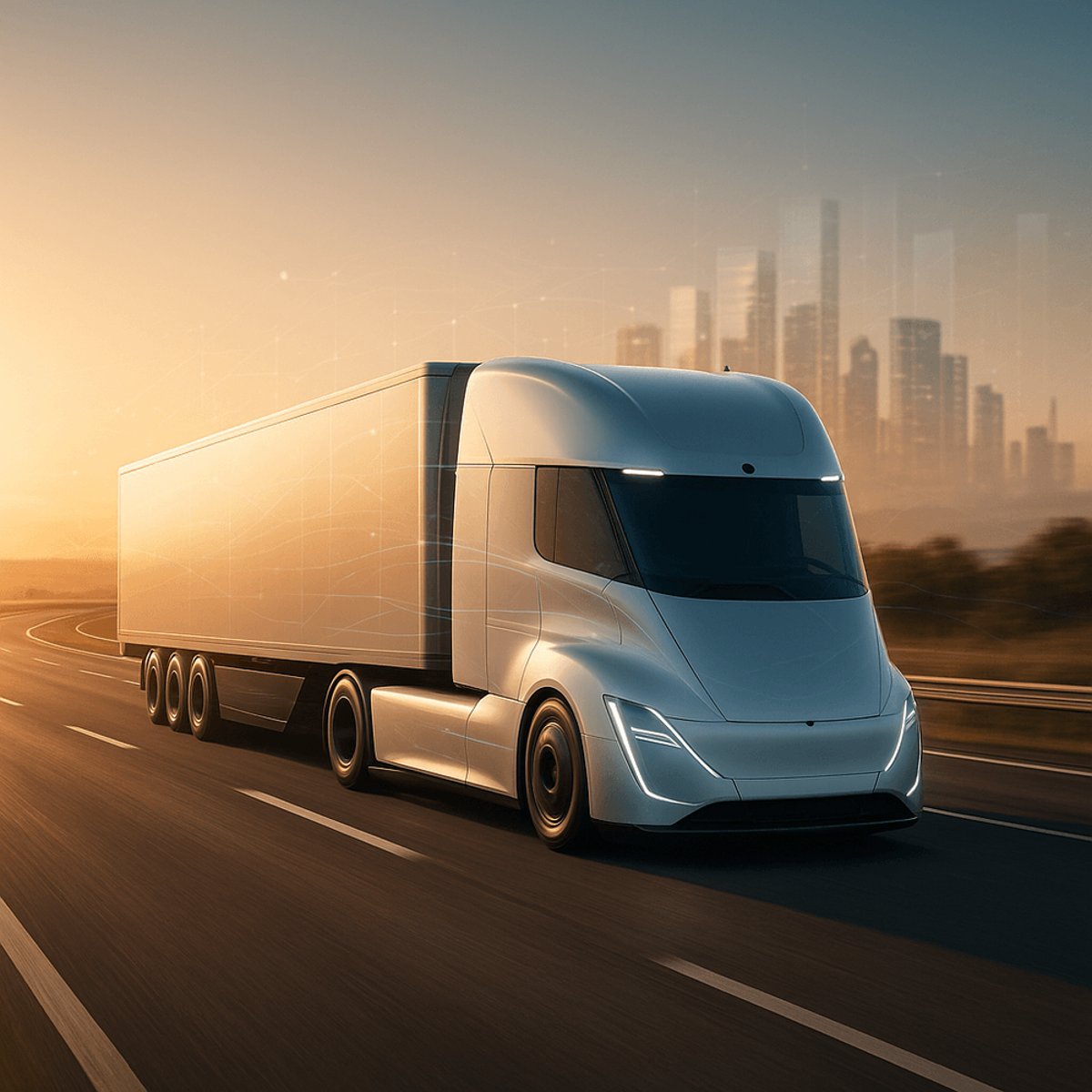
What sets Einride apart isn't just the autonomous tech - it's the business model. The company operates three distinct revenue streams that position it as more than just another self-driving truck startup. Their fleet of 200 heavy-duty electric trucks already serves enterprise clients across Europe, North America, and the UAE, including household names like Heineken, PepsiCo, and Carlsberg.
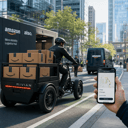
But the real innovation lies in their autonomous pods - steering wheel-free vehicles designed for fixed routes that look more like freight-carrying robots than traditional trucks. These pods are already operating with customers including Swedish pharmacy chain Apotea and GE Appliances in the United States, proving the concept works beyond controlled test environments.
The SPAC structure will generate approximately $219 million in gross proceeds, with Einride also pursuing up to $100 million in private investment in public equity (PIPE) capital. That's a significant war chest for a company that's been methodically building its business since founder Robert Falck launched it in 2016 with the audacious goal of transforming freight transportation.
Einride's path to this moment hasn't been typical Silicon Valley hypergrowth. The company raised a substantial $500 million in 2022 - $200 million in equity from backers including Northzone, Temasek, and Swedish pension fund AMF, plus $300 million in debt led by Barclays Europe. That disciplined approach to capital has allowed them to build actual operations while competitors burned through funding on R&D.
The SPAC route puts Einride in notable company. Aurora, which launched commercial self-driving truck operations with human observers, went public via SPAC in 2021 at a $13 billion valuation - though that was during the SPAC boom's peak. More recently, Kodiak AI took the same path to public markets earlier this year, signaling that autonomous vehicle companies see SPACs as a viable alternative to traditional IPOs.
The timing couldn't be better for autonomous freight. Supply chain disruptions, driver shortages, and rising logistics costs have created urgent demand for automated solutions. Traditional automakers are finally taking notice - Volvo and Daimler have ramped up their autonomous truck investments, while tech giants like Waymo are expanding beyond passenger vehicles.
From Einride's Austin headquarters, the company is positioning itself as the European answer to American autonomous trucking leaders. Their three-pronged approach - electric trucks for immediate deployment, autonomous pods for controlled routes, and software for logistics optimization - creates multiple revenue streams that traditional trucking companies can't easily replicate.
The $1.8 billion pre-money valuation reflects growing investor confidence in freight automation, but it also sets high expectations for execution. Einride will need to prove they can scale beyond their current 200-truck fleet while maintaining the reliability that enterprise customers demand.
Einride's SPAC announcement marks a turning point for autonomous freight, moving the sector from experimental tech to investable business. With proven revenue streams, major enterprise customers, and a clear path to scale, the company is betting that public markets are ready to embrace self-driving trucks as the logistics industry's inevitable future. The real test will be whether they can execute on their ambitious timeline while competitors like Aurora and new entrants from traditional automakers intensify the race for autonomous freight dominance.