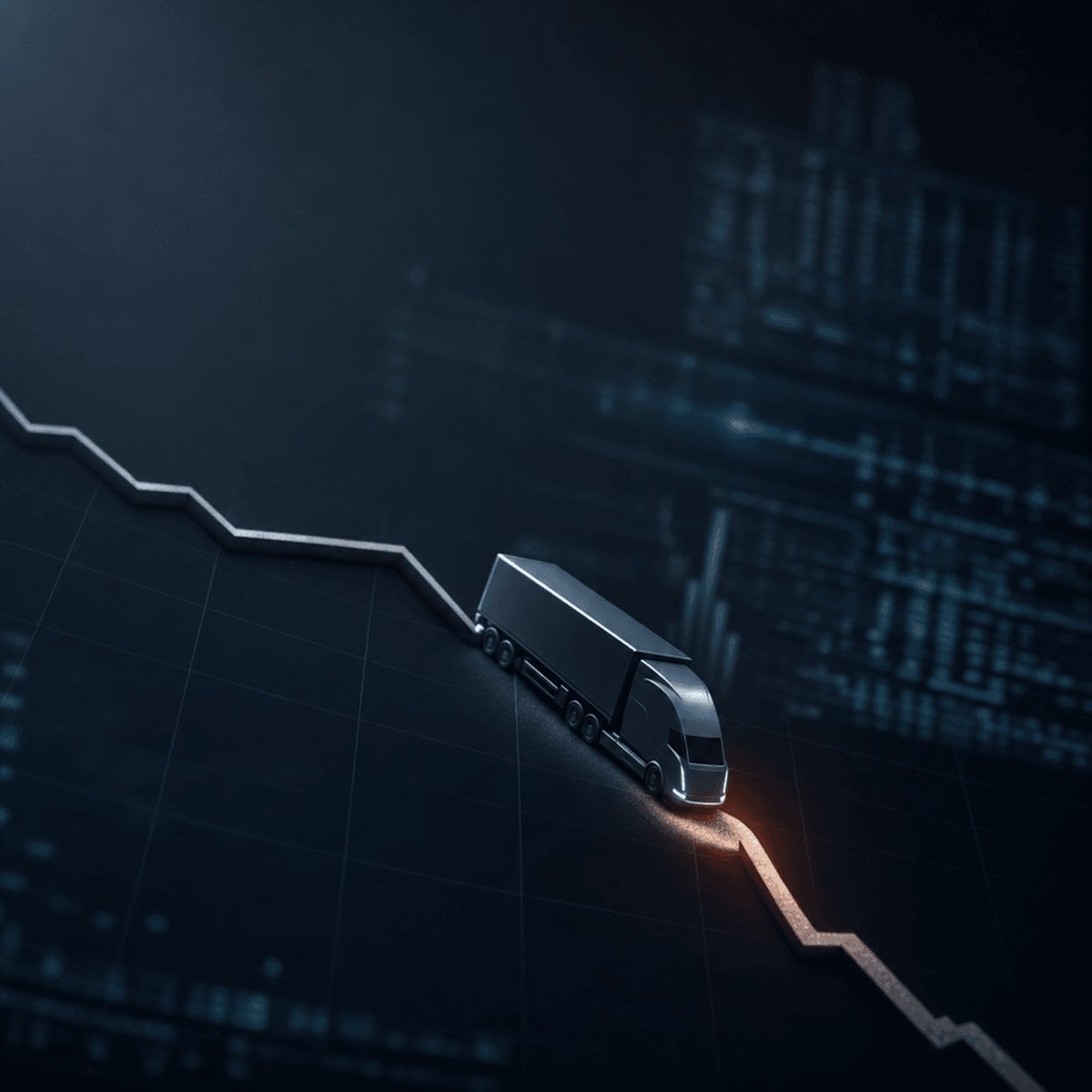
Kodiak AI just closed a $100 million funding round that sent its stock plummeting 37% in a brutal reminder that the autonomous vehicle market isn't immune to broader tech valuation pressures. The autonomous trucking startup disclosed the financing at a steep discount to its previous valuation during its earnings announcement Thursday, marking one of the most dramatic down rounds in the self-driving sector since the 2022 tech correction. The funding comes as Kodiak attempts to balance commercial expansion with cash preservation in an increasingly cautious funding environment.
Kodiak AI delivered a one-two punch to investors Thursday evening: a $100 million funding round that should extend its runway, but at a valuation that triggered an immediate 37% stock collapse. The autonomous trucking company disclosed the financing during its earnings call, revealing the kind of down round that's become increasingly common in capital-intensive sectors but remains rare enough to send shockwaves through the self-driving industry.
The timing tells its own story. Just eighteen months ago, autonomous vehicle startups were commanding premium valuations on the promise of revolutionizing logistics. Now Kodiak's accepting capital at terms that suggest investors are demanding proof over potential. The company didn't disclose the exact valuation, but the market's reaction speaks volumes about how steep the discount was.
What makes this particularly striking is that Kodiak isn't standing still. During the same earnings call that revealed the down round, the company announced a new commercial contract, launched a pilot program in Canada, and confirmed an unnamed collaboration that executives characterized as strategically significant. The disconnect between operational progress and valuation compression reveals how dramatically investor sentiment has shifted in the autonomous vehicle space.
Kirsten Korosec at TechCrunch broke the news as markets were processing the implications. The $100 million should provide Kodiak with runway to hit key commercial milestones, but it comes at a cost that existing shareholders are feeling immediately. Down rounds typically include terms that protect new investors while diluting earlier backers, and the stock movement suggests significant dilution is in play.
The autonomous trucking sector has been watching capital markets tighten for months. While players like Aurora and Waymo benefit from deep-pocketed corporate parents, independent startups like Kodiak face a more challenging fundraising environment. Investors want to see not just technical progress but clear unit economics and realistic timelines to commercialization. The days of funding based purely on total addressable market calculations are definitively over.
Kodiak's situation reflects broader pressure across the autonomous vehicle industry. The technology remains capital-intensive, regulatory timelines stay uncertain, and the gap between pilot programs and true commercial scale continues to challenge even the best-funded players. But Kodiak's operational announcements suggest the company isn't retreating. The Canadian expansion and new commercial contracts indicate management believes they can demonstrate value even at a compressed valuation.
The down round also raises questions about what comes next for other autonomous trucking startups. If Kodiak, with its operational traction and public market access, had to accept these terms, what does that mean for earlier-stage competitors? The autonomous vehicle market has already seen consolidation, with several high-profile shutdowns and acquisitions. This funding round suggests that pressure isn't easing.
For Kodiak, the immediate challenge is converting this capital into results that justify a valuation recovery. The company has the runway now to execute on its commercial strategy, but the market has clearly reset expectations. The Canadian pilot and new commercial contract provide near-term catalysts, but investors will be watching closely to see if operational momentum can eventually translate back into valuation growth.
The 37% single-day drop also highlights the volatility that comes with being a public autonomous vehicle company. Unlike private competitors who can raise down rounds away from daily market scrutiny, Kodiak's shareholders are experiencing the repricing in real-time. That transparency cuts both ways - it makes down rounds more painful, but it also means any operational wins will be immediately reflected in the stock price.
Kodiak AI's down round captures the current reality for autonomous vehicle startups: operational progress doesn't guarantee valuation growth, and even companies with commercial traction face tough funding terms. The $100 million provides breathing room, but the 37% stock drop makes clear that investors are resetting expectations across the sector. What matters now is whether Kodiak can use this capital to demonstrate the kind of commercial scale and unit economics that justify a valuation recovery. The Canadian expansion and new contracts provide a roadmap, but execution has never mattered more. For the broader autonomous trucking industry, Kodiak's experience serves as a reality check about what it takes to secure capital in 2026's more demanding environment.