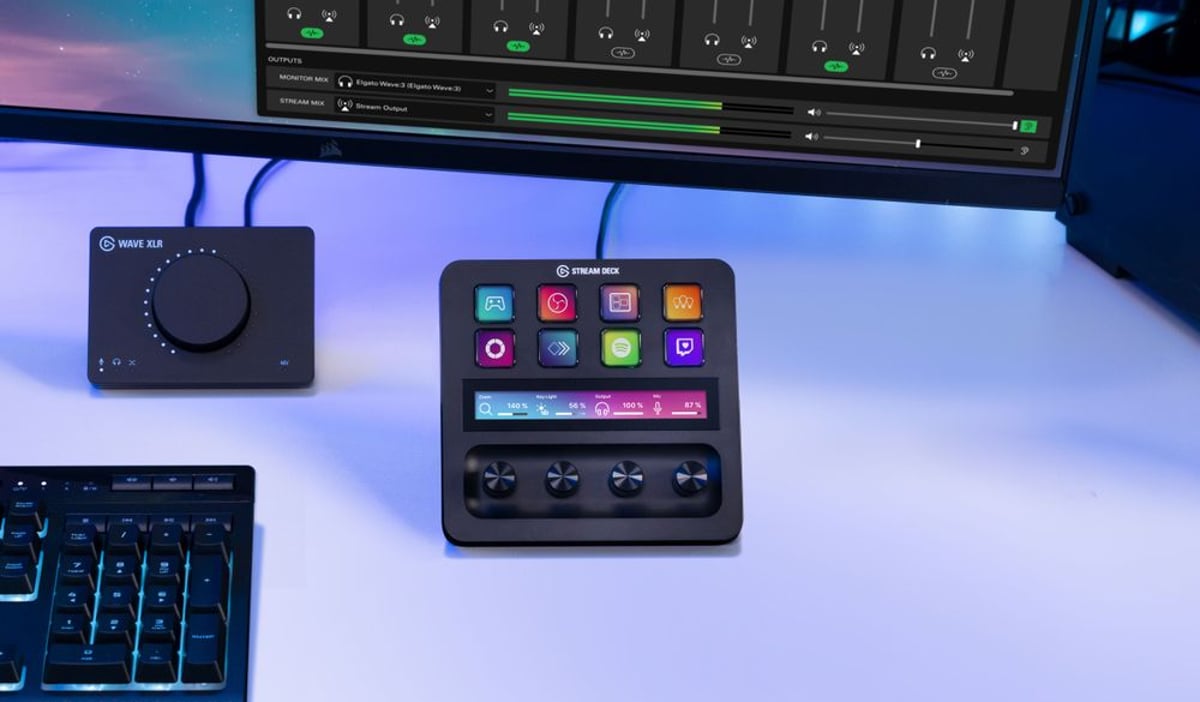
The Elgato Stream Deck Plus just hit its lowest price ever - $159.99 across Amazon, Best Buy, and B&H Photo. This represents a $40 discount from the standard $199.99 retail price, making the productivity controller an increasingly compelling option for streamers and content creators.
The Elgato Stream Deck Plus just hit its lowest price ever, and it's a significant moment for anyone looking to streamline their workflow without breaking the bank. Right now, the device is selling for $159.99 across Amazon, Best Buy, and B&H Photo - a solid $40 discount from the standard $199.99 retail price. This marks the first time the productivity controller has dropped to this price point since launch, making it genuinely worth reconsidering if you've been on the fence.
For those unfamiliar with the hardware, the Stream Deck Plus combines eight programmable buttons with four rotary dials and a touchscreen display. The dials are really the star here. Unlike traditional button-based systems that require multiple commands for simple tasks, a single dial lets you skip through a Spotify playlist, adjust volume, or cycle through functions using what Elgato calls "Dial Stacks" - a software feature that lets each physical dial handle multiple commands.
The device launched with some legitimate limitations though. The touchscreen couldn't trigger plugins directly, and the dials felt somewhat underutilized compared to the main buttons. But Elgato has quietly been improving the experience through software updates. The company released updates that let users assign up to three standard button or plugin actions to each dial. This single change transformed the device from a glorified premium button pad into something genuinely useful for power users and content creators who take their workflows seriously.
That distinction matters because the original launch felt incomplete. The hardware promised flexibility, but the software wasn't quite there yet. Streamers and content creators who bought at full price initially felt they were paying a premium for potential rather than a finished product. The gap between launch and now shows how companies can really improve hardware value through thoughtful software development.
At $159.99, the calculus changes entirely. You're getting a device that cost $200 just months ago, but with a software experience that's substantially better than what shipped initially. The touchscreen is particularly clever - it displays what each control is currently assigned to and lets you swipe between different profiles. So if you're switching between gaming, music production, and streaming, you can have completely different layouts ready to go instantly.
The competitive landscape matters here too. Nothing else at this price point really competes directly with the Stream Deck Plus. You could build something custom with a macro pad, but you'd spend more time configuring than actually creating content. Standard Stream Decks are cheaper at $99.99, but they lack the dials entirely. That's the real value proposition of the Plus model - those rotary dials actually save time in your workflow.
What's particularly interesting is why this price drop is happening now. Elgato's parent company Corsair has been consolidating its peripheral strategy, and the Stream Deck line is clearly important to their content creator portfolio. The price cut suggests they're confident in the product and want to drive adoption before the next generation potentially arrives. It's a smart move that signals confidence in what they've built.
The deal applies to the black version across all three retailers, which is the standard color everyone typically buys anyway. If you need other colors, you might find them at different prices elsewhere, but for the classic black model, $159.99 is genuinely the lowest you'll find.
For the target audience - streamers, podcast producers, video editors, and anyone who needs to trigger complex actions with minimal thought - this is worth seriously considering. The dials actually matter for workflow efficiency, and the latest software makes them genuinely useful rather than just a nice-to-have feature. The combination of recent software improvements and this historic price drop makes right now a pretty good time to jump in if you've been waiting.
At $159.99, the Stream Deck Plus represents solid value for content creators and power users who benefit from hardware-based workflow automation. The combination of eight programmable buttons, four genuinely useful rotary dials, and recent software improvements that expanded dial functionality makes this the best version of the device yet - and at its lowest price. Whether you're a streamer fine-tuning broadcast controls or a music producer adjusting multiple parameters simultaneously, the dials alone justify the Plus model over the standard Stream Deck. The question isn't really whether you need the Stream Deck Plus, but whether you can pass up this price.