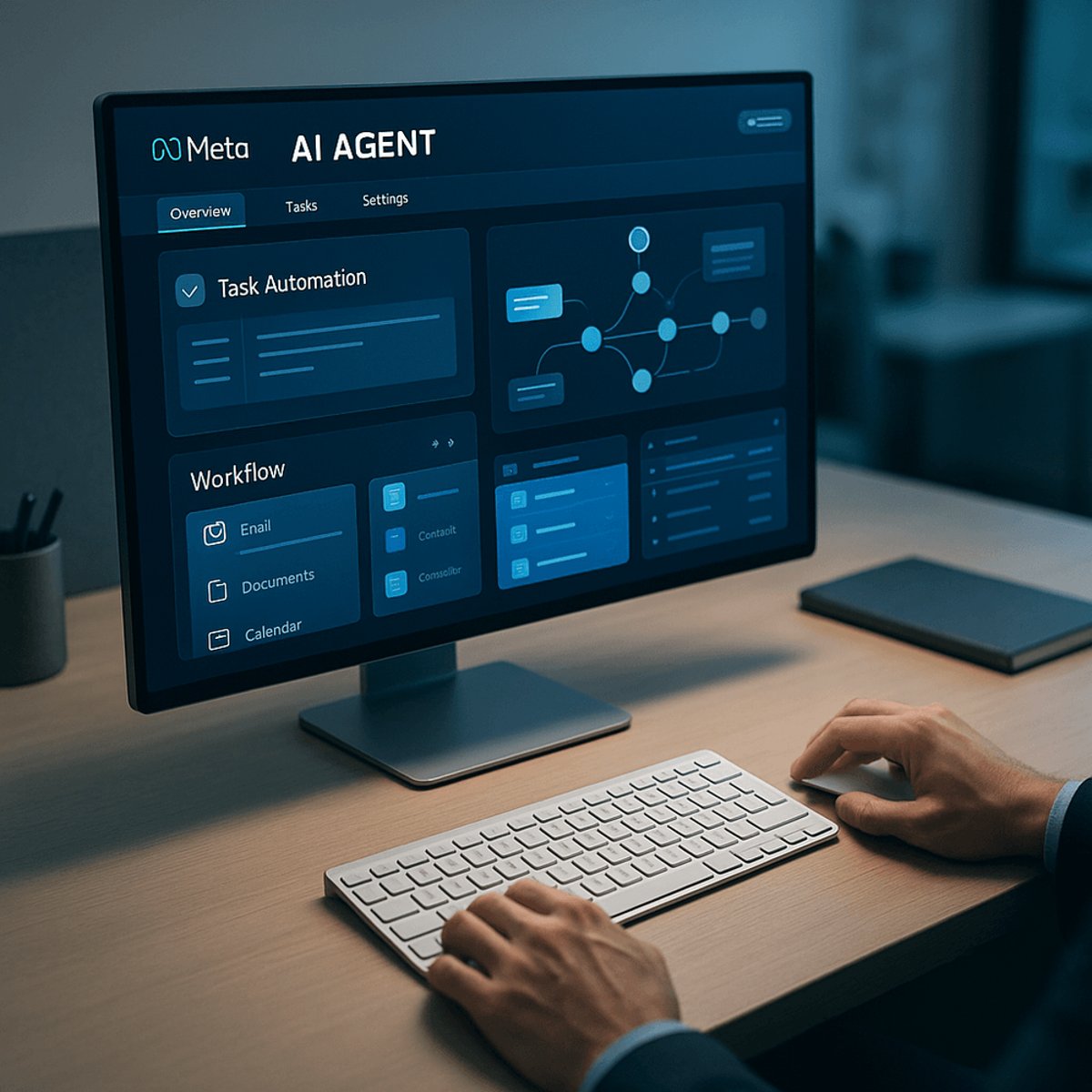
Meta just threw down the gauntlet in the AI agent wars. The company launched Manus, a new desktop application that plants its AI agent directly onto personal computers, marking Meta's aggressive push beyond mobile and web into the desktop battleground. The timing couldn't be more strategic - the move comes as the industry buzzes about OpenClaw and autonomous AI agents that can actually control your computer, not just chat with you.
Meta is betting big on AI agents living right on your desktop. The company announced Wednesday that Manus, its AI agent platform, is now available as a standalone desktop application - a strategic expansion that puts Meta in direct competition with the wave of autonomous AI tools flooding the market.
The desktop app represents a fundamental shift in how Meta thinks about AI deployment. Instead of keeping users tethered to browsers or mobile apps, Manus now sits directly on personal computers, giving it deeper system access and the potential for more sophisticated automation. It's the kind of move that signals Meta sees desktop AI agents as table stakes, not experimental features.
Timing matters here. The launch comes amid what industry insiders are calling the "OpenClaw moment" - a frenzy of interest in AI agents that can actually do things on your computer, not just answer questions. While OpenClaw itself has captured attention from players like Nvidia, Meta's rapid deployment of Manus suggests the company's been working on this longer than the current hype cycle.
The desktop battleground is heating up fast. OpenAI has been testing computer-controlling capabilities, Google continues expanding its AI assistant ecosystem, and Microsoft has deeply integrated Copilot into Windows. Meta's entry with a dedicated desktop app shows it won't cede this territory without a fight.
What makes desktop agents different from their chat-based predecessors is system-level access. A browser-based AI can help you draft emails or summarize documents. A desktop agent can potentially orchestrate workflows across multiple applications, manage files, and automate repetitive tasks - assuming it works as promised and users trust it with that level of access.
Meta's broader AI strategy has been aggressive bordering on chaotic. The company open-sourced its Llama models, integrated AI across Facebook and Instagram, and now is pushing into desktop territory with Manus. Each move telegraphs the same message: Meta refuses to be left behind in the AI race, even if it means launching products that overlap or compete with each other.
The competitive dynamics are fascinating. Unlike Meta's social platforms where network effects create moats, AI agents live or die on capability and trust. Users will quickly abandon an agent that breaks workflows or feels creepy. Desktop access amplifies both the utility and the risk - Manus needs to prove it's genuinely helpful without becoming invasive.
Industry analysts have been predicting the "agent era" for months, but real adoption has lagged hype. Most AI assistants still function as glorified chatbots. The companies that crack truly useful desktop automation will capture enormous value, which explains why Meta, Google, Microsoft, and OpenAI are all racing to ship desktop-native experiences.
The enterprise angle looms large too. Desktop AI agents that can handle routine tasks could reshape knowledge work - or at least that's the pitch to corporate buyers. Meta has been building out its enterprise AI offerings, and a desktop agent gives sales teams something tangible to demonstrate, rather than abstract API capabilities.
What remains unclear is what Manus actually does beyond existing on your desktop. The announcement provides few technical details about capabilities, system requirements, or privacy safeguards. That vagueness is either strategic - letting Meta iterate quickly based on feedback - or concerning, suggesting the product launched before it was truly ready.
Meta's Manus desktop launch is less about a single product and more about staking territory. The AI agent space is moving from hypothetical to real, and desktop deployment is where the real automation happens. Whether Manus becomes a genuine productivity tool or another abandoned Meta experiment depends entirely on execution - something the company has been inconsistent about with AI products. But the strategic bet is sound: whoever owns the most useful desktop AI agent owns a massive chunk of how people work. Meta clearly intends to fight for that prize, OpenClaw hype or not.