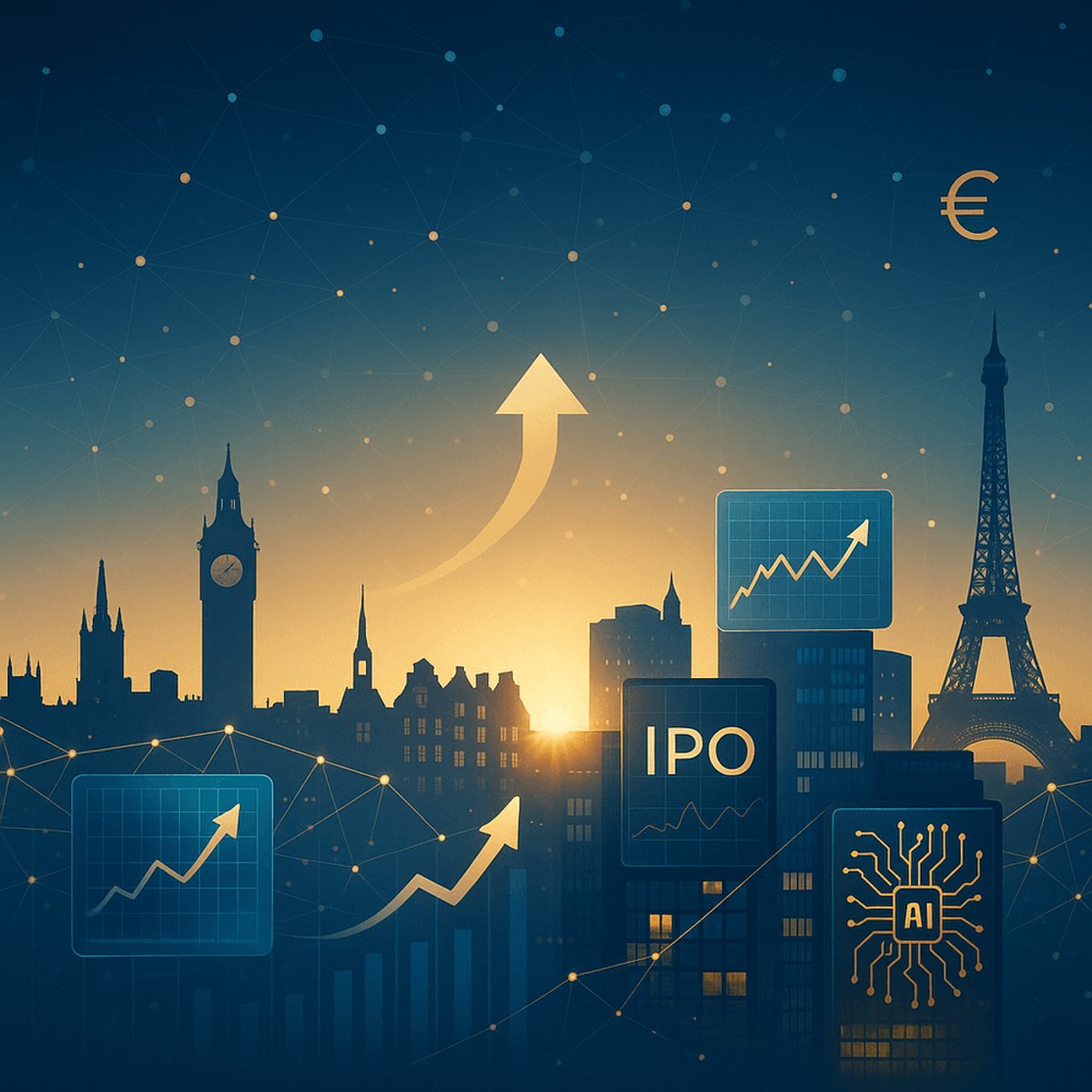
Europe's tech sector just delivered its biggest week in years. Klarna's explosive $17 billion NYSE debut Thursday capped a remarkable stretch that saw ElevenLabs double to $6.6 billion and ASML lead Mistral AI's massive $14 billion funding round. After years of Silicon Valley dominance, European tech is finally proving it can compete on the global stage.
The numbers tell an unambiguous story - Europe's tech sector is having its moment. Klarna's Thursday trading debut saw shares close at $45.82, giving the Swedish buy-now-pay-later pioneer a market cap exceeding $17 billion. The performance vindicated investors who'd watched the company's valuation plummet 85% from its $45.6 billion peak during the 2022 market downturn.
But Klarna's IPO was just the crescendo in a week that redefined European tech ambitions. On Tuesday, London-based AI voice startup ElevenLabs announced a secondary share sale doubling its valuation to $6.6 billion. Then Wednesday brought the biggest surprise - Dutch semiconductor giant ASML confirmed it was leading French AI company Mistral's €1.7 billion Series C funding round.
The Mistral deal particularly caught Silicon Valley's attention. The company's valuation jumped to €11.7 billion ($13.7 billion) from €5.8 billion just last year, positioning it as a legitimate competitor to OpenAI and Anthropic. "Right now, the confluence of a huge new technological opportunity in the form of generative AI, as well as a community that has done it before and has access to the capital required, is, unsurprisingly, yielding a huge number of sector-defining companies," Suranga Chandratillake, partner at Balderton Capital, told CNBC.
The timing couldn't be more strategic. While U.S. tech megacaps combined are worth over $20 trillion according to recent analysis, venture firm Atomico pegged Europe's entire tech ecosystem at just $3 trillion in its latest "State of European Tech" report. The firm predicts that figure will reach $8 trillion by 2034, suggesting massive upside for early investors.
"Ten years ago, there wasn't a single European startup valued at over $50 billion; today, there are several," Jan Hammer, partner at Index Ventures, told CNBC. Index has backed European success stories including Revolut and payments processor Adyen.
The broader geopolitical landscape is also shifting capital flows toward Europe. Amy Nauikoas, founder and CEO of fintech investor Anthemis, suggested investors view Europe as a safe haven amid President Trump's trade tensions and macroeconomic uncertainty. "Macroeconomic dislocation always favors early-stage entrepreneurial disruption and innovation," she explained to CNBC.
Yet structural challenges persist. The European market remains highly fragmented, with regulations varying significantly between countries. Startup investors continue pushing for greater pension fund allocation to venture capital, while entrepreneurs back the "EU Inc" initiative - a proposed pan-European legal framework to streamline the complex regulatory patchwork across EU member states.
"There's really nothing that stops European tech companies to scale, to become huge," Niklas Zennström, CEO and founding partner of Klarna investor Atomico, told CNBC. "However, there's some conditions that make it harder. We still don't have a single market."
The recent success stories suggest those barriers may be cracking. "Crucially, European startups are no longer simply expanding abroad - they are born global from day one," Hammer noted. Companies like Mistral, Revolut, and now public Klarna have demonstrated that European founders can build globally competitive platforms from the start.
Europe's tech awakening isn't just about individual company success - it represents a fundamental shift in global innovation patterns. With AI creating new opportunities, experienced entrepreneurs leading the charge, and investors seeking alternatives to overvalued U.S. markets, European tech finally has the ingredients for sustained growth. The real test won't be whether companies like Klarna and Mistral can maintain their momentum, but whether Europe can address its structural challenges quickly enough to capitalize on this historic opportunity.