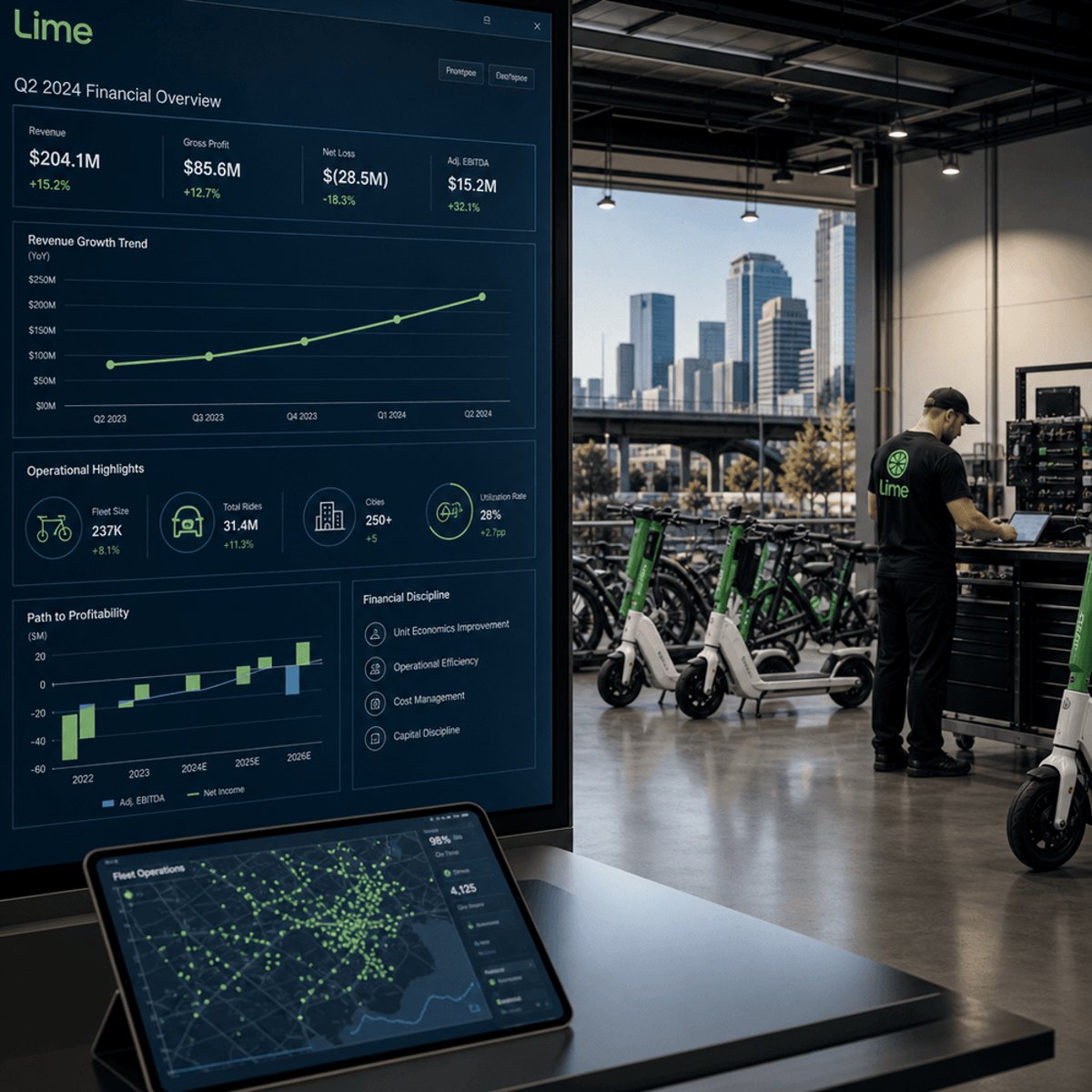
Lime, the nine-year-old scooter and bike-share company that dominated city streets during the micromobility boom, has finally pulled the trigger on its long-teased public debut. The company raised $167 million in its IPO, a move driven less by growth ambitions and more by financial necessity - Lime needs the cash to chip away at roughly $1 billion in liabilities that have been weighing down its balance sheet. After years of hints and delays, the public market debut marks a pivotal moment for a company that once symbolized urban transportation's future but now faces the hard realities of unit economics.
Lime just became a public company, but don't expect champagne and confetti. The micromobility pioneer raised $167 million in its initial public offering, a figure that tells you everything about where the scooter industry stands in 2026. This isn't a victory lap - it's a financial lifeline.
The San Francisco-based company has been transparent about why it needs the money. With approximately $1 billion in liabilities on its books, Lime is essentially using its public debut to clean up its balance sheet rather than fuel aggressive expansion. That's a far cry from the heady days of 2018 and 2019, when scooter startups were raising nine-figure rounds at multi-billion dollar valuations and flooding city streets with electric vehicles.
Lime's journey to public markets has been anything but smooth. The company first started hinting at an IPO back in 2021, riding the wave of enthusiasm that saw rival Bird merge with a special purpose acquisition company. But Bird's subsequent collapse - the company filed for bankruptcy in 2023 and was delisted - served as a cautionary tale that likely kept Lime on the sidelines longer than planned. Investors who got burned watching Bird's stock crater from its $2.3 billion SPAC valuation to penny stock status weren't exactly clamoring for another micromobility bet.
The $167 million raise is modest by tech IPO standards, especially for a company that's been operating for nearly a decade. For context, Lime has raised over $1 billion in venture capital funding since its 2017 launch, backed by heavyweights including Uber, Alphabet, and Bain Capital. The company's previous private valuations reportedly topped $2 billion, making this public debut feel more like a reset than a triumph.
What changed? The micromobility market has matured dramatically. Cities that once welcomed scooters with open arms have implemented strict regulations, caps on fleet sizes, and expensive permit requirements. The unit economics that seemed promising when rides cost $1 to unlock have proven brutal in practice. Scooters get vandalized, stolen, and damaged. They require constant recharging, rebalancing, and maintenance. And the gross margins just aren't there to support the infrastructure costs.
Lime has tried to adapt. The company has shifted focus to fewer, more profitable markets rather than the land-grab strategy of its early years. It's invested in more durable hardware, including swappable batteries that reduce operational costs. And unlike Bird, Lime has maintained partnerships rather than burned bridges - its ongoing relationship with Uber, which integrated Lime's vehicles into its app, provides crucial distribution.
But the liability burden tells the real story. That $1 billion figure likely includes everything from outstanding vendor payments to legal settlements to financial obligations from market exits. When you're racing to deploy thousands of scooters across dozens of cities, you rack up debts fast. And when the music stops, someone has to pay the bill.
The timing of this IPO is telling. Public market conditions for tech companies have stabilized after the turbulence of 2022 and 2023, but they're hardly euphoric. Lime is essentially testing whether there's any appetite left for micromobility stories among public investors. The modest raise suggests the company and its bankers kept expectations realistic.
For Lime's backers, this IPO represents a chance to finally see some liquidity after years of being locked into a private company that couldn't seem to find its exit. For Lime itself, going public means increased scrutiny, quarterly earnings pressure, and the need to show a path to consistent profitability - not just growth.
The broader micromobility sector will be watching closely. Companies like Spin and Voi are still operating in various markets, but the venture capital that once flowed freely into electric scooters has largely dried up. If Lime can successfully navigate public markets and demonstrate sustainable economics, it might revive interest in the category. If it struggles, it could mark the final chapter in micromobility's transformation from world-changing disruption to niche transportation option.
Lime's $167 million IPO isn't the triumph the company probably imagined when it first started talking about going public five years ago. It's a pragmatic move to address financial realities and give investors an exit. The real test starts now - whether Lime can prove that micromobility can work as a public company business, not just a venture-backed experiment. With $1 billion in liabilities to work through and a skeptical public market to convince, Lime's journey is just beginning. The company that helped kick off the scooter revolution now has to show it can survive in a world where the hype has faded and the numbers have to actually work.