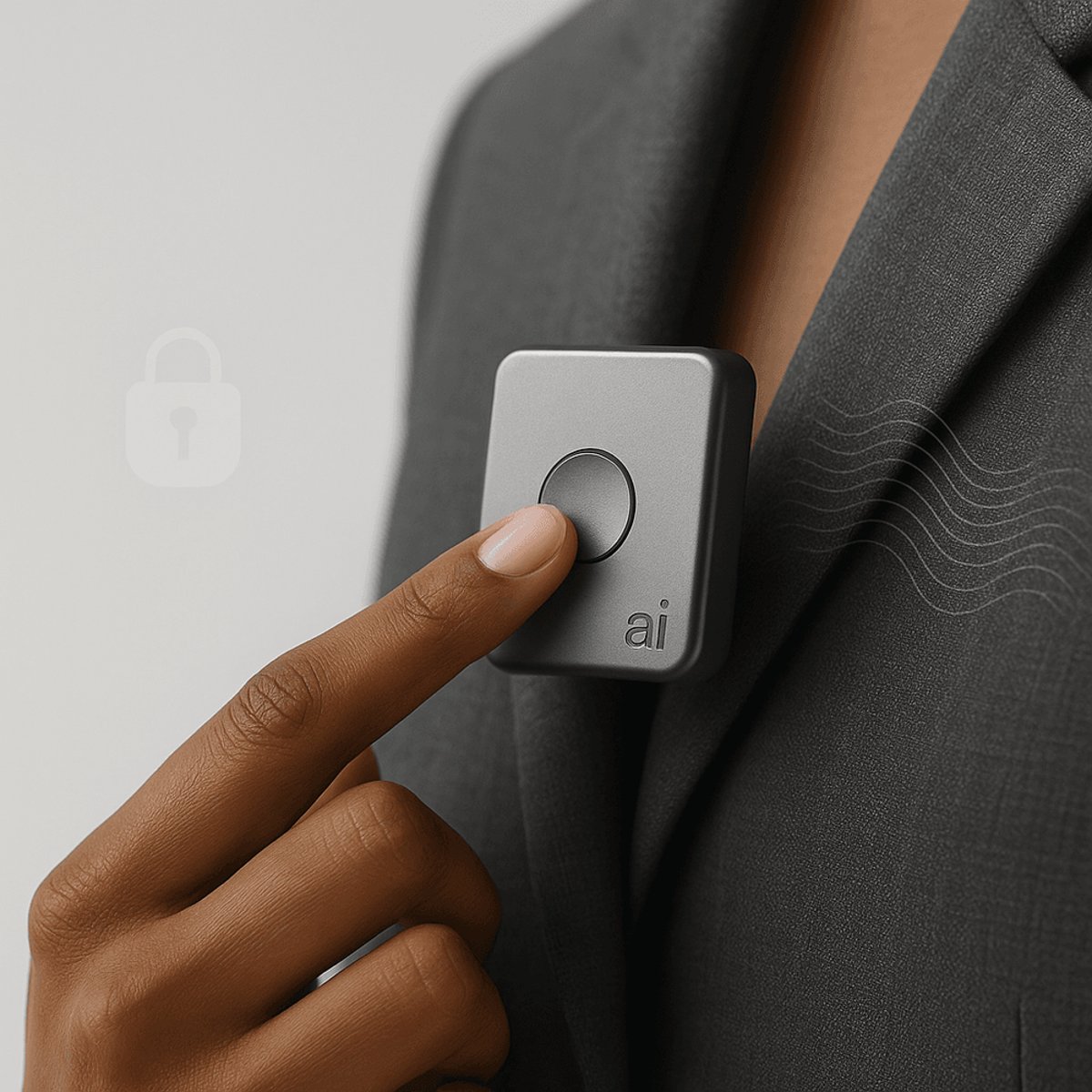
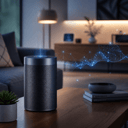
Two former Apple Vision Pro engineers just unveiled an AI wearable that only listens when you want it to. The device, which resembles the iconic iPod Shuffle in form factor, activates only when tapped - a direct response to mounting privacy concerns that have plagued always-on AI gadgets from Humane and Rabbit. It's a calculated bet that consumers want AI assistance without the constant surveillance, and the timing couldn't be better as the AI wearable market searches for its breakthrough moment.
The AI wearable space just got its first serious answer to the privacy problem. Two engineers who worked on Apple's Vision Pro headset have launched a device that fundamentally rethinks how we interact with ambient AI - by making it decidedly non-ambient.
The wearable, which borrows its minimalist design language from Apple's discontinued iPod Shuffle, represents a sharp pivot from the always-listening approach that defined 2024's first wave of AI hardware. While Humane's $699 AI Pin and Rabbit's R1 device both suffered from privacy backlash and tepid adoption, this new entry requires a physical tap to activate its microphone.
That's not just a feature - it's the entire thesis. The founding team believes the fatal flaw in previous AI wearables wasn't the technology but the trust deficit. When your device is perpetually listening, even the promise of local processing can't overcome consumer unease. The tap-to-activate mechanism creates a literal air gap between surveillance and utility.
The Apple pedigree matters here. Vision Pro development required solving complex problems around spatial computing and user privacy in intimate contexts - skills that translate directly to wearable AI. These engineers watched firsthand how Apple balanced powerful sensors with privacy controls, implementing features like the external EyeSight display to signal when the headset was recording.
That experience shows in the industrial design. The iPod Shuffle form factor isn't nostalgia bait - it's strategic. The device is small enough to clip onto clothing, familiar enough to feel unthreatening, and simple enough that the interaction model is immediately obvious. No screens, no cameras, just a button and a microphone that only wakes when you want it to.
The competitive landscape makes this positioning smart. Humane raised over $200 million but has struggled with returns and lukewarm reviews focused on privacy concerns and limited functionality. Meta's Ray-Ban smart glasses faced similar scrutiny despite stronger sales. Even Amazon's Alexa-enabled wearables never escaped the echo chamber of existing Alexa users.
What sets this device apart is its acknowledgment that AI assistance doesn't require constant monitoring. The tap interaction creates what the founders call "intentional AI" - you summon the intelligence when needed, then it disappears. It's the opposite of the ambient computing vision that Google and others have pushed, but it might be exactly what the market wants.
The technology underneath remains relatively standard - cloud-connected AI models, voice recognition, natural language processing. But the hardware interface transforms the experience. Instead of wondering if your device is listening, you know exactly when it's active. That certainty could be the unlock that moves AI wearables from early adopter curiosity to mainstream consideration.
Timing favors the launch too. OpenAI's GPT-4 and competing models have matured enough that voice AI actually works reliably. The infrastructure exists. What's been missing is a form factor that people trust enough to wear daily. Apple's own rumored AI initiatives, expected to feature heavily in upcoming iOS updates, will likely boost the entire category's credibility.
The startup hasn't disclosed funding details or manufacturing partners, but the Apple connection suggests access to supply chain relationships and potential investor interest. Consumer hardware is brutally difficult - even Apple reportedly scaled back its car ambitions - but a focused, privacy-first AI wearable occupies a different risk profile than trying to compete across the full gadget spectrum.
What remains to be seen is whether intentional AI can deliver enough utility to justify carrying another device. The always-on competitors failed partly due to privacy, but also because they couldn't prove indispensable. A tap-to-activate assistant needs to be so useful that reaching for it becomes habitual, not occasional.
The real test for this device won't be technical specs or AI capabilities - it'll be whether privacy-conscious design can coexist with genuine utility. If these ex-Apple engineers are right, the future of AI wearables isn't about disappearing into the background but about being there exactly when summoned and silent the rest of the time. That's a fundamentally different vision than what the industry has been building toward, and if it works, it could redefine how we think about personal AI entirely. The question now is whether consumers who've been burned by overpromised AI gadgets are ready to give the category another chance.