Eyebot just closed a $20 million Series A led by General Catalyst to expand its revolutionary 90-second vision test kiosks nationwide. The Boston startup has already conducted over 45,000 free vision tests since its seed round, proving that consumers will trust AI-powered healthcare when backed by real doctors. This funding validates a new model for accessible healthcare that could reshape how Americans get their glasses prescriptions.
Eyebot just proved that healthcare disruption works when you combine speed with medical credibility. The Boston-based startup closed a $20 million Series A round led by General Catalyst to scale its 90-second vision test kiosks across the country, marking a pivotal moment for accessible eye care technology.
The funding comes just over a year after Eyebot raised its $6 million seed round, and the growth metrics tell a compelling story. The company has conducted more than 45,000 free vision tests and projects delivering over half a million annually. That trajectory caught the attention of returning investors AlleyCorp, Baukunst, Village Global, Humba Venture, Ravelin, and Ubiquity Ventures, who all participated in this latest round.
"Since our seed round, the shift has been dramatic. We've gone from piloting to partnering with some of the largest companies in the U.S., launching kiosks all over the country, and delivering tens of thousands of vision tests," CEO Matthias Hofmann told TechCrunch. The company's revenue is scaling and its team has doubled in size as retailers embrace the foot traffic these kiosks generate.
What makes Eyebot's approach work is its hybrid model that addresses the core tension in healthcare automation. Every 90-second test generates a prescription that gets reviewed and approved by licensed eye doctors, many with over a decade of experience. When results indicate anything unusual, patients receive referrals for comprehensive in-person exams. This clinical oversight has been crucial for earning trust from both consumers and traditional eye care providers.
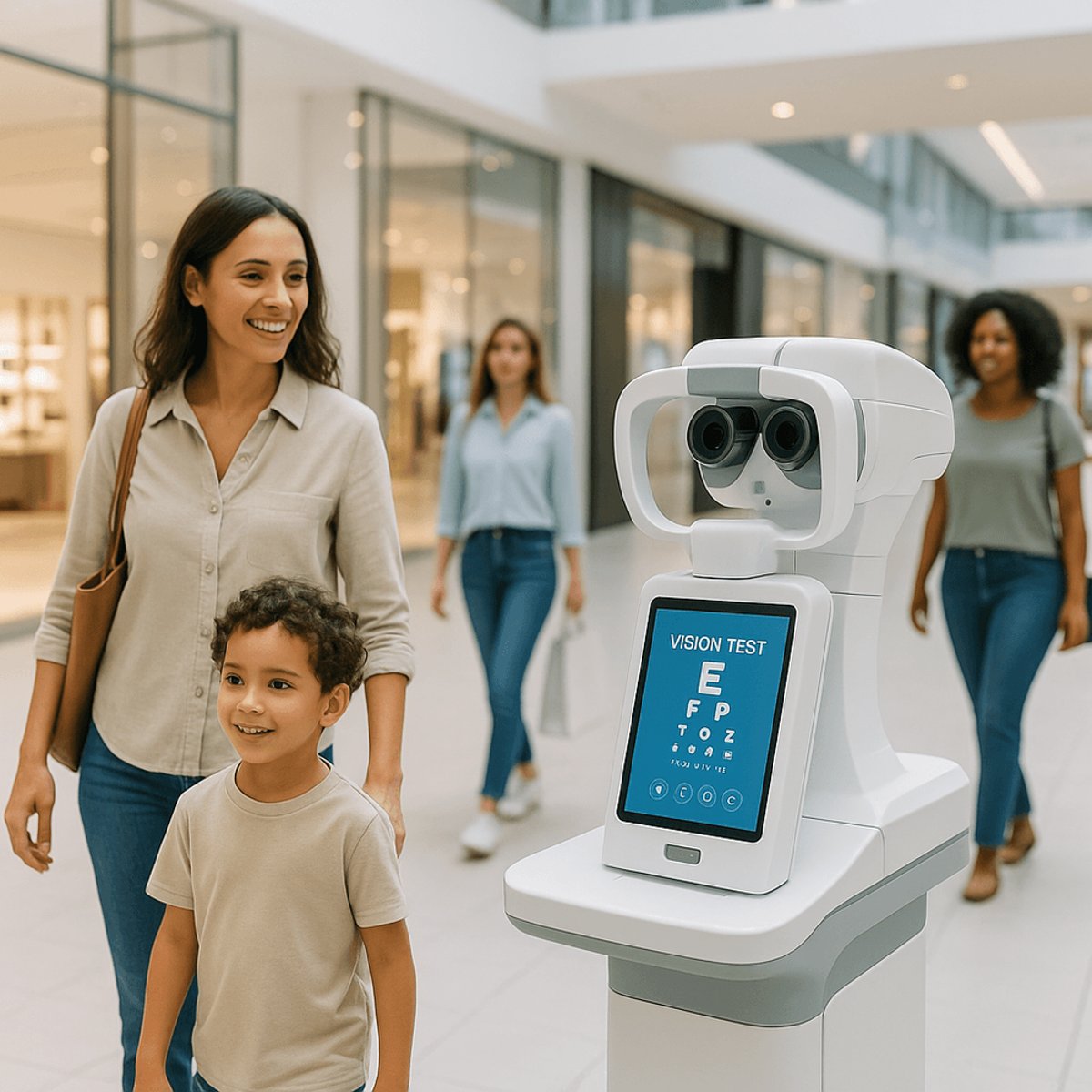
The kiosk placement strategy reveals sophisticated retail partnerships. Eyebot has deployed units in malls, universities, retail stores, pharmacies, grocery chains, schools, and airports—locations where people already spend time. "At our mall locations, we've seen surprising uptake from parents with kids," Hofmann explained. "They'll stop between stores, try Eyebot — sometimes even while holding their kids' hands — and leave with a prescription in just a couple of minutes."
Initial skepticism from traditional eye care providers ran deep, with doctors questioning accuracy and patients doubting whether such a fast process could be reliable. But that resistance has softened as the medical community recognized the doctor oversight component. The startup's business model addresses multiple stakeholders: consumers get free vision tests, doctors earn fees for prescription verification, and retailers lease kiosks while benefiting from increased foot traffic.
The timing couldn't be better for healthcare accessibility solutions. Traditional eye care faces significant barriers including appointment delays, limited accessibility, complex insurance requirements, and high costs. Eyebot eliminates these friction points while maintaining clinical standards, creating a scalable model that works for consumers, providers, and retail partners.
With total funding now exceeding $30 million, the company plans aggressive expansion across product development, clinical operations, and commercial growth. The Series A validates that investors see massive opportunity in reimagining healthcare delivery through strategic retail partnerships and AI-assisted diagnostics backed by human expertise.
This funding round positions Eyebot to capture significant market share as consumers increasingly expect convenient, technology-enabled healthcare experiences. The company's proven ability to conduct tens of thousands of tests while maintaining clinical oversight suggests this model could extend beyond vision care into other routine healthcare services.
Eyebot's Series A success signals that healthcare disruption works when technology enhances rather than replaces human expertise. By combining AI-powered diagnostics with doctor oversight and strategic retail placement, the company has created a scalable model that addresses real consumer pain points while maintaining clinical standards. As the company scales toward half a million annual tests, it's proving that accessible healthcare innovation can simultaneously serve patients, providers, and retail partners—a formula that could reshape how Americans access routine medical services beyond just vision care.