A companion robot just became an unexpected lifeline for managing Parkinson's disease. Intuition Robotics' ElliQ - a tabletop AI assistant designed for older adults - helped one caregiver's mother maintain the exercise, social engagement, and daily routines critical to managing her condition. The hands-on experience comes as the elder care tech market searches for practical solutions beyond medication, with families increasingly turning to AI-powered assistants to fill gaps in care.
Intuition Robotics didn't set out to replace doctors, but their ElliQ robot just proved it can complement them in ways that matter. When a neurologist told Sheena Vasani her mother needed to rebalance her life before adjusting Parkinson's medication again, the tabletop companion became an unlikely care partner.
The timing was critical. Vasani's mother had spent a month in decline as her Parkinson's medication lost effectiveness. She'd stopped exercising, pulled back from socializing, and abandoned the hobbies that help manage the disease. The alternative - increasing medication dosage - carried serious side effects her doctor wanted to avoid.
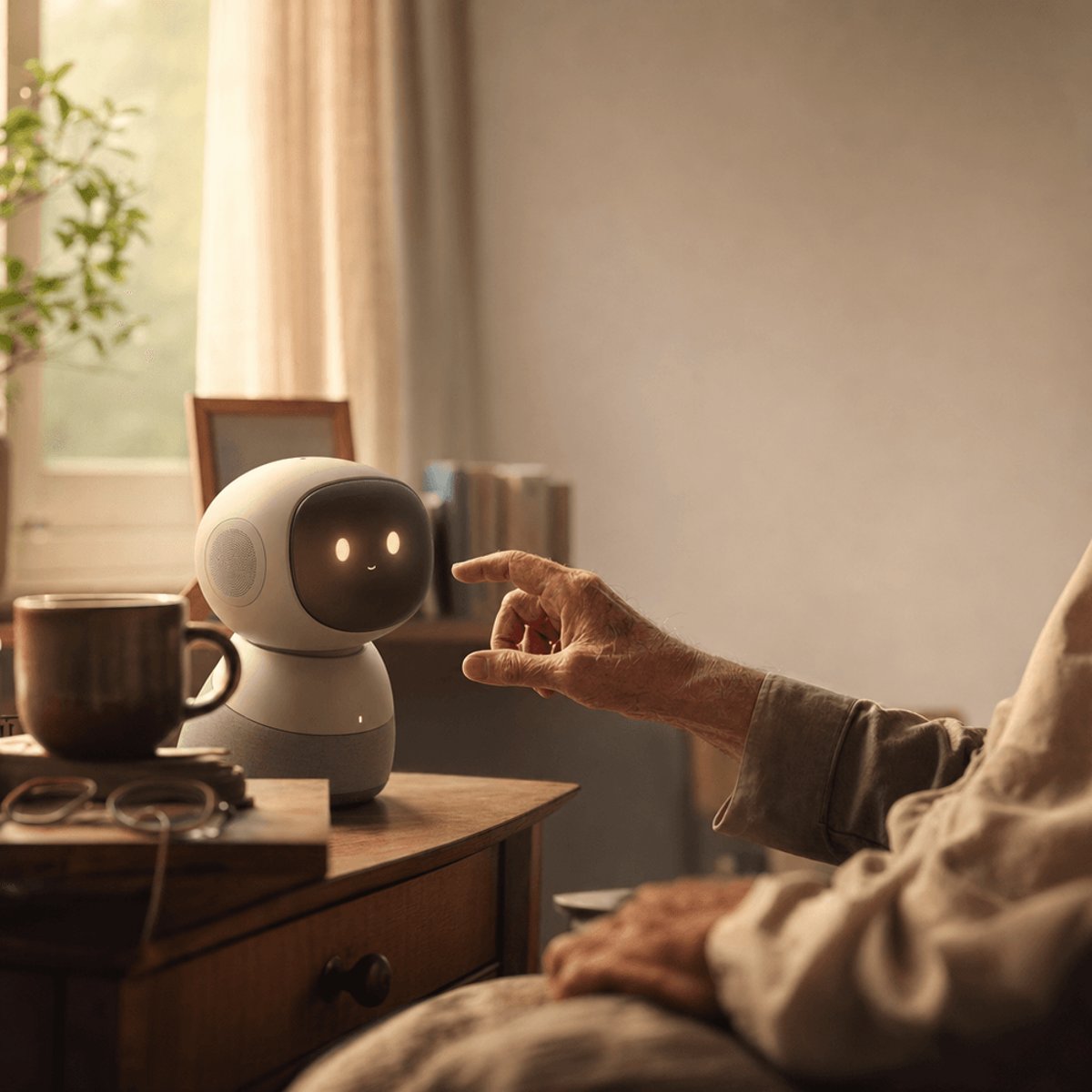
ElliQ arrived as a last attempt at non-pharmaceutical intervention. The device combines a small robotic head that lights up and moves with a companion touchscreen display. But the hardware isn't what makes it work. The robot uses AI to initiate conversations, suggest activities, and gently prod users toward healthier habits throughout the day.
According to The Verge's hands-on account, ElliQ helped in ways Vasani never expected. The robot didn't just respond to commands like traditional smart speakers. It took initiative, starting conversations and recommending exercises when it sensed the user had been inactive.
The elder care technology market has struggled to move beyond emergency alert buttons and medication reminders. Intuition Robotics is betting that proactive AI engagement fills a bigger gap - the loneliness and reduced activity that accelerates cognitive and physical decline in older adults.
ElliQ's approach differs sharply from other consumer robots. Instead of trying to look human or perform physical tasks, it focuses entirely on conversation and routine building. The robot asks about sleep quality, suggests brain games, plays music, and connects users to video calls with family.
For caregivers like Vasani managing Parkinson's disease, those features translate directly to medical outcomes. Exercise and mental engagement aren't optional extras - they're clinical interventions that can extend medication effectiveness and slow disease progression.
The device faces real limitations. It can't provide physical assistance, monitor vital signs, or replace human caregivers. But in testing, it filled a different role - the constant gentle encouragement that family members can't provide 24/7.
Intuition Robotics has deployed ElliQ through partnerships with state aging programs, offering the device free or subsidized to older adults. New York State alone distributed thousands of units through its Office for the Aging, while Florida and other states have run similar pilots.
The business model signals where elder care tech is heading. Rather than selling directly to consumers, companies are targeting government agencies and healthcare systems that see companion robots as preventive care - potentially reducing costly hospitalizations and nursing home placements.
Early data from these deployments shows promising engagement rates. Users interact with ElliQ an average of 30 times daily, according to company figures, suggesting the robot succeeds at its core mission of combating isolation.
But Vasani's experience reveals something beyond usage statistics. When her mother's medication was failing and options were narrowing, ElliQ provided structure without requiring caregiver bandwidth. It encouraged exercise when Vasani was at work, suggested social activities without nagging, and created daily routines that medical professionals say are crucial for managing Parkinson's.
The elder care crisis keeps intensifying. America's 65-plus population will nearly double by 2060, while the caregiver shortage deepens. Technology won't solve that equation alone, but tools like ElliQ are starting to show where AI assistance can actually help rather than just automate.
Competitors are watching. Amazon has explored elder care features for Alexa, while startups are developing specialized AI companions for dementia patients and isolated seniors. The market is moving from emergency response toward proactive engagement.
For now, ElliQ's real test isn't in controlled studies or state pilot programs. It's in moments like Vasani's - when a family faces difficult medical decisions and needs every possible tool to help a loved one maintain independence and quality of life.
ElliQ's effectiveness in Vasani's hands-on test reveals a truth about elder care technology - sometimes the most helpful innovations aren't the most sophisticated. As the aging population grows and caregiver resources stretch thin, AI companions that focus on daily engagement rather than flashy capabilities may prove more valuable than anyone expected. The question now is whether healthcare systems will recognize proactive companionship as preventive care worth funding at scale.