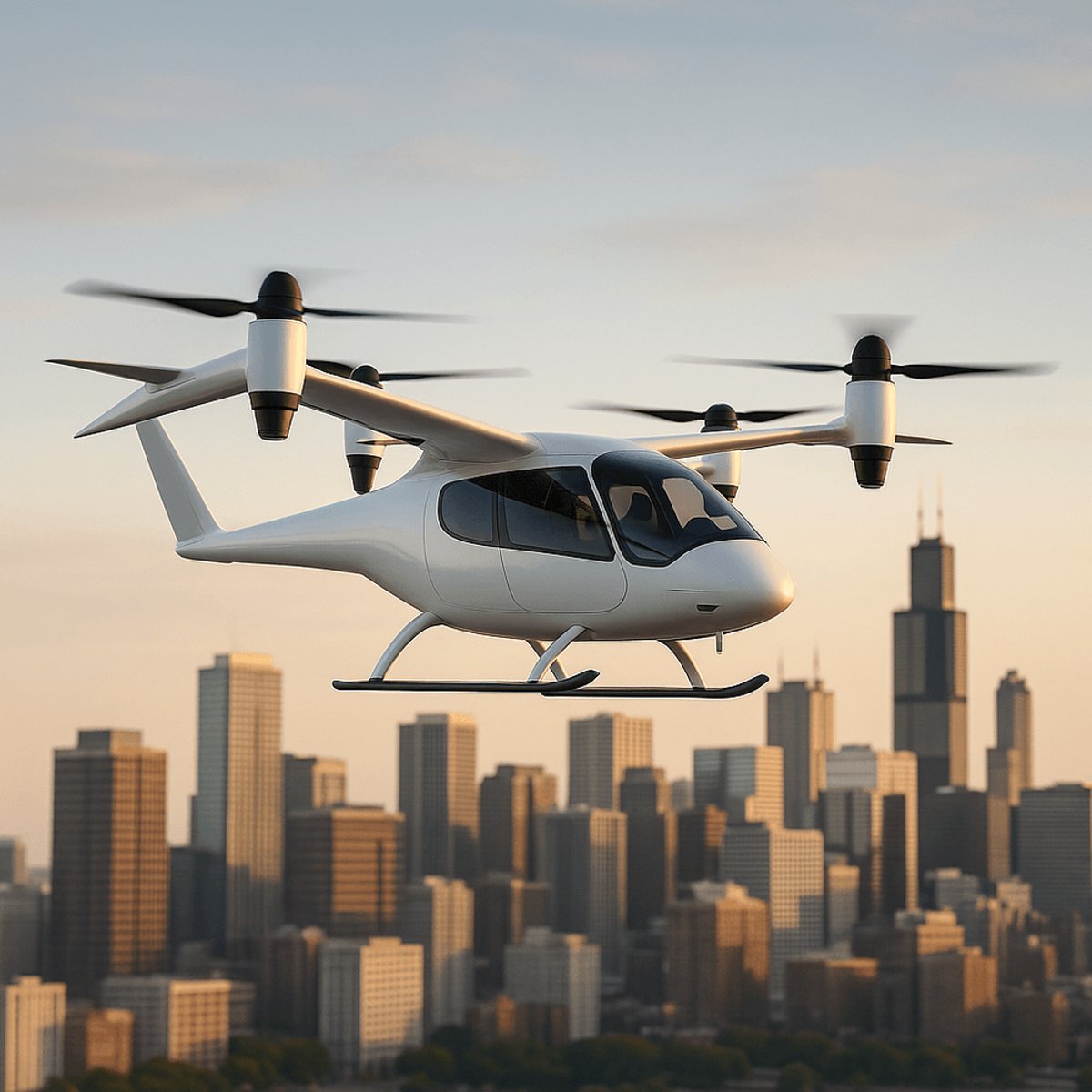
The flying car revolution just got its biggest regulatory green light yet. The Federal Aviation Administration launched a pilot program Friday that could put Joby Aviation and Archer Aviation air taxis in US skies within months, marking a pivotal moment for the $17 billion eVTOL industry.
The Federal Aviation Administration just handed the air taxi industry its most significant regulatory breakthrough. Friday's announcement of a new pilot program puts Joby Aviation and Archer Aviation on track to launch supervised commercial trials across the US, potentially within the next 12 months.
Both companies saw their shares climb Friday as investors digested the implications. Joby jumped 8% while Archer gained 12% in afternoon trading, reflecting Wall Street's confidence that regulatory approval - long the industry's biggest hurdle - is finally within reach.
The program will establish at least five demonstration projects through public-private partnerships with state and local governments. "The next great technological revolution in aviation is here," Transportation Secretary Sean Duffy said in the official release. "The United States will lead the way, and doing so will cement America's status as a global leader in transportation innovation."
This isn't just regulatory theater. Archer says supervised trials could begin in the US as soon as next year, ahead of full FAA certification. Joby is set to begin FAA flight testing early next year. Both timelines represent significant acceleration from previous estimates that pushed commercial operations into the late 2020s.
The announcement comes two months after President Trump's executive order specifically called for the creation of an eVTOL pilot program to foster safe development in the US. The timing signals the administration's commitment to beating China and Europe in the race to deploy urban air mobility at scale.
Joby called the program a "critical step" toward widespread air taxi service. Archer CEO Adam Goldstein went further, dubbing it a "landmark moment" that allows the company to work with partners like United Airlines to trial aircraft in real-world conditions.
"These early flights will help cement American leadership in advanced aviation and set the stage for scaled commercial operations in the US and beyond," Goldstein wrote in a company statement.
The regulatory breakthrough comes as both companies have been building operational experience overseas. Joby completed its first international commercial flight in Dubai earlier this year, while Archer has been conducting trials in the UAE. These Middle East partnerships have provided crucial flight data and operational insights that should smooth the path to US approval.
For an industry that's raised billions on the promise of transforming urban transportation, Friday's announcement represents validation that the technology is finally ready for prime time. Proponents have long touted eVTOLs as a solution to traffic congestion and emissions, but skeptics questioned whether the aircraft could meet safety standards strict enough for passenger service.
The pilot program structure suggests the FAA is taking a measured approach, allowing companies to demonstrate safety and viability in controlled environments before opening the floodgates to commercial operations. This gradual rollout mirrors how regulators approached autonomous vehicles, starting with limited trials before expanding to broader deployment.
The FAA's pilot program marks a turning point for an industry that's spent years navigating regulatory uncertainty. With supervised trials potentially starting within months, Joby and Archer are positioning themselves at the forefront of what could become a massive new transportation category. The real test now is whether these electric aircraft can deliver on their promises of safety, reliability, and cost-effectiveness in real-world urban environments.