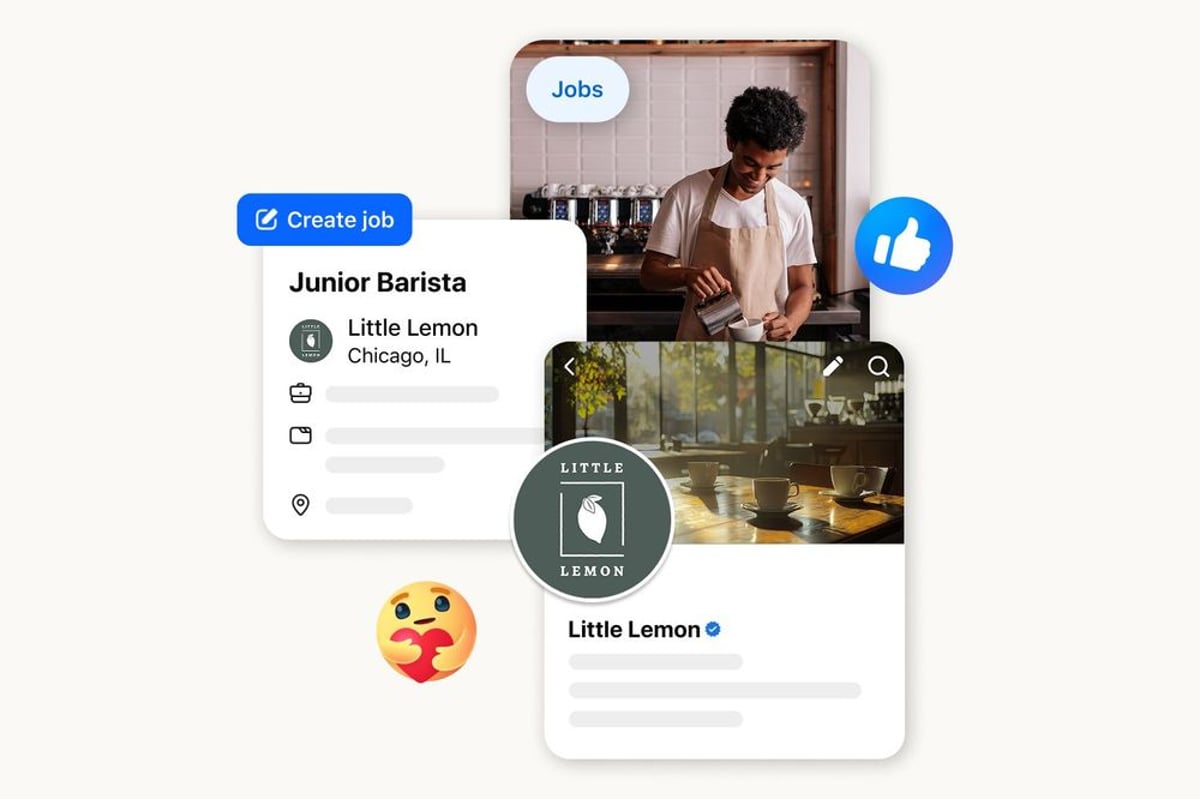
Meta is bringing job listings back to Facebook after shutting down the feature in 2023. The revived jobs tab in Marketplace focuses on local entry-level, service, and trade work, marking the third attempt at this feature since 2017. It's available now in the US only, integrated with Facebook's existing community groups infrastructure.
Meta just pulled out the "third time's the charm" playbook. The company quietly relaunched job listings on Facebook this week, marking yet another attempt to crack the local hiring market that has eluded the social giant for years.
The new jobs tab sits inside Facebook Marketplace, targeting what Meta calls local "entry-level, service, and trade work." Think restaurant server positions, retail gigs, and skilled trades - the kind of jobs that still get posted on community bulletin boards and Facebook groups anyway.
But this isn't Meta's first rodeo with job listings. The company first launched the feature in 2017 in the US and Canada, positioning it as a direct challenge to LinkedIn. By 2018, Facebook had expanded to over 40 countries, riding high on dreams of disrupting professional networking.
That optimism didn't last. The feature faced serious headwinds when job advertisers used Facebook's targeting tools to exclude groups based on gender and religious background from seeing listings. The practice violated employment discrimination laws and landed Facebook in hot water with civil rights groups.
By 2022, Meta had quietly scaled back to just the US and Canada. Then in 2023, the company pulled the plug entirely, citing low adoption and regulatory complexity.
So what's different this time? The new approach feels more grassroots. Instead of trying to compete with LinkedIn for white-collar positions, Facebook is targeting the local gig economy where its community groups already thrive. Job listings can appear in relevant Facebook groups, and business pages can post their own openings directly.
The feature comes with stricter guardrails too. All listings must comply with Facebook's discrimination policy, and certain categories are banned outright - no adult services, drugs, or interestingly, in-person childcare. That last restriction seems odd given how many local Facebook groups exist specifically for finding nannies and babysitters.
Early adoption in Seattle suggests the feature is being used exactly as Meta intended - like a digital "Help Wanted" sign for local businesses. The integration with Marketplace makes sense given Facebook's success in local commerce, where it competes directly with Craigslist and Nextdoor.
The US-only launch suggests Meta is being cautious this time around. International expansion brings regulatory complexity, especially around employment law and data privacy. The company likely wants to prove the model works domestically before dealing with compliance across dozens of countries.
For job seekers, the feature offers another channel beyond traditional job boards like Indeed and Monster. But for Meta, it represents something bigger - another way to keep users engaged within its ecosystem instead of jumping to specialized platforms.
Facebook's job listings comeback reflects Meta's broader strategy of keeping users within its ecosystem for as many activities as possible. The focus on local, entry-level positions plays to Facebook's community strengths while avoiding the LinkedIn competition that proved challenging before. Success will depend on whether small businesses actually adopt the feature and whether Meta can avoid the discrimination issues that plagued the previous version. With gig work continuing to grow and local hiring remaining a challenge for small businesses, the timing might finally be right for Facebook to crack this market.