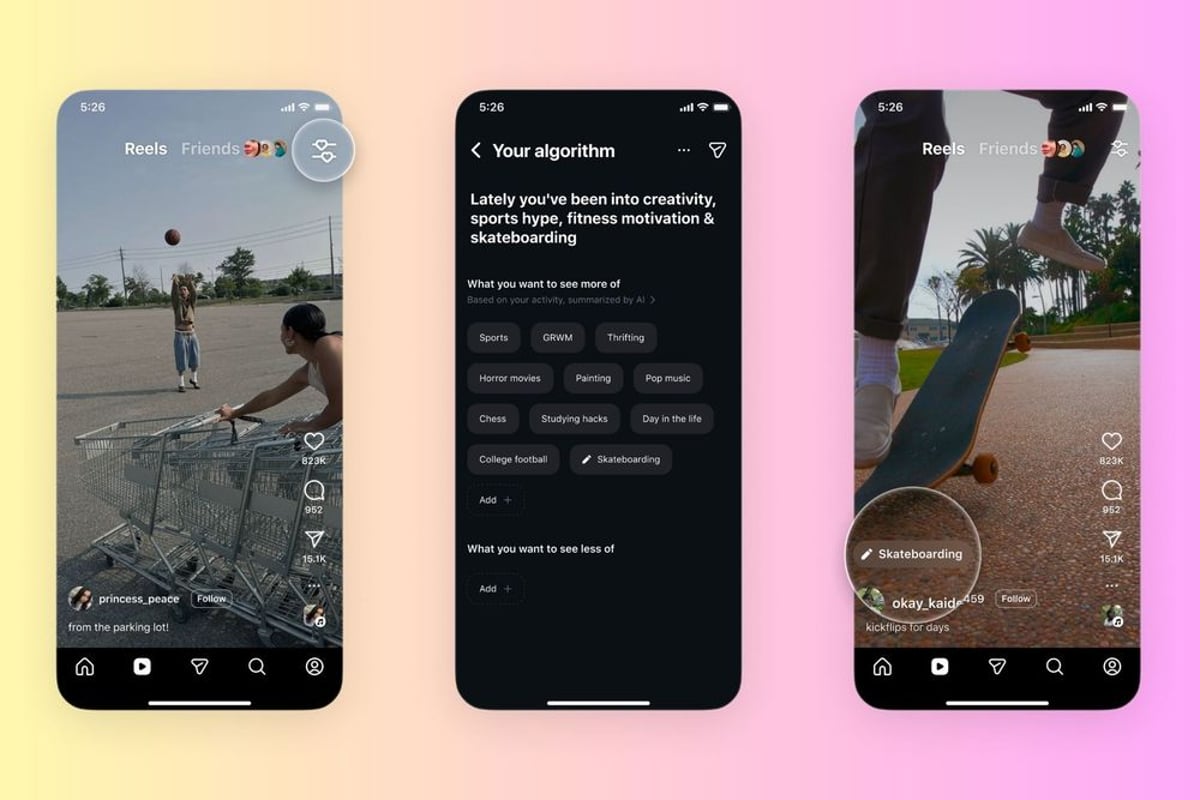
Instagram just handed users the keys to their Reels algorithm. The platform's new "Your Algorithm" feature launches today in the US, letting users see exactly what topics the AI thinks they like and directly adjust those preferences. It's the most transparent algorithmic control any major social platform has offered users.
Instagram is breaking new ground in algorithmic transparency. The Meta-owned platform just launched "Your Algorithm," an AI-powered feature that pulls back the curtain on how Reels recommendations work and lets users directly tune what they see.
The feature went live in the US today, with global English rollout coming "soon," according to Instagram's announcement. Users can access it through a new icon - two hearts on line sliders - that appears in the top-right corner of Reels videos. Click it, and Instagram shows you an AI-generated summary of topics it thinks you're interested in based on your activity.
"As your interests evolve over time, we want to give you more meaningful ways to control what you see on Instagram, starting with Reels," the company said in its official announcement. "Using AI, you can now more easily view and personalize the topics that shape your Reels, making recommendations feel even more tailored to you."
This represents a significant shift for social media platforms, which have historically kept their recommendation algorithms as closely guarded trade secrets. While users have long complained about irrelevant or unwanted content appearing in their feeds, platforms typically offered only blunt tools like "not interested" buttons or complete account blocking.
Instagram's approach goes deeper. Users can see exactly which topics the algorithm has identified - everything from "cooking" to "travel" to niche interests like "vintage fashion" - and then add new topics or remove ones that no longer interest them. They can even share their interest profile on their Instagram Story, turning algorithmic preferences into a form of social expression.
The timing isn't accidental. Social media companies are facing increasing pressure from regulators and users for algorithmic accountability. The EU's Digital Services Act requires large platforms to provide more transparency about their recommendation systems, while users have grown frustrated with feeds that feel out of sync with their actual interests.
But Meta isn't stopping with Instagram Reels. The company says it's planning to bring adjustable algorithms to Instagram's Explore tab and "more places in the app soon." A similar feature is already in development for Meta's Threads app, which will let users tag posts with "dear algo" to tell the algorithm to show them more or less of specific content types.
The broader Meta ecosystem is getting algorithmic feedback tools too. The company is adding the ability for users to explain why something in their Reels and Facebook feeds isn't relevant, moving beyond simple "hide this" options to more nuanced feedback. Meta promises to "introduce new ways for you to shape your Feed and provide your algorithm feedback in the coming months."
This push for user control comes as competition heats up in short-form video. TikTok has long dominated with its highly engaging For You page algorithm, while YouTube Shorts and other platforms scramble to match that engagement. By giving users direct control over their recommendations, Instagram is betting that transparency and customization can be competitive advantages.
The feature also arrives as Meta faces scrutiny over how its algorithms affect user behavior and mental health, particularly among younger users. By making algorithmic preferences visible and controllable, the company can potentially deflect some criticism while giving users a greater sense of agency over their social media experience.
Early user reactions on social media have been largely positive, with many praising the transparency and control the feature provides. Some users have already started sharing screenshots of their algorithmic interest profiles, treating them as a new form of personality test or social identity marker.
For creators and marketers, this change could significantly impact content strategy. If users can directly tell Instagram they want to see more cooking content or fewer fashion posts, it adds a new layer of audience targeting and retention to consider.
The rollout represents one of the most significant changes to social media recommendation systems in years. While platforms have experimented with chronological feeds and other alternatives, this marks the first time a major platform has given users granular, persistent control over their algorithmic recommendations.
Instagram's algorithmic transparency move could reshape how users interact with social media platforms. By letting people see and control what drives their recommendations, Meta is betting that user agency will trump algorithmic mystery. If successful, expect other platforms to follow suit - the era of black-box recommendations might finally be ending.