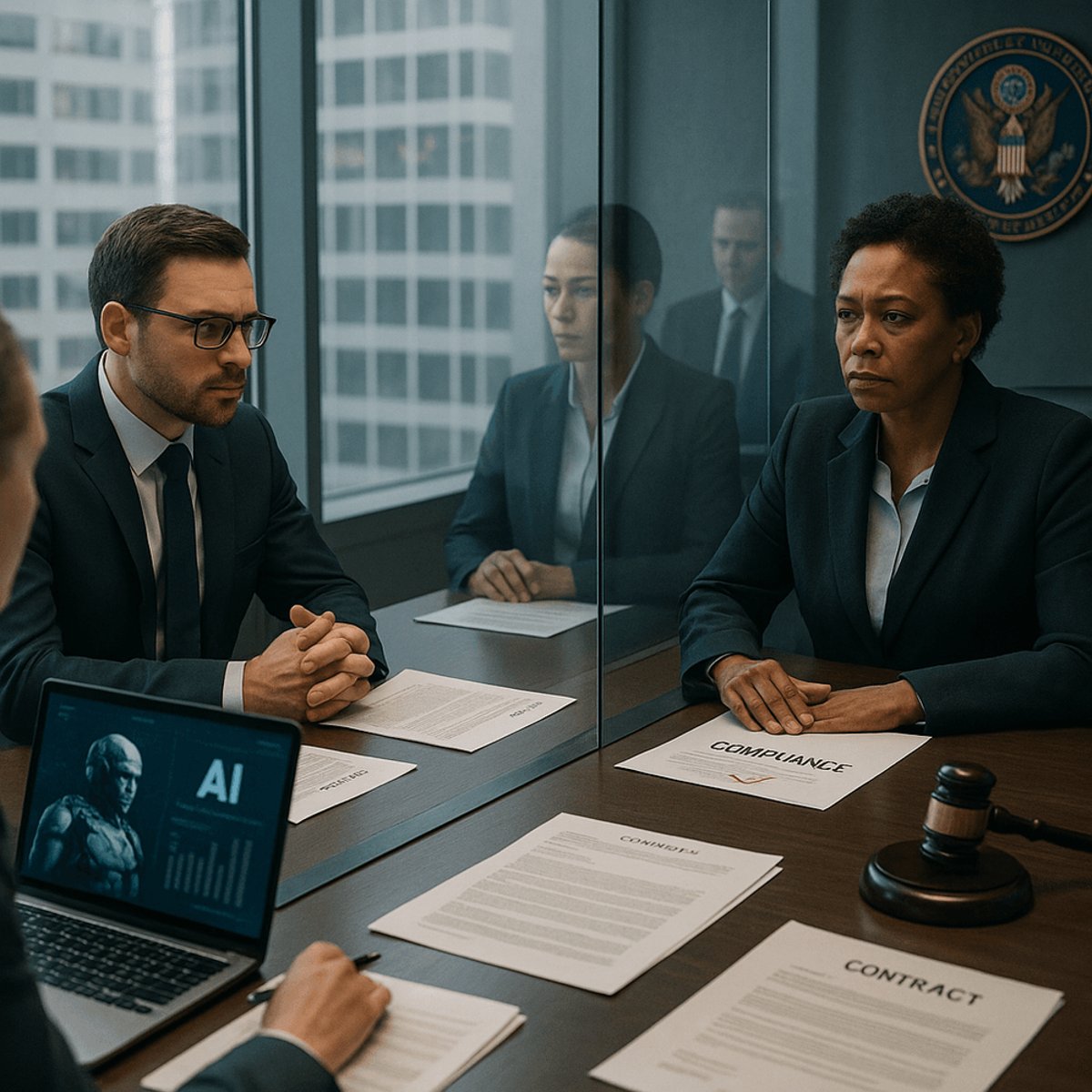
The Federal Communications Commission chair just threw a regulatory curveball at Anthropic, publicly calling the AI startup's approach to Pentagon negotiations a mistake that needs correcting. The rare rebuke from a federal regulator marks a sharp escalation in the debate over AI companies working with defense agencies - and signals that Anthropic's attempt to impose specific restrictions on military use of its technology didn't sit well in Washington.
Anthropic is finding out the hard way that trying to put guardrails on Pentagon AI use comes with serious pushback from Washington's power brokers. The FCC chair's unusually direct criticism that the AI safety-focused company "made a mistake" and should "correct course" represents more than bureaucratic sniping - it's a shot across the bow for any AI company thinking about limiting military applications.
The clash centers on negotiations where Anthropic pushed for specific restrictions on how the Department of Defense could deploy its Claude AI models. Those restrictions apparently didn't fly. The Pentagon walked away without agreeing to Anthropic's terms, according to CNBC. Now a federal regulator is putting public pressure on the company to reconsider its stance entirely.
This isn't happening in a vacuum. Anthropic has positioned itself as the responsible AI company, the one willing to pump the brakes on deployment if safety concerns arise. Co-founded by former OpenAI executives who left over disagreements about safety priorities, Anthropic built its brand on constitutional AI and careful scaling. That philosophy apparently extends to questioning military applications - a stance that's now creating friction with federal agencies eager to leverage AI for national security.
The timing is particularly loaded. AI companies are facing mounting pressure from multiple directions on defense work. Worker petitions at various firms have challenged military contracts, while competitors like Microsoft and Google navigate their own complex relationships with defense agencies. Google famously backed away from Project Maven in 2018 after employee protests, only to later pursue other Pentagon work more quietly. Microsoft, by contrast, has defended its military contracts as patriotic duty.
But this FCC intervention marks something different - direct regulatory pressure from a federal official telling an AI company it's wrong to limit government use cases. The public nature of the criticism suggests frustration within the administration that Anthropic isn't playing ball on terms the Pentagon finds acceptable. It's one thing for workers to petition management, quite another for federal regulators to publicly call out a company's negotiating position.
What exactly did Anthropic want restricted? The details remain murky, but AI ethicists have long raised concerns about autonomous weapons systems, surveillance applications, and lethal decision-making powered by large language models. Anthropic's constitution for Claude includes principles about helpfulness, harmlessness, and honesty - values that could theoretically conflict with certain military deployments. The company has published extensive research on AI safety and alignment, suggesting it takes these concerns seriously beyond just marketing speak.
The Department of Defense, meanwhile, is racing to integrate AI across operations from logistics to intelligence analysis. Pentagon officials have warned repeatedly that falling behind China on military AI poses strategic risks. In that context, an AI vendor seeking to impose use restrictions probably feels like unnecessary friction - particularly when competitors are willing to sell without ethical strings attached.
For Anthropic, this creates a genuine dilemma. Back down, and the company risks undermining its core identity as the safety-first AI lab. The very executives who founded it specifically because they wanted to prioritize caution over speed would be reversing course under regulatory pressure. But dig in, and Anthropic potentially alienates federal customers while inviting more regulatory scrutiny - scrutiny that could affect far more than defense contracts.
The FCC chair's involvement itself raises eyebrows. While the FCC regulates communications, AI governance remains fractured across multiple agencies with overlapping and sometimes conflicting jurisdictions. That a communications regulator is weighing in on AI-defense partnerships suggests the issue is bubbling up to senior administration levels as a priority concern.
Other AI companies are undoubtedly watching closely. If standing firm on ethical boundaries draws public rebukes from federal officials, that changes the calculation for any startup trying to balance values with business pragmatism. The message seems clear: Washington expects AI companies to cooperate with defense agencies on the government's terms, not impose their own ethical frameworks on military use cases.
What happens next will set important precedent for AI governance. If Anthropic caves to federal pressure, it signals that AI companies have limited leverage to impose ethical boundaries when national security is invoked. If it holds firm, expect more regulatory heat and potential complications beyond defense contracts. Either way, the public nature of this clash reveals the increasingly political nature of AI deployment decisions - where safety principles meet geopolitical realities, and federal regulators aren't shy about picking sides.