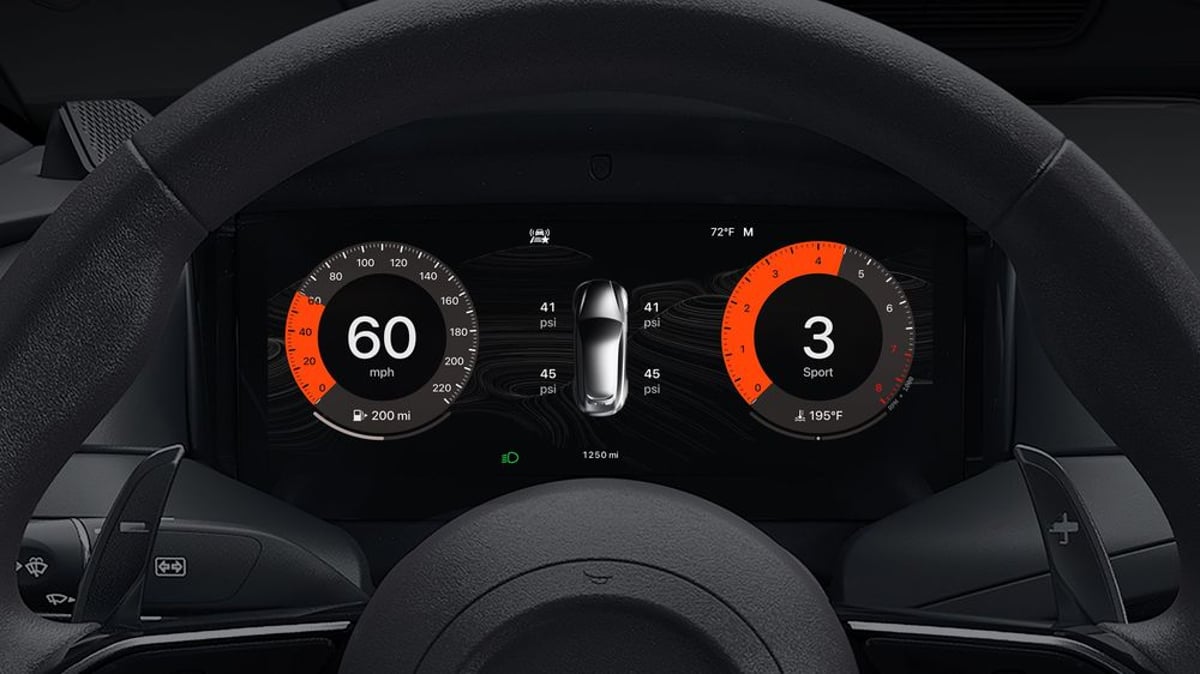
Ford CEO Jim Farley just delivered a blunt assessment of Apple's CarPlay Ultra, telling The Wall Street Journal he doesn't like the "execution in round one" of the tech giant's ambitious vehicle integration system. The rare public criticism from a major automaker CEO signals growing industry resistance to Apple's push for deeper control over car functions, potentially derailing the iPhone maker's automotive ambitions.
Ford CEO Jim Farley just threw cold water on Apple's biggest automotive bet. In a candid interview on Decoder, Farley admitted he's not impressed with CarPlay Ultra's debut, marking the latest setback for Apple's push into vehicles. "We don't like the execution in round one of Ultra, but we're very committed to Apple," Farley told Wall Street Journal columnist Joanna Stern during the podcast. "I've talked to Tim many times about this." The frank assessment comes as Apple's CarPlay Ultra struggles to gain traction beyond its initial launch partners. After years of hype, the system debuted earlier this year exclusively in Aston Martin models, with Porsche expected to follow. But the promised wave of adoptions hasn't materialized, leaving Apple with just two luxury brands while major automakers like Ford, Mercedes-Benz, and GM stay on the sidelines. Farley's concerns center on control boundaries. CarPlay Ultra promises unprecedented vehicle integration, allowing Apple's interface to span multiple screens and control climate systems, drive modes, and other core functions. But that ambition creates friction with automakers who've spent billions developing their own software platforms. "How far do you want the Apple brand to go?" Farley asked rhetorically. "Do you want the Apple brand to start the car? Do you want the Apple brand to limit the speed? Do you want the Apple brand to limit access?" The questions hit at the heart of a brewing power struggle in connected vehicles. Ford Pro, the company's commercial division, currently uses proprietary software to track fleet locations and restrict driver access for corporate customers. Farley made clear he wouldn't want Apple controlling similar functions. "Is Apple going to want to do that?" he said. "If Apple wants to do that, I think we're going to have a tough time with that, because then the digital experience gets really messy." The resistance reflects broader industry tensions over software supremacy. Mercedes-Benz CEO Ola Källenius expressed similar reservations during his own Decoder appearance last year, signaling coordinated pushback from traditional automakers. Meanwhile, General Motors took the nuclear option, completely blocking CarPlay and Android Auto from its electric vehicles to force customers onto GM's native software. That controversial decision backfired spectacularly with consumers, who overwhelmingly prefer their smartphone interfaces to automaker-built systems. Ford is taking a different approach, positioning itself as the consumer-friendly alternative. Farley emphasized the company won't restrict phone projection access, noting Ford's new Digital Experience actually enhances CarPlay by allowing full-screen usage. "We don't think we should restrict that to make money off the customers," he said. "We don't want it to be a hassle. We don't think we can design an experience that's going to displace your phone." That pragmatic stance could give Ford competitive advantage as rivals wage software wars. While GM alienates customers and Apple struggles to sign partners, Ford's embrace of consumer choice positions it to capture market share from frustrated buyers. The slow CarPlay Ultra adoption also exposes Apple's automotive strategy challenges. Unlike smartphones, where Apple controls the entire user experience, vehicles require deep partnerships with manufacturers who have their own software ambitions and regulatory responsibilities. Apple's typical "our way or the highway" approach doesn't translate well to an industry where safety regulations and liability concerns dominate decision-making. For now, Ford remains in wait-and-see mode while Apple refines its approach. But Farley's public criticism suggests even that patience has limits if Apple can't address automaker concerns about control and integration complexity.
Ford's criticism of CarPlay Ultra exposes the fundamental tension between Apple's ecosystem ambitions and automaker independence. While Apple revolutionized smartphones by controlling every aspect of the user experience, the automotive industry operates under different rules where safety, liability, and decades of engineering expertise can't simply be displaced by sleek interfaces. Farley's comments suggest the path forward requires Apple to find a middle ground that enhances rather than replaces automaker systems - a compromise that may conflict with the company's traditional all-or-nothing approach to new markets.