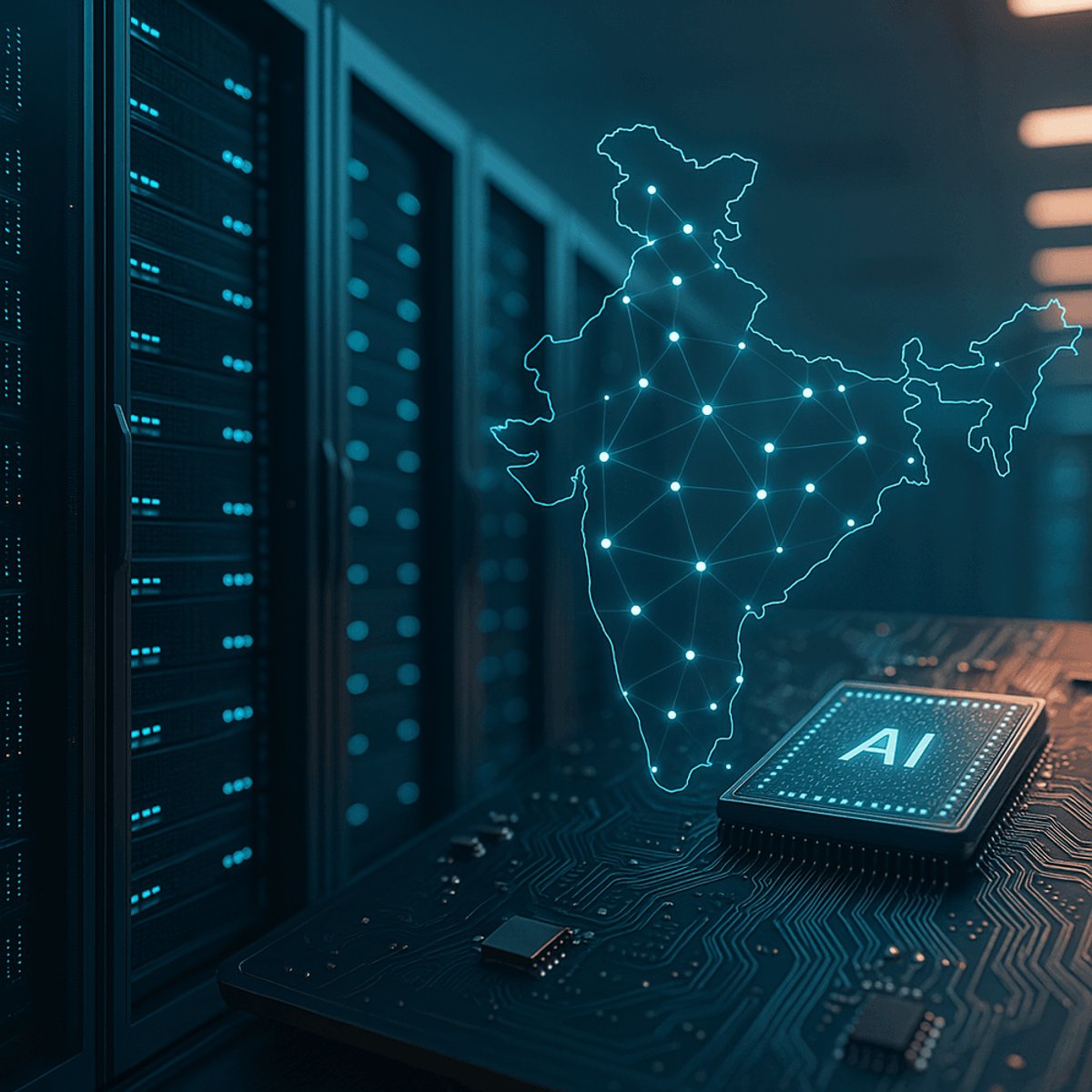
G42, the Abu Dhabi-based AI powerhouse, just announced a massive infrastructure partnership with chipmaker Cerebras to deploy eight exaflops of compute capacity in India. The deal, revealed at the India AI Impact Summit 2026, represents one of the largest AI infrastructure investments in Asia and signals a major shift in the global AI compute landscape. It's a bold move that positions India as a critical node in the emerging AI supply chain while cementing G42's role as a bridge between Middle Eastern capital and Asian tech ambitions.
G42 is making a massive bet on India's AI future. The Abu Dhabi tech giant just unveiled plans to deploy eight exaflops of compute capacity across India in partnership with Cerebras, the U.S. chipmaker known for its wafer-scale engine technology. The announcement, made at the India AI Impact Summit 2026, marks one of the largest AI infrastructure commitments in Asia and comes as the region faces a critical shortage of compute resources.
The timing couldn't be more strategic. India's been scrambling to build out AI infrastructure as demand from startups and enterprises skyrockets. According to industry estimates, the country currently has less than 2% of global AI compute capacity despite having one of the world's largest developer populations. This deal could change that calculus overnight.
Cerebras brings something different to the table than the usual Nvidia GPU clusters dominating the market. The company's CS-3 systems use wafer-scale engines - essentially chips the size of dinner plates - that can train large language models faster and more efficiently than traditional setups. For G42, which has been aggressively expanding its AI infrastructure footprint across the Middle East and Asia, Cerebras offers a way to differentiate from competitors betting entirely on Nvidia's ecosystem.
The eight exaflops figure is eye-popping. To put it in perspective, that's roughly equivalent to eight quintillion floating-point operations per second, enough computational power to train multiple frontier AI models simultaneously. It's the kind of capacity typically reserved for national supercomputing initiatives or hyperscale cloud providers.
G42's been on a tear lately. The company, backed by Abu Dhabi's Royal Group and with strategic investments from Microsoft, has positioned itself as a neutral AI infrastructure provider at a time when U.S.-China tech tensions are reshaping global supply chains. The India deployment follows similar announcements in the UAE, Saudi Arabia, and several African nations, suggesting a coordinated strategy to build compute capacity in regions underserved by Western cloud giants.
For Cerebras, this represents validation of its alternative approach to AI infrastructure. The company's been competing against Nvidia's CUDA ecosystem dominance by focusing on customers who need to train models quickly rather than just run inference at scale. Landing a deal of this magnitude with G42 gives Cerebras a major reference customer and manufacturing scale it hasn't previously enjoyed.
The geopolitical implications are significant. India's government has been pushing for AI sovereignty, wanting to ensure the country isn't dependent on foreign cloud providers for critical infrastructure. A partnership between a UAE-based company and a U.S. chipmaker, deploying hardware on Indian soil, threads a delicate needle - bringing capital and technology without the baggage of direct Chinese or pure Western control.
Neither company disclosed the financial terms, but industry sources estimate infrastructure deployments of this scale typically run into the billions of dollars. The systems are expected to come online in phases starting later this year, with full deployment targeted for 2027.
The announcement also raises questions about power and cooling infrastructure. Eight exaflops of compute requires massive amounts of electricity and sophisticated cooling systems. India's data center infrastructure has been growing rapidly, but projects of this scale will need dedicated facilities with direct access to power substations and water resources for cooling.
What remains unclear is who'll be the primary customers for this capacity. G42 operates both as a cloud provider and as an infrastructure partner for governments and large enterprises. The India deployment could serve regional startups building AI applications, support government AI initiatives, or potentially lease capacity to other cloud providers looking to expand in Asia without building their own infrastructure.
This partnership represents more than just another infrastructure deal - it's a glimpse at how AI compute is becoming a geopolitical chess piece. As countries race to build AI capabilities, access to cutting-edge compute matters as much as access to talent or data. G42's ability to move capital and technology across borders while Cerebras provides an alternative to Nvidia's ecosystem creates a playbook other regions will watch closely. For India, it's a chance to leapfrog into the top tier of AI infrastructure nations. The real test will be whether the country can build the ecosystem of customers, applications, and governance frameworks to make full use of all those exaflops.