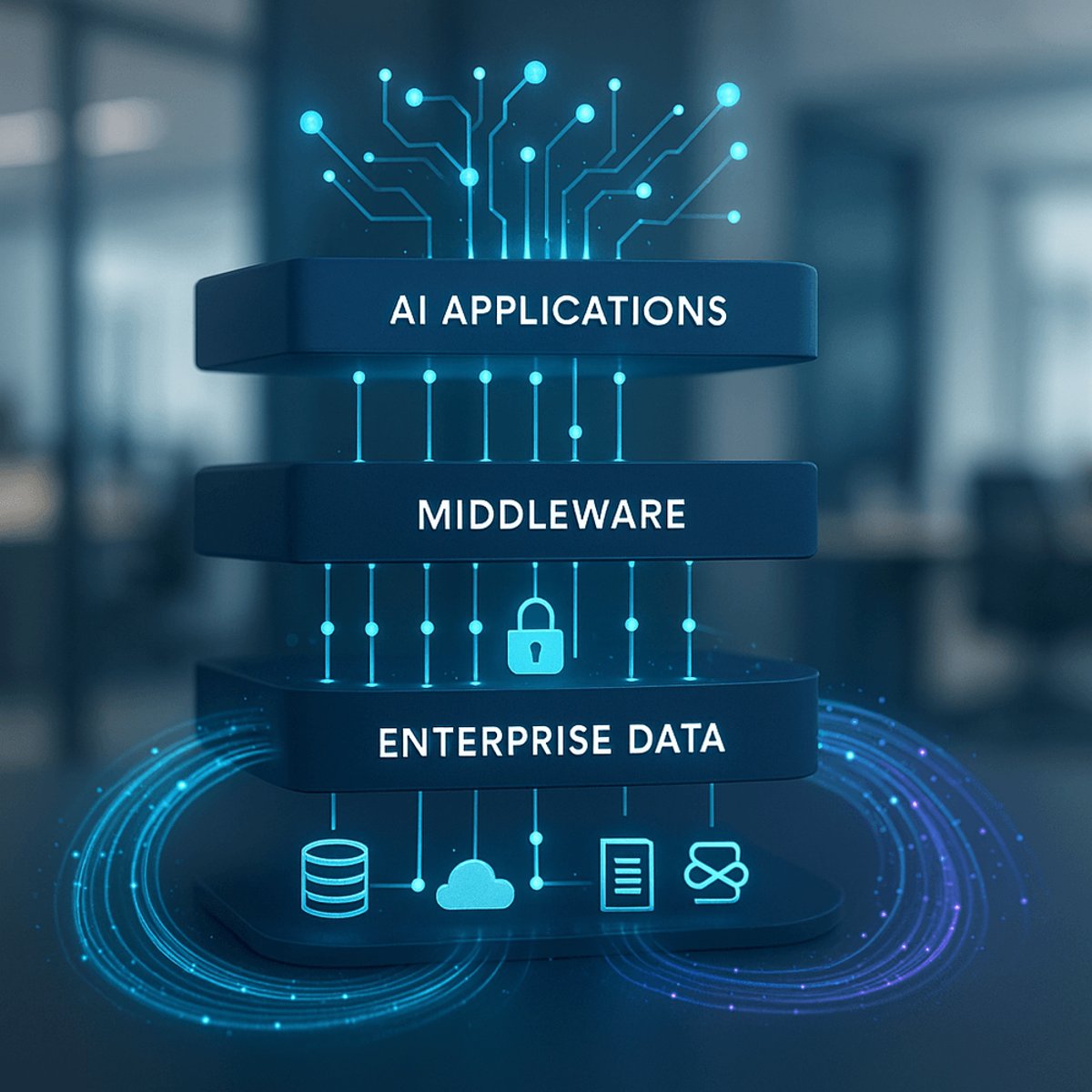
Glean is making a bold bet that the future of enterprise AI won't be won at the interface level. The company, which started as an enterprise search tool, is now positioning itself as the critical middleware layer that sits between AI applications and company data. CEO Arvind Jain revealed the strategic shift during this week's Equity podcast, signaling that the real land grab in enterprise AI isn't about chatbots - it's about infrastructure.
The enterprise AI stack is getting a major reshuffling, and Glean wants to own the layer no one sees but everyone needs.
CEO Arvind Jain laid out the company's new vision during an interview on TechCrunch's Equity podcast, explaining why Glean is abandoning its original enterprise search positioning to become the connective tissue between AI applications and corporate data. It's a calculated retreat from the flashy AI assistant wars into the more lucrative but less visible infrastructure game.
"We realized the interface isn't where the value is," Jain told the podcast. "Every company is going to build their own AI applications. What they need is a layer that can securely access, understand, and deliver the right enterprise data to those applications."
The pivot makes strategic sense in a market that's becoming brutally competitive at the application layer. Microsoft has Copilot embedded across its suite. Google is pushing Gemini into Workspace. Salesforce just launched Einstein GPT with native CRM integration. For a startup like Glean to compete head-to-head with these giants on user-facing AI would be suicide.
But infrastructure? That's where the real money flows. Middleware doesn't need to win hearts and minds - it just needs to work reliably and integrate seamlessly. It's the same playbook that made Twilio worth billions without consumers ever hearing its name, or Stripe essential despite most shoppers having no idea it's processing their payments.
Glean's original pitch was straightforward: enterprise search that actually works. The company built connectors to dozens of workplace apps - Slack, Notion, Google Drive, Salesforce, Jira - and used AI to surface relevant information when employees searched. It solved a real problem. Anyone who's tried to find a document in a large company knows the pain.
But as large language models exploded in capability over the past 18 months, Glean's leadership recognized their search infrastructure was actually solving a different problem: how to feed enterprise context into AI systems. The same connectors that powered search could power AI agents. The same permissions system that kept sensitive data private in search results could govern what AI assistants could access. The same semantic understanding that improved search relevance could help AI ground its responses in factual company data.
"We had already built 90% of what every enterprise AI application needs," Jain explained. "Why compete with our customers to build chatbots when we could enable all of them to build better AI?"
The middleware strategy opens up a dramatically larger market. Instead of selling to companies that want better search, Glean can now sell to every company building AI applications - which is increasingly every company, period. Gartner predicts that by 2027, more than 80% of enterprises will have deployed generative AI applications in production, up from less than 5% today.
Each of those applications faces the same fundamental challenge: connecting AI models to proprietary company data in a secure, governed way. Building those connections from scratch is expensive and time-consuming. Most companies would rather buy infrastructure than build it, especially for non-differentiating capabilities.
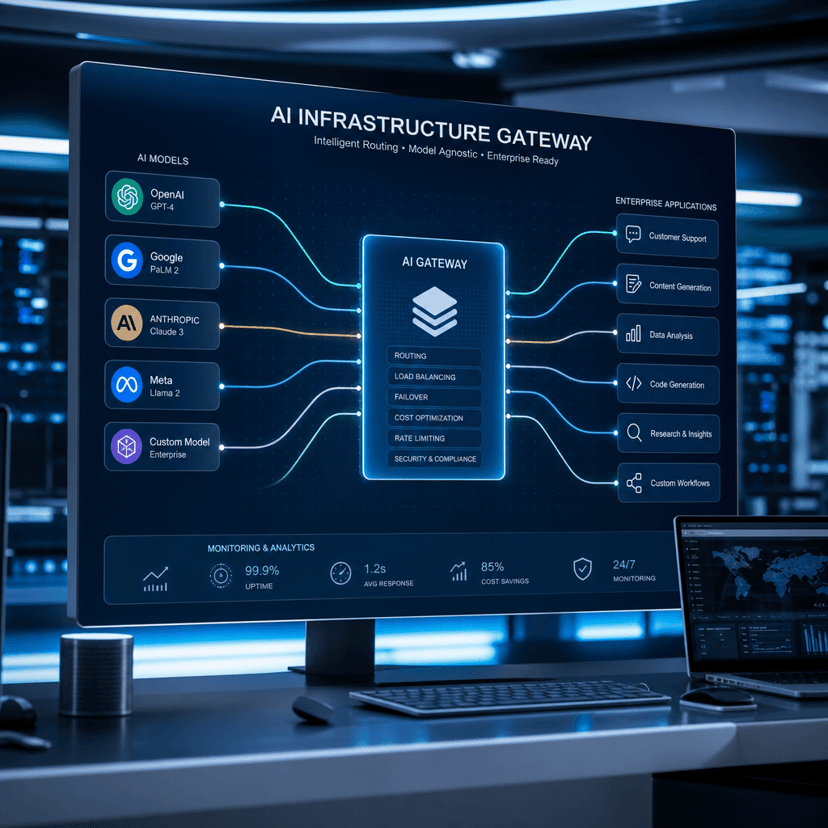
Glean's competition shifts dramatically with this pivot. They're no longer fighting Microsoft and Google directly. Instead, they're competing with data integration platforms like MuleSoft, AI infrastructure providers like LangChain, and emerging players in the retrieval-augmented generation space. It's a more level playing field where startup agility matters more than platform lock-in.
The timing is particularly interesting given recent developments in enterprise AI. OpenAI just launched enterprise API features that let developers connect custom data sources. Anthropic is pushing its Claude models deeper into enterprise workflows. These foundation model providers need partners who can handle the messy reality of enterprise data integration - exactly what Glean is positioning to provide.
There's also the question of defensibility. Search interfaces are notoriously difficult to defend - users will switch to whatever works better. But infrastructure layers with deep integrations create switching costs. Once Glean's middleware is woven through a company's AI applications, ripping it out means rebuilding everything. That's the kind of stickiness that drives long-term enterprise value.
The risk is commoditization. Middleware businesses can become plumbing - essential but low-margin. Amazon Web Services and Google Cloud could easily build competing offerings and bundle them into existing cloud contracts. Microsoft is already moving in this direction with its Graph API and Copilot extensibility framework.
Glean's defense will need to be superior integrations and reliability. In enterprise infrastructure, "good enough" often beats "innovative." Companies want boring technology that works predictably. If Glean can become the default, trusted layer for enterprise AI data access, they'll be extremely difficult to displace regardless of who else enters the market.
The company hasn't disclosed updated financials or valuation with this strategic shift, but previous reporting indicates Glean has raised over $200 million from investors including Sequoia Capital and Kleiner Perkins. The middleware play likely makes the business more attractive to enterprise investors who prefer predictable infrastructure revenue over application volatility.
What remains to be seen is how quickly Glean can execute the transition. Existing search customers will need to be migrated or convinced to adopt the new positioning. New customers will need education on why middleware matters. And the product itself will need to evolve beyond search architecture to truly serve as a general-purpose AI data layer.
Glean's pivot from enterprise search to AI middleware represents a sophisticated read of where enterprise AI is headed. While the spotlight stays on chatbots and AI assistants, the real value might accrue to whoever controls the data layer beneath them. If Jain is right that every company will build custom AI applications, then the infrastructure enabling those applications becomes extraordinarily valuable. It's not the sexiest positioning, but in enterprise software, boring and essential often beats exciting and optional. The question now is whether Glean can execute the transition before the cloud giants wake up and build competing offerings into their platforms.