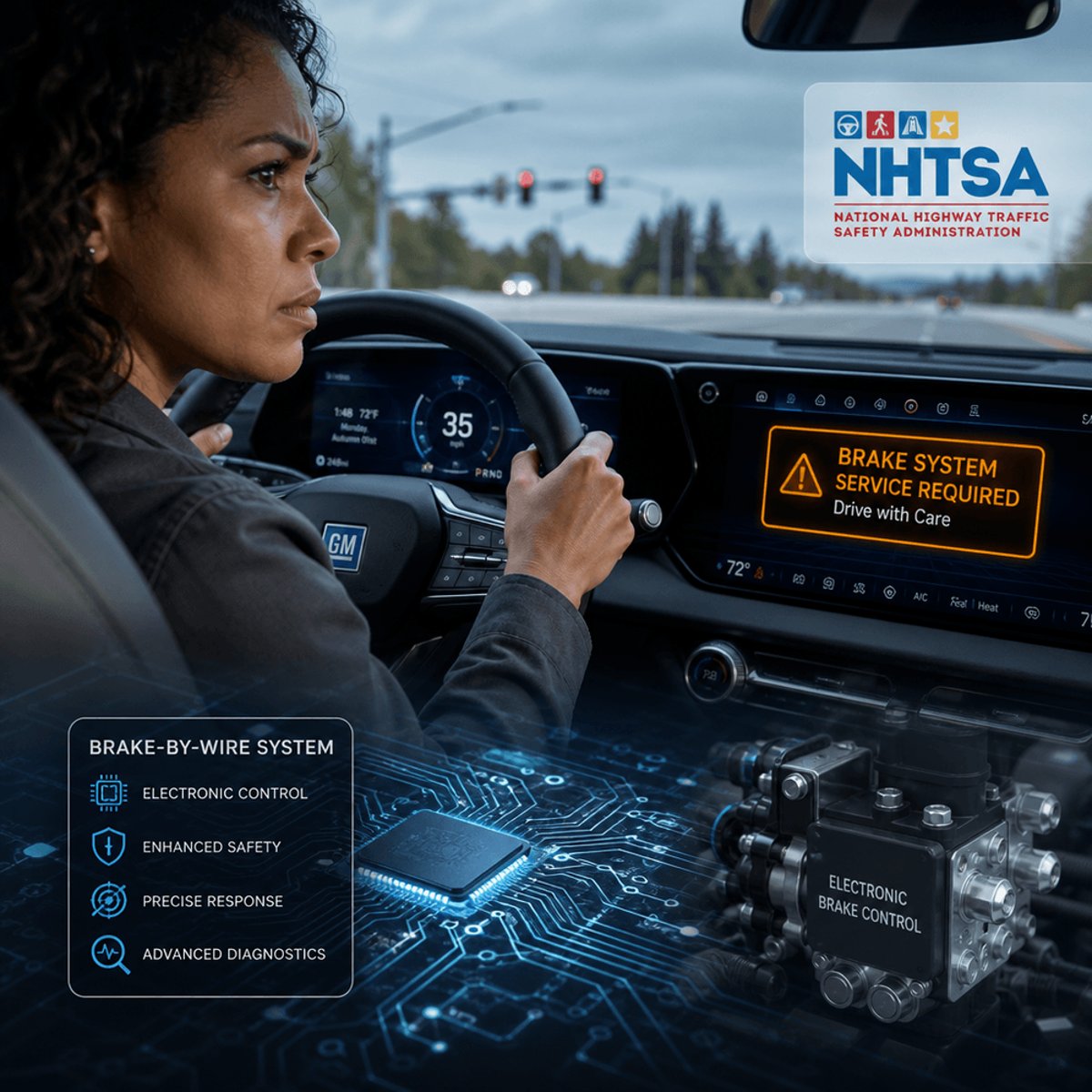
Federal safety regulators are ramping up scrutiny of General Motors electric vehicles after receiving alarming reports of complete brake failure. In one harrowing incident, a 2024 Blazer EV driver said they had to "deliberately steer the vehicle into a concrete curb" to avoid a "catastrophic intersection collision" when the brakes stopped responding. The escalation marks a critical moment for GM's EV ambitions as the company races to catch Tesla in the electric vehicle market.
General Motors is facing mounting pressure from federal safety regulators over reports of catastrophic brake failures in its electric vehicle lineup. The National Highway Traffic Safety Administration has elevated its investigation into what drivers describe as sudden, complete loss of braking power across multiple GM EV models.
The most alarming account comes from a 2024 Blazer EV owner who told investigators they had to make a split-second decision to crash into a concrete curb rather than risk plowing through a busy intersection. The driver's statement, filed with NHTSA, paints a terrifying picture of modern vehicle systems failing at the worst possible moment.
This isn't an isolated incident. Federal safety databases show a pattern of similar complaints across GM's Ultium-based EV platform, which underpins the Blazer EV, Equinox EV, and the electric versions of the Silverado and Sierra trucks. The timing couldn't be worse for GM, which has bet billions on its electric vehicle transformation and positioned these models as direct challengers to Tesla's dominance.
The brake problems appear to center on the electronic brake systems that have replaced traditional hydraulic setups in many modern EVs. These brake-by-wire systems use electronic signals instead of physical hydraulic lines, offering benefits like regenerative braking integration and improved efficiency. But when they fail, drivers lose the mechanical backup that traditional brakes provide.
GM has sold thousands of Ultium-based EVs since launching the platform in 2022, making the potential scope of this issue significant. The company's stock dipped 3% in early trading following reports of the expanded federal investigation, reflecting investor concerns about potential recalls and reputational damage.
Industry analysts note that brake-by-wire technology has generally proven reliable across the automotive sector, with Tesla, Rivian, and legacy automakers deploying similar systems without widespread issues. That suggests GM's problems may be specific to its implementation or software rather than a fundamental flaw in the technology itself.
"What we're seeing here is likely a software integration issue rather than a hardware failure," said automotive safety consultant Michael Brooks in comments to industry publications. "Modern EVs have incredibly complex brake systems that blend regenerative and friction braking. Getting that coordination right is critical."
The investigation puts GM in an uncomfortable spotlight just as the company is trying to accelerate EV adoption. The automaker has pledged to phase out gas-powered vehicles by 2035 and has invested over $35 billion in electric and autonomous vehicle development. A major recall or extended investigation could slow that momentum significantly.
GM hasn't issued a formal recall yet, but the company released a statement saying it's "working closely with NHTSA and taking these reports seriously." The automaker noted that it has deployed several over-the-air software updates to its EV fleet in recent months, though it didn't specify whether any addressed braking systems.
The federal investigation will likely examine vehicle data logs, brake system designs, and software code to determine the root cause. If investigators find a safety defect, GM could face a costly recall affecting tens of thousands of vehicles. More damaging would be the hit to consumer confidence in the company's EVs at a crucial moment in the market's development.
For drivers currently behind the wheel of affected GM EVs, the situation creates real anxiety. Unlike traditional mechanical failures that often give warning signs, electronic system failures can be sudden and total. NHTSA has urged anyone experiencing brake issues to report them immediately and consider alternative transportation if they don't feel safe.
The investigation also raises broader questions about how quickly automakers are adopting brake-by-wire and other drive-by-wire technologies. While these systems offer real advantages, they also introduce new failure modes that the industry is still learning to prevent and diagnose.
The escalating federal investigation into GM's EV brake systems represents more than just a potential recall - it's a test of consumer trust in electric vehicle technology at a pivotal moment. As automakers race to electrify their fleets and replace mechanical systems with software-controlled alternatives, incidents like these remind us that the transition brings new risks alongside new capabilities. For GM, resolving this quickly and transparently isn't just about avoiding regulatory penalties. It's about proving that its multibillion-dollar EV bet can deliver on the basic promise that every driver expects: that the brakes will work when you need them most. How the company handles the next few weeks will likely shape consumer perception of its electric vehicles for years to come.