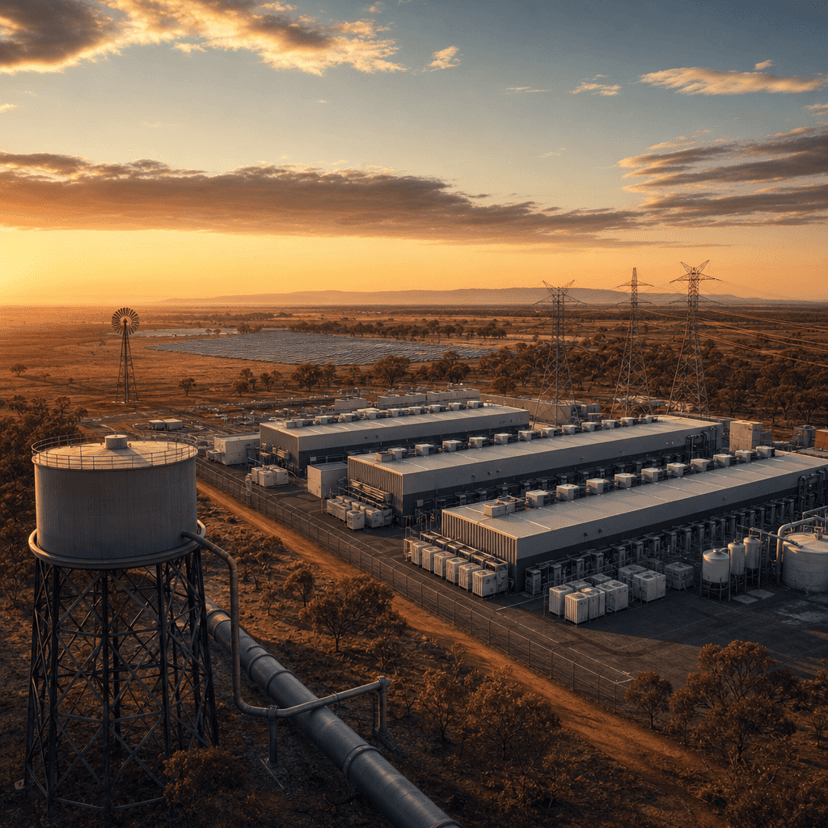
Google is doubling down on Texas infrastructure. The tech giant just announced plans for a new data center in Wilbarger County, paired with clean energy agreements designed to bolster local grid resilience. The move signals Google's continued investment in cloud and AI infrastructure as demand for computing power surges across the industry, particularly as companies race to deploy large-scale AI models and services.
Google is planting another flag in Texas. The company revealed plans to build a new data center in Wilbarger County, marking its latest infrastructure bet in a state that's become a magnet for hyperscale computing facilities. The announcement comes as tech giants scramble to expand capacity for AI workloads that demand exponentially more processing power than traditional cloud services.
The Wilbarger County facility represents more than just another server farm. Google's pairing the data center with what it calls agreements to support local energy resilience, a nod to the grid stability challenges that have plagued Texas in recent years. While the company didn't disclose specific investment figures or timelines in its initial announcement, the clean energy component suggests a significant commitment to sustainable operations.
Texas has emerged as prime real estate for data center development, and it's not hard to see why. The state offers relatively cheap land, business-friendly policies, and access to both traditional and renewable energy sources. Google already operates data centers in several Texas locations, but the AI boom is pushing all the major cloud providers to expand faster than originally planned.
The timing is telling. As AI models grow more sophisticated and companies integrate generative AI into everything from search to productivity tools, the infrastructure requirements have skyrocketed. Training a single large language model can consume as much energy as hundreds of homes use in a year. Inference - actually running those models for users - demands constant, distributed computing power across multiple data centers.
Google's emphasis on energy resilience touches on a sensitive issue in Texas. The state's independent power grid has faced scrutiny after high-profile failures during extreme weather events. By committing to agreements that support grid stability, Google's potentially positioning itself as a partner rather than just another massive energy consumer. The specifics of these agreements remain unclear, but they likely involve some combination of renewable energy purchases, battery storage, or flexible load management.
The Wilbarger County development also reflects the geographic spread that cloud providers need to maintain low latency and high availability. Users expect instant responses whether they're in Dallas or Detroit, which means distributing computing resources across regions. For Google's cloud customers and its own services like Search, YouTube, and Gmail, every additional data center improves performance and redundancy.
Competitors aren't sitting still. Microsoft and Amazon have both announced massive data center investments across the U.S., with Amazon Web Services particularly aggressive in Texas markets. Meta is also expanding its infrastructure footprint to support AI research and the computing demands of billions of social media users.
The clean energy angle isn't just good PR - it's become a competitive necessity. Enterprise customers increasingly demand that their cloud providers operate sustainably, with major corporations setting carbon-neutral targets that depend on their technology partners' energy choices. Google has long positioned itself as a leader in renewable energy purchasing, and the Wilbarger County project appears designed to maintain that reputation while meeting practical infrastructure needs.
What's not mentioned in the announcement is equally interesting. No job creation numbers, no construction timeline, and no details about the facility's computing capacity. Those specifics typically come later as projects move through permitting and planning stages, but their absence suggests this is still early in the development process.
For Wilbarger County, the economic impact could be substantial. Data centers bring construction jobs, permanent technical positions, and significant property tax revenue, though they employ far fewer people per square foot than traditional manufacturing. The real question is how the local community balances the economic benefits against concerns about energy consumption and resource demands.
Google's Wilbarger County expansion is less about a single facility and more about the infrastructure arms race reshaping tech. As AI demands push computing requirements into uncharted territory, expect more announcements like this - data centers paired with energy commitments, strategic geographic placement, and vague timelines. The companies that can build fastest while managing energy costs and sustainability optics will have a structural advantage in the AI era. Texas, with its combination of available land, energy resources, and favorable regulations, looks set to remain a primary battleground.