Elon Musk is making a surprise play for the semiconductor industry. In a rare fireside chat with ASML CEO Christophe Fouquet, the SpaceX chief praised the Dutch chip equipment giant as tensions build around the company's highly anticipated IPO. The move signals Musk's ambitions to vertically integrate chip manufacturing into his sprawling empire, potentially reshaping how SpaceX sources critical components for satellites and rockets while Wall Street watches his every pre-IPO move.
Elon Musk just dropped a major hint about SpaceX's next frontier, and it's not Mars. Speaking directly to employees at ASML, the Dutch company that holds a monopoly on the most advanced chip-making equipment in the world, Musk lavished praise on the firm during a fireside chat with CEO Christophe Fouquet. The timing couldn't be more strategic as SpaceX barrels toward what could be one of the decade's biggest IPOs.
"ASML is a great company," Musk told the gathered employees, according to CNBC. But the real story isn't the compliment, it's what comes next. Multiple sources close to the company suggest SpaceX is seriously exploring vertical integration into semiconductor manufacturing, a move that would give Musk's aerospace giant unprecedented control over the custom chips powering its Starlink satellites and rocket guidance systems.
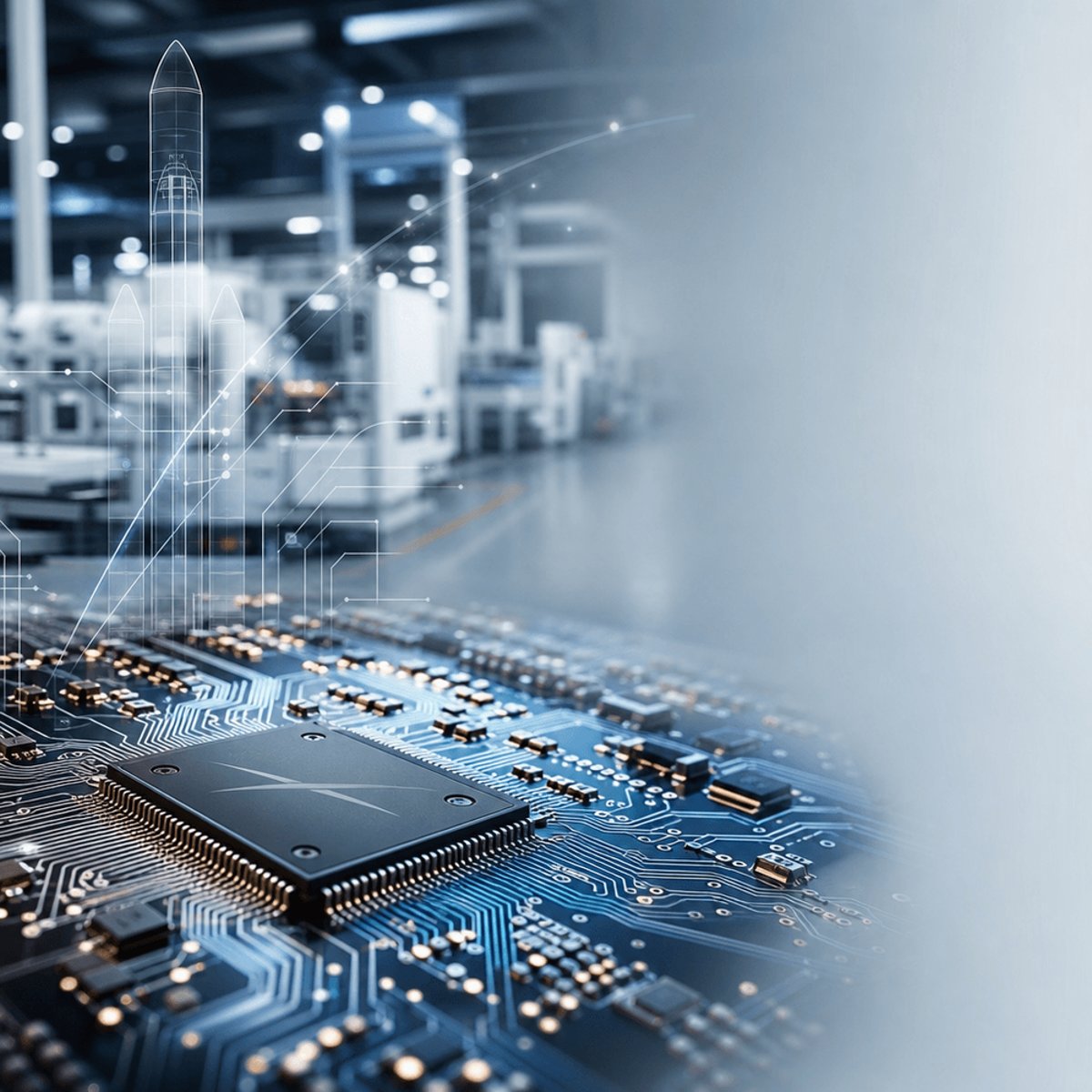
ASML isn't just any chip equipment maker. The company manufactures extreme ultraviolet lithography machines that are absolutely essential for producing the most advanced semiconductors on the planet. These massive systems, which can cost north of $380 million each, are so complex that only a handful exist worldwide. Taiwan Semiconductor Manufacturing Company, Samsung, and Intel dominate the buyer list, but Musk's appearance suggests SpaceX wants in on that exclusive club.
The strategic logic is compelling. SpaceX currently relies on third-party suppliers for the thousands of processors needed for its rapidly expanding Starlink constellation, which now numbers over 5,000 satellites in orbit. Each satellite requires radiation-hardened chips capable of withstanding the harsh space environment, and supply chain disruptions during the pandemic exposed vulnerabilities in SpaceX's procurement strategy. Building in-house chip fabrication capacity would eliminate that dependency entirely.
But there's another angle here. With SpaceX's IPO looming, Musk is painting a picture of a company that's far more than a rocket manufacturer. By positioning SpaceX as a vertically integrated technology powerhouse spanning aerospace, telecommunications, and now potentially semiconductors, he's crafting a narrative that could justify a significantly higher valuation. Wall Street analysts have pegged SpaceX's IPO valuation anywhere from $150 billion to $200 billion, but adding chip manufacturing to the mix changes the calculus entirely.
The ASML connection makes perfect sense when you consider Musk's playbook at Tesla. The electric vehicle maker already designs its own AI chips for autonomous driving, working with Samsung and TSMC for fabrication. Musk has repeatedly said vertical integration is key to Tesla's cost advantages and innovation speed. Applying that same philosophy to SpaceX would be vintage Musk, pushing the boundaries of what a single company can control.
Fouquet, for his part, has been vocal about ASML's growth ambitions beyond traditional semiconductor customers. The company reported €28.3 billion in revenue last year, but it's hungry for new markets as geopolitical tensions restrict sales to China. A partnership with SpaceX would open entirely new revenue streams in aerospace-grade chip production, a niche market with sky-high margins and minimal competition.
Industry insiders aren't entirely sold on Musk's chip ambitions, though. Building a modern fab facility requires billions in upfront capital and years of expertise development. "You don't just walk into semiconductor manufacturing," one former Intel executive told trade publication Semiconductor Engineering. "Even with ASML's best machines, you need process engineers, yield optimization specialists, and a decade of institutional knowledge." SpaceX would be starting from scratch in an industry where Intel and Samsung have spent 50-plus years perfecting their craft.
Yet Musk has a track record of doing the supposedly impossible. He broke into the auto industry when Detroit said it couldn't be done. He revived American rocketry when NASA had given up on cost-effective space access. And he built a global satellite internet network that incumbents dismissed as fantasy. Betting against Musk entering chip manufacturing might be as foolish as betting against reusable rockets in 2015.
The IPO timing adds urgency to the entire equation. SpaceX needs to demonstrate growth vectors beyond launch services and Starlink subscriptions if it wants to command a premium valuation. Chip manufacturing, even in its earliest stages, gives the company a compelling story about long-term margin expansion and strategic independence. Investors are already salivating at the prospect of owning a piece of SpaceX, and this latest move only sweetens the pitch.
What remains unclear is whether Musk intends to build a full-scale fab or simply establish a smaller, specialized facility for aerospace applications. A complete semiconductor foundry capable of competing with TSMC would require $20 billion-plus in investment. A smaller operation focused solely on radiation-hardened chips for satellites and rockets might cost a fraction of that while still delivering strategic benefits. Either way, the ASML connection suggests Musk is thinking bigger than anyone outside his inner circle realized.
Musk's ASML courtship represents more than industrial tourism. It's a calculated signal that SpaceX intends to control every critical piece of its technology stack, from rocket engines to satellite processors. Whether this ambitious pivot materializes into actual fab construction or remains strategic positioning for the IPO, the message is clear: SpaceX isn't just a space company anymore. It's becoming a vertically integrated technology conglomerate that happens to launch rockets. For investors sizing up the upcoming IPO and competitors watching nervously from the sidelines, Musk just added another variable to an already complex equation. The chip industry, already dealing with geopolitical tensions and supply chain fragility, now has to contend with the possibility of Elon Musk crashing the party.