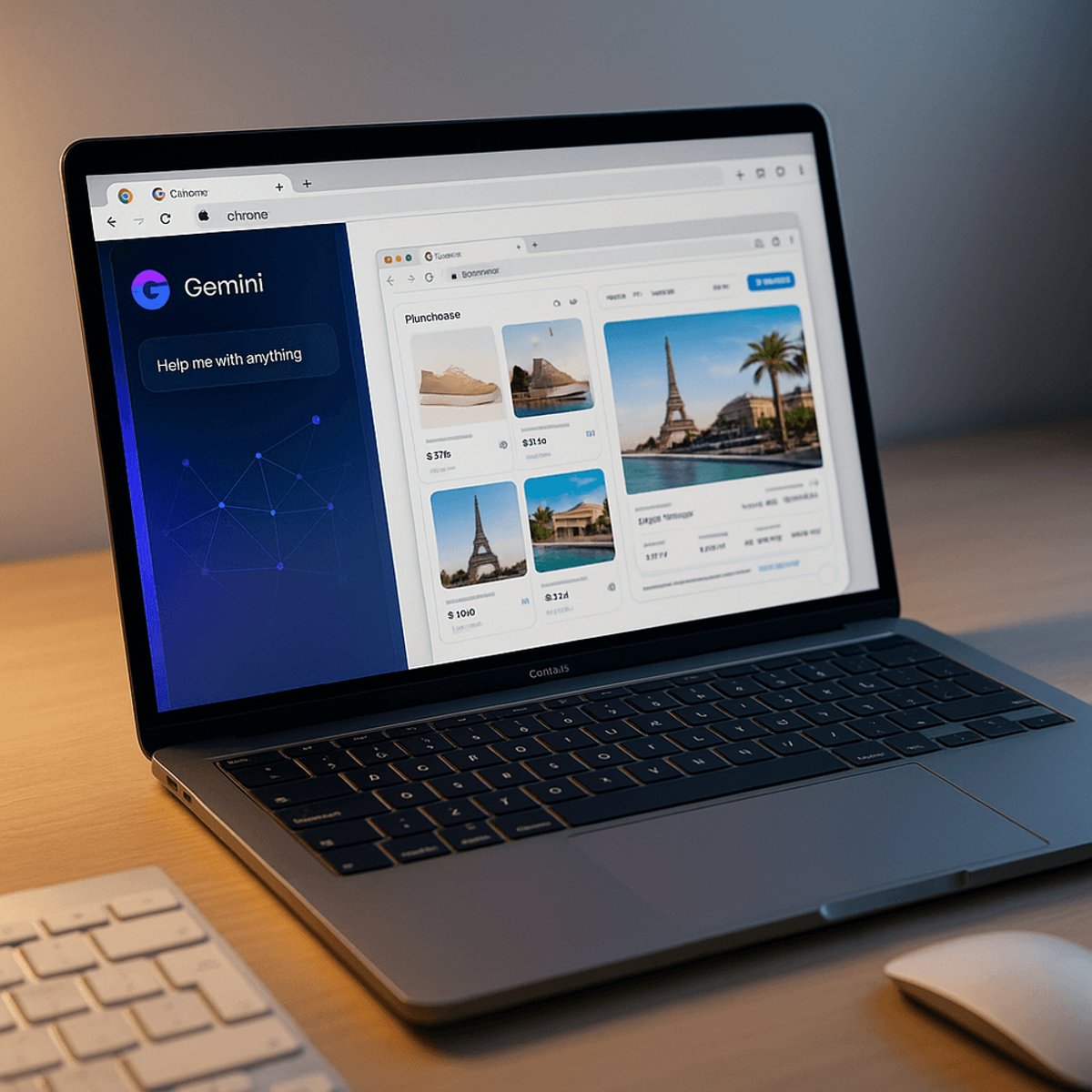
Google just dropped a bombshell update that could reshape how billions of people interact with the web. The company is integrating Gemini 3, its most advanced AI model, directly into Chrome, the world's dominant browser with over 60% global market share. The rollout includes agentic capabilities that can handle multi-step tasks autonomously, a persistent AI side panel for multitasking, and deep hooks into Gmail, Calendar, and other Google services. For AI Pro and Ultra subscribers, a new 'auto browse' feature can book flights, fill forms, and even shop on your behalf - marking Google's most aggressive push yet into ambient AI assistance.
Google is making its biggest bet yet on AI agents living inside your browser. The company just unveiled a sweeping overhaul of Chrome that embeds Gemini 3-powered intelligence directly into the browsing experience, available now for MacOS, Windows, and Chromebook Plus users.
The centerpiece is a reimagined side panel that keeps Gemini persistently accessible no matter what tab you're on. Unlike previous implementations that opened AI assistance in separate windows, this new interface lets users maintain their primary work while the AI handles parallel tasks in the sidebar. Early testers report using it to compare options across dozens of tabs, synthesize product reviews from multiple sites, and coordinate calendar scheduling without breaking flow.
But the real shift comes with auto browse, an agentic feature rolling out to AI Pro and Ultra subscribers in the U.S. This goes way beyond Chrome's traditional autofill. According to Parisa Tabriz, VP of Chrome, the system can "handle multi-step chores on your behalf" - researching hotel and flight combinations across date ranges, scheduling appointments, collecting tax documents, getting contractor quotes, and managing subscriptions.
The multimodal capabilities of Gemini 3 unlock some wild use cases. Planning a Y2K-themed party? Auto browse can analyze inspiration photos, identify specific items, search across retailers, add them to cart within budget, and apply discount codes automatically. If you grant permission, it can tap Google Password Manager to handle tasks requiring sign-in.
Google is also bringing Nano Banana, its image transformation model, directly into Chrome. Users can now modify images on the fly without downloading or switching tabs - transforming research data into infographics or redesigning living rooms with a simple prompt in the side panel.
The Connected Apps integration ties Chrome's AI into Gmail, Calendar, YouTube, Maps, Google Shopping, and Google Flights. The workflow possibilities are significant: Gemini can pull event details from an old email, cross-reference flight options, book travel, and draft a confirmation email to colleagues - all from the browser sidebar. Users control which apps connect through Gemini Settings.
Personal Intelligence, already available in the standalone Gemini app, is coming to Chrome in the coming months. The system will remember context from past conversations to deliver tailored answers and proactive assistance. Google emphasizes opt-in controls, letting users connect or disconnect apps at any time.
On the commerce front, Google is backing the Universal Commerce Protocol (UCP), a new open standard co-developed with Shopify, Etsy, Wayfair, and Target. This protocol ensures AI agents can take actions on behalf of users seamlessly across participating retailers - a critical infrastructure piece for agentic shopping at scale.
Security remains front and center as Google introduces what it calls "entirely new defenses" against emerging AI-specific threats. Auto browse pauses before sensitive actions like purchases or social media posts, requiring explicit user confirmation. The design philosophy keeps humans in the loop for high-stakes decisions while letting the AI handle tedious legwork.
The timing is notable. Microsoft has been pushing Copilot integration across Edge, while OpenAI and Anthropic have been experimenting with browser automation tools. Google's advantage lies in Chrome's massive install base and its ecosystem of first-party services. By embedding Gemini 3 directly into the browser used by billions, Google is making agentic AI accessible at unprecedented scale.
The feature rollout is staged. Side panel, Nano Banana, and Connected Apps are available now to all Gemini in Chrome users. Auto browse is limited to AI Pro and Ultra subscribers in the U.S. for now, with Personal Intelligence arriving in the coming months. The phased approach suggests Google is testing infrastructure and gathering user feedback before broader deployment.
For developers and retailers, the UCP adoption signals a shift toward agent-ready web experiences. Sites that support the protocol will be better positioned as AI-driven browsing becomes mainstream. Shopify's involvement is particularly telling - the platform powers millions of online stores, giving the protocol immediate reach.
The broader question is how users will adapt to having an AI agent that can act autonomously across the web. Google's pause-and-confirm approach for sensitive actions addresses some privacy concerns, but the feature fundamentally changes the relationship between user and browser. Chrome isn't just rendering web pages anymore - it's actively navigating and transacting on your behalf.
Google's Gemini-powered Chrome update represents the clearest vision yet of how AI agents will integrate into everyday computing. By embedding agentic capabilities directly into the world's most-used browser and establishing open commerce protocols with major retailers, Google is laying infrastructure for a fundamentally different web experience. The staged rollout and security guardrails suggest caution, but the ambition is unmistakable: Chrome is evolving from a window to the internet into an active participant that browses, shops, and manages tasks on your behalf. How users respond to surrendering that level of control - even with confirmation prompts - will determine whether this becomes the new normal or a bridge too far for ambient AI.