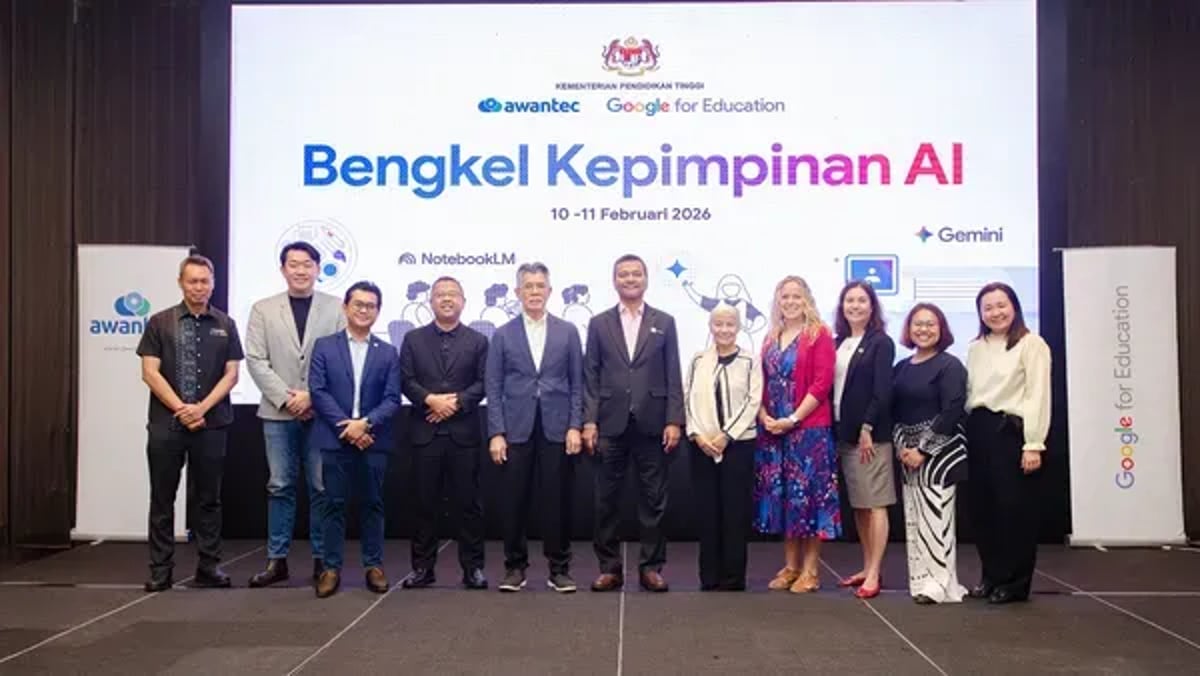
Google just completed a massive education AI deployment across Malaysia, bringing its Gemini for Education platform to all 20 public universities in the country. The rollout reaches 600,000 students and 75,000 faculty members, marking one of Southeast Asia's largest national AI education initiatives. The move positions Google to capture the next generation of AI users in a region where education technology adoption is accelerating rapidly.
Google has completed a sweeping deployment of its Gemini AI platform across Malaysia's entire public university system, a move that puts AI tools directly into the hands of 675,000 students and educators. The rollout, announced by Olivia Basrin, Google's Indonesia and Malaysia Country Lead for Education, covers all 20 public universities in the country - making it one of the most comprehensive national AI education initiatives in Southeast Asia.
The scale is significant. With 600,000 students and 75,000 faculty members now having access to Gemini for Education, Malaysia becomes a major testing ground for Google's education AI strategy in a region where digital transformation in academics is moving fast. According to Google's official announcement, the platform is designed to help students with research, writing assistance, and personalized learning support while giving faculty tools for course preparation and administrative tasks.
This isn't just about product distribution - it's about market positioning. Google is racing against Microsoft and OpenAI to lock in the next generation of AI users through educational institutions. Microsoft's Copilot has already made inroads into universities globally, while OpenAI's ChatGPT has become the default AI assistant for millions of students despite concerns about academic integrity. Google's institutional approach with Gemini for Education offers built-in safeguards and administrative controls that appeal to university administrators worried about misuse.
Malaysia's embrace of the technology reflects broader trends in Southeast Asian education policy. The country has been pushing digital literacy initiatives as part of its national development strategy, and AI adoption in education fits naturally into that framework. The Malaysian government has been vocal about preparing students for an AI-driven economy, and partnerships with tech giants like Google provide infrastructure without massive upfront investment.
But the deployment raises questions about data privacy and vendor lock-in that have dogged big tech's education pushes before. Universities are essentially giving Google access to massive amounts of student interaction data, which could inform future product development even as Google insists on privacy protections. The company hasn't disclosed specific terms of the Malaysian partnership, including whether universities are paying licensing fees or if this is part of a broader strategic arrangement.
The timing matters too. Google's education business has been growing steadily, with Chromebooks and Google Workspace dominating K-12 in many markets. Extending that ecosystem into higher education with AI capabilities creates stickiness - students who learn on Google's tools in university are more likely to choose Google products in their careers. It's the same playbook Microsoft used for decades with Office, now updated for the AI era.
For Malaysian students, the practical impact depends on how universities integrate Gemini into curricula. Some institutions might use it as a supplemental research tool, while others could build entire courses around AI-assisted learning. Faculty adoption will be the real test - if professors resist or discourage its use, the deployment becomes symbolic rather than transformative.
The move also puts pressure on other Southeast Asian countries to keep pace. If Malaysia's universities are training students with advanced AI tools, neighboring countries risk falling behind in preparing their workforce for AI-integrated industries. Expect similar announcements from Google and competitors across Indonesia, Thailand, and Vietnam in coming months as the regional education AI race accelerates.
Google's Malaysian university deployment is less about revolutionary technology and more about strategic positioning. By getting Gemini into the daily workflows of 675,000 students and faculty, Google is building the next generation of institutional customers in a region where AI adoption is still taking shape. The real story will unfold over the next year as we see actual usage patterns, faculty adoption rates, and whether this translates into deeper Google ecosystem lock-in. For now, it's a significant market move dressed up as an education initiative - and one that puts competitive pressure on Microsoft and OpenAI to secure their own institutional footholds before Google claims the territory.