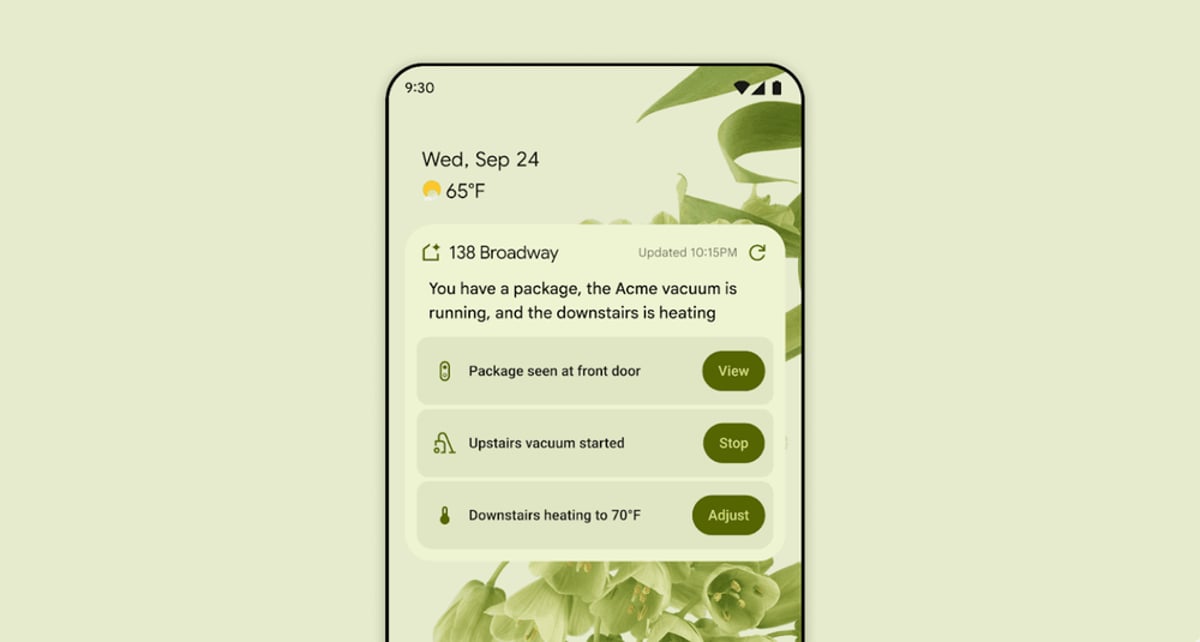
Google is rolling out a major redesign of its Home app that puts Gemini AI front and center, according to code analysis by Android Authority. The update introduces natural language control through a new "Ask Home" feature that lets users type or speak commands to control smart devices and search through their home's video history.
Google just gave us our first real look at how Gemini will transform the smart home experience. Code diggers at Android Authority cracked open the upcoming Google Home app version 3.41.50.3 and found what they're calling "a significant redesign" that puts AI conversations at the heart of home control.
The biggest change hits you right at the top - there's now an "Ask Home" search bar that opens up a whole new way to interact with your smart devices. Instead of hunting through menus and toggles, you can just type "turn off the living room lights" or ask "what happened at my front door yesterday?" The system will parse your video history and give you detailed descriptions of events, making it feel more like chatting with a smart assistant than operating an app.
Google had already announced that Gemini for Home was coming to smart speakers and displays, so seeing this natural language control migrate to the mobile app makes perfect sense. What's interesting is how seamlessly they've integrated it - the overall UI doesn't look dramatically different, but the user flow becomes much more conversational.
The navigation gets a streamline too. Google's ditching the five-tab bottom bar for a cleaner three-icon setup. The old Favorites tab becomes "Home," while Devices and Settings disappear from the main navigation. Don't panic - devices are still accessible through a grid icon within the Home tab, which actually makes the interface less cluttered.
Android Authority's video breakdown also reveals some intriguing new tiles for outdoor air quality and temperature control. There are fresh icons for video and thermometer functions scattered throughout the Home page. That thermometer icon is particularly interesting given that Google's teasing new Nest hardware for next month.
This timing isn't coincidental. Google's been building toward this moment for months, quietly testing features in their Public Preview program while competitors like Amazon and Apple scramble to integrate their own AI assistants into smart home control.
The real test will be how well Gemini handles the nuanced requests that make or break voice control. Can it understand "make it warmer upstairs" when you have multiple thermostats? Will it correctly interpret "turn on movie mode" across different rooms with different setups? The natural language processing has to be spot-on, or users will quickly revert to manual controls.
What's smart about Google's approach is they're not forcing a complete interface overhaul. Power users can still access all the granular controls they're used to, while newcomers get this conversational layer that should make smart home management feel less intimidating. The "Ask Home" conversation screen essentially becomes a command center where you can troubleshoot, control, and monitor everything through natural speech.
This redesign also signals Google's broader strategy to make Gemini the connective tissue across all their products. We've seen it in search, productivity apps, and now home automation. The company's betting that conversational AI will become the primary interface for complex systems, and smart homes are the perfect testing ground.
Google's Home app redesign represents more than just a UI refresh - it's the company's vision for how AI should mediate our relationship with smart devices. By making Gemini the primary interface for home control, Google's positioning itself as the leader in conversational smart home management. The success of this approach could determine whether voice assistants finally deliver on their promise of making our homes truly intelligent, or if we're still stuck with the same frustrating command-and-response patterns that have defined smart speakers for years.