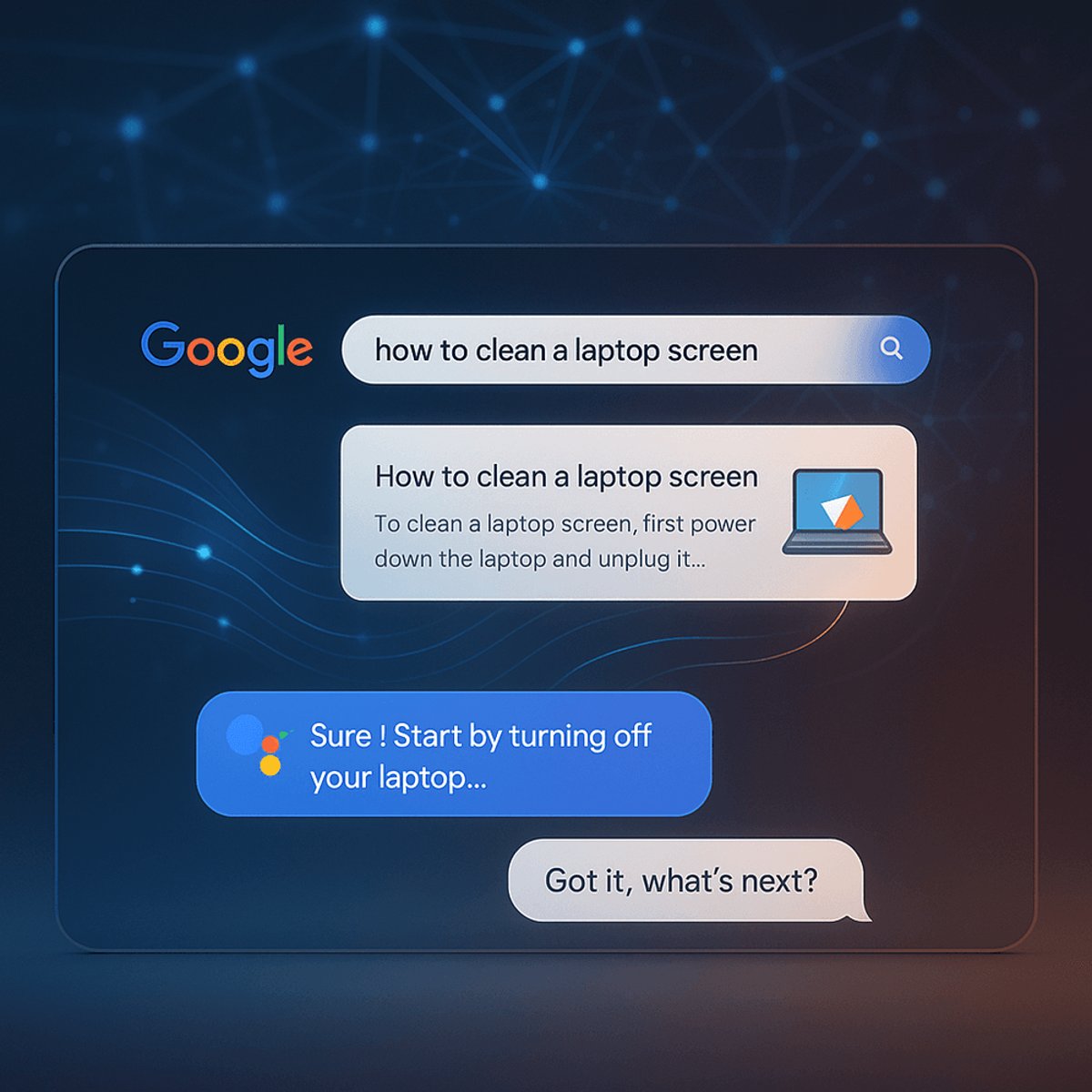
Google just made its search experience a lot more conversational. The tech giant is rolling out a feature that lets users jump from AI Overviews - those AI-generated summaries at the top of search results - directly into AI Mode for deeper, back-and-forth conversations. The update comes alongside Google's decision to make Gemini 3 the default model powering AI Overviews globally, marking another step in the company's push to transform search from a static results page into an interactive AI experience.
Google is betting that the future of search isn't about getting one answer - it's about starting a conversation. The company just announced it's rolling out the ability for users to ask follow-up questions directly from AI Overviews, those AI-generated summaries that appear at the top of search results. Now, instead of getting a static snapshot and moving on, users can dive into AI Mode, Google's conversational search feature designed for complex questions that need more than a quick answer.
The timing couldn't be more strategic. According to TechCrunch, Google is simultaneously making Gemini 3 the default model powering AI Overviews worldwide. The company says this upgrade will deliver "a best-in-class AI response right on the search results page," though it's not sharing specific performance benchmarks yet.
"People come to Search for an incredibly wide range of questions - sometimes to find information quickly, like a sports score or the weather, where a simple result is all you need," Robby Stein, VP of Product at Google Search, explained in a company blog post. "But for complex questions or tasks where you need to explore a topic deeply, you should be able to seamlessly tap into a powerful conversational AI experience."
The new feature represents a fundamental shift in how Google thinks about search. Instead of the traditional model where users type a query, scan results, click a link, and maybe start over with a refined search, Google wants to keep users in a flowing conversation. The company says its internal testing shows users prefer an experience that transitions naturally from a quick overview into deeper dialogue while preserving context from the original query.
This isn't Google's first move to make search more conversational. Just days ago, the company announced it's bringing "Personal Intelligence" to AI Mode, letting the system tap into Gmail and Google Photos to provide individualized responses. That capability, which debuted earlier in January in the Gemini app, connects across Google's ecosystem including Search and YouTube history.
The pattern is clear: Google is rapidly stitching together its AI capabilities across products. Earlier this month, the company brought AI Overviews to Gmail, letting users search their inbox with natural language instead of hunting through emails with keyword searches. That announcement came alongside Gmail's new AI Inbox feature.
But the real story here is competitive pressure. While Google dominates traditional search, OpenAI has been making noise about turning ChatGPT into a search destination. By making AI Overviews more interactive and conversational, Google is essentially saying: we can do what ChatGPT does, but with access to the entire web and your personal data across Google services.
The Gemini 3 upgrade is significant too. By making it the default model globally, Google is committing serious computational resources to improving the quality of these AI-generated summaries. That's a bet that users will stick with Google Search even as AI-powered alternatives proliferate. The company needs these summaries to be accurate, helpful, and fast - any stumbles could send users looking elsewhere.
For now, Google isn't sharing specifics about rollout timing or which users will see the new features first. The company also hasn't detailed how the transition from AI Overview to AI Mode will look in practice, though it says the experience is "designed to feel like a single flow" with links that let users move from snapshot to conversation as needed.
What's clear is that Google is moving fast to reinvent search before someone else does it for them. The question isn't whether search will become more conversational and AI-driven - it's whether Google can maintain its dominance as the search landscape fundamentally changes. With Microsoft backing OpenAI and integrating AI into Bing, and new startups like Perplexity gaining traction, Google can't afford to let its search crown slip.
The integration of Gemini 3, combined with Personal Intelligence features and seamless transitions to AI Mode, shows Google is playing both defense and offense. It's defending its core search business while trying to set the standard for what AI-powered search should look like. Whether users actually want this level of conversational depth in their search experience - or if they'll find it overwhelming - remains to be seen.
Google's push to make search conversational isn't just a feature update - it's a fundamental reimagining of how billions of people find information online. By linking AI Overviews to AI Mode and powering it all with Gemini 3, Google is trying to own the next era of search before competitors can define it. The real test will be whether users embrace this shift toward longer, context-aware conversations or if they just want quick answers and move on. Either way, the days of search as a simple list of blue links are clearly over, and Google is determined to write the next chapter on its own terms.