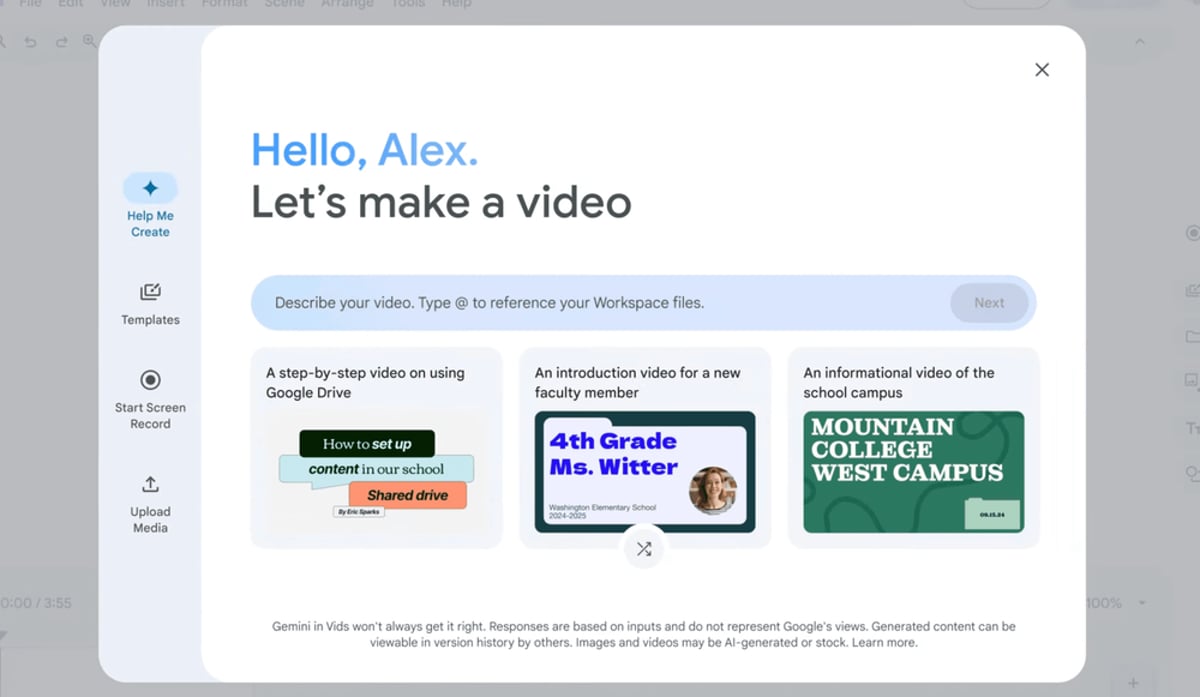
Google just threw open the doors to its AI-powered video editor Vids, making it free for everyone after months behind the paywall of Workspace subscriptions. The move signals Google's aggressive push to democratize AI video creation tools as competition heats up in the enterprise content space, with new AI avatar features and automated editing capabilities that could reshape how businesses create video content.
Google is making its biggest play yet in the AI video creation wars. The tech giant just announced it's rolling out a free version of Vids, its AI-powered video editor that until now required expensive Workspace or AI plan subscriptions. The move puts professional-grade video creation tools in the hands of millions of users, setting up a direct challenge to established players in the enterprise video space.
"Google is rolling out a basic version of Vids to everyone," product director Vishnu Sivaji told The Verge. The free tier includes templates, stock media, and what Sivaji calls "a subset of AI capabilities" - though notably missing the premium AI features that paying customers get.
The timing couldn't be more strategic. Launched just last year, Vids represents Google's answer to the exploding demand for AI-assisted content creation in the enterprise market. The platform specializes in helping users quickly assemble video presentations with AI-driven storyboarding, scene suggestions, and automated background music selection.
But it's the new AI avatar feature that's generating the most buzz. Users can now select from 12 pre-made digital presenters, each with distinct appearances and voices, then simply input their script. The avatars handle the rest, delivering polished presentations without the need for human talent or studio time. However, unlike Zoom's offering, Google isn't yet allowing users to create personalized avatars of themselves - a feature that's become surprisingly popular among tech CEOs.
[embedded image]
When pressed about custom avatar creation, Sivaji remained coy, saying Google doesn't "have any further updates to share" on that front. It's a notable gap considering Zoom already offers this capability, suggesting Google may be holding back premium features for its paid tiers.
The platform is also expanding its video generation capabilities with new image-to-video functionality. Users can now create 8-second video clips that incorporate specific images - perfect for product demonstrations or marketing content. Additionally, Google's rolling out an AI-powered transcript trimmer that automatically identifies and removes filler words and awkward pauses from recorded presentations.
[video iframe]
The enterprise implications are massive. Sivaji painted a stark picture of traditional video production costs: "A 10-minute-long clip with real actors can take as long as six months, and it might be tens of thousands of dollars because of the amount of time it goes into writing the script, iterating on it, getting into the studio, actually recording it, and then editing it."
Those economics explain why Google sees such opportunity in this space. By dramatically reducing both the time and cost barriers to professional video creation, Vids could unlock entirely new categories of business content - from training materials to customer support videos that were previously too expensive to justify.
The free tier strategy also signals Google's broader AI democratization play. While competitors focus on high-end enterprise customers, Google is betting that widespread adoption of AI tools will create network effects and drive eventual premium upgrades. It's the same playbook that made Google Workspace a dominant force in enterprise productivity.
For businesses, the implications are immediate. Marketing teams that previously relied on external agencies or expensive internal production can now create professional-looking content in-house. Training departments can rapidly scale video content creation. Customer support can move beyond text-based help articles to rich, multi-media experiences.
The competitive landscape is heating up rapidly. While Adobe dominates professional video editing and Canva leads in design templates, Google's positioning Vids as the bridge between the two - professional capabilities with consumer-grade simplicity. The AI avatar feature particularly puts pressure on specialized tools like Synthesia and Loom that have built businesses around similar functionality.
What remains to be seen is how Google will monetize this strategy. The free tier includes "pretty much all of the amazing capabilities" according to Sivaji, raising questions about what premium features will drive Workspace upgrades. Early signs suggest advanced AI features like custom avatars and enhanced video generation will remain behind the paywall.
The broader trend is clear: AI is rapidly commoditizing creative work that once required specialized skills and expensive tools. Google's Vids launch is just the latest example of how major tech platforms are using AI to break down barriers between professional and consumer-grade content creation.
Google's decision to democratize Vids represents a calculated bet that widespread AI adoption will reshape the enterprise video landscape. By removing cost barriers and simplifying professional video creation, Google is positioning itself at the center of the next wave of business content transformation. The real question isn't whether AI will disrupt traditional video production - it's whether Google can maintain its competitive edge as every major platform races to offer similar capabilities. For businesses ready to embrace AI-powered content creation, the timing couldn't be better to experiment with these tools while they're still free.