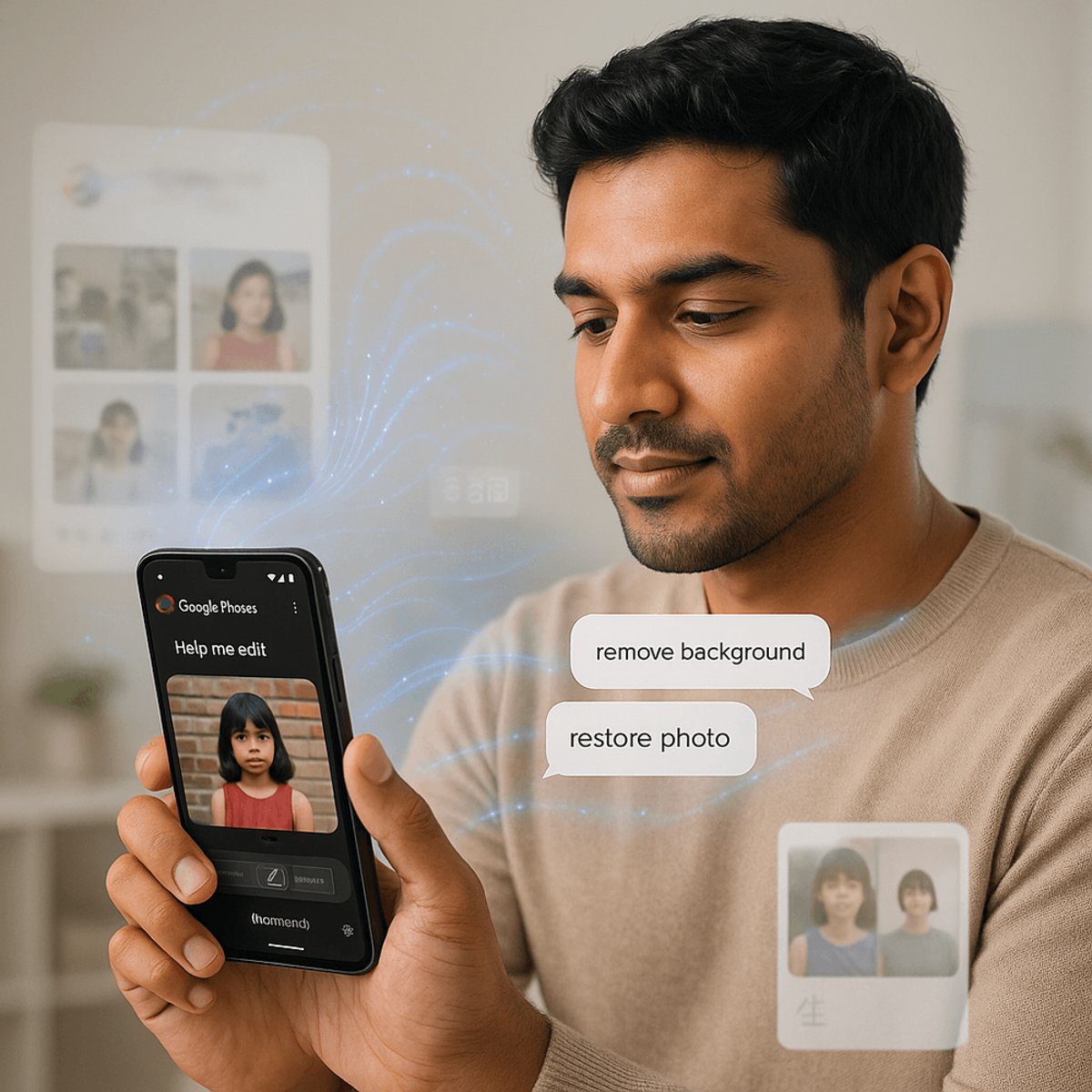
Google is pushing its AI-powered photo editing tools deeper into international markets, rolling out natural language editing capabilities to India, Australia, and Japan. The move brings the "Help me Edit" feature - which lets users describe photo changes in plain language rather than wrestling with sliders and filters - to millions of new Android users. First launched for Pixel 10 owners in the U.S. last August, the expansion signals Google's aggressive strategy to dominate consumer AI applications ahead of rivals like Adobe and Apple.
Google just handed millions of users across India, Australia, and Japan something most photo editing apps still can't match - the ability to fix images by just asking. The company announced Tuesday it's expanding natural language-based editing in Google Photos to these three markets, bringing conversational AI editing beyond the U.S. launch that kicked off with Pixel 10 devices last August.
The timing isn't accidental. While Adobe continues to charge premium subscriptions for AI-powered editing in Photoshop and Lightroom, and Apple slowly rolls out similar features across its ecosystem, Google's making a calculated bet that free, accessible AI tools will lock users into its broader services ecosystem. India alone represents over 600 million smartphone users, many accessing premium software features for the first time through Google's free tier.
Here's how it works in practice: Users in the newly supported countries now see a "Help me Edit" box when they tap the edit option on any photo. From there, they can either pick from suggested prompts or type their own requests in plain language. Want to "remove the motorcycle in the background" or "reduce the background blur"? Just type it. Need a more ambitious restoration job? Try "restore this old photo" and watch the AI reconstruct faded details.
The feature handles surprisingly specific requests, according to demonstrations shared by Google. Users can ask it to edit a friend's pose, remove their glasses, or even force open someone's eyes in a photo where they blinked. Behind the scenes, Google's Nano Banana image model processes these transformations entirely on-device, which means no internet connection required once you've downloaded the capability. That on-device processing gives Google a crucial edge in markets like India where connectivity remains inconsistent.
But Google's real play here goes beyond just editing photos. The company's adding language support for Hindi, Tamil, Marathi, Telugu, Bengali, and Gujarati - six languages spoken by over 800 million people. That localization effort dwarfs anything competitors have attempted and positions Google to capture users who've historically been locked out of premium creative tools due to language barriers.
The hardware requirements stay relatively modest: any Android device with at least 4GB of RAM running Android 8.0 or higher can access the feature. That's not just Pixel phones - it's hundreds of millions of mid-range Android devices from Samsung, Xiaomi, Oppo, and others flooding markets across Asia and Australia. Google's essentially turned every compatible Android phone into an AI photo editing workstation.
There's a transparency component too. Google's rolling out C2PA Content Credentials support alongside the editing expansion, embedding metadata that flags when images have been created or edited using AI. As synthetic media floods social platforms, this kind of provenance tracking has become critical. Meta's been grappling with how to label AI content since mid-2024, and C2PA credentials offer a standardized solution.
The expansion fits into Google's broader AI integration blitz across Google Photos. Last November, the company pushed AI-powered search to over 100 countries with support for 17+ languages. It introduced AI templates that convert photos into different artistic styles. Last week came the "Meme me" feature, which lets users combine reference templates with their own images to create shareable memes.
The competitive implications run deep. Adobe's been the professional standard for image editing for decades, but its subscription model - starting at $54.99 monthly for the full Creative Cloud suite - prices out most users in emerging markets. Apple's photo editing advances remain locked to its hardware ecosystem, which commands minimal market share in price-sensitive regions like India and Southeast Asia. Google's betting that free, AI-powered tools accessible across hundreds of device models will build loyalty that translates to paid services down the line.
There's also the data play. Every edit users make trains Google's models to better understand visual preferences and natural language requests across different cultures and languages. That training data becomes invaluable as Google pushes AI capabilities across Search, Gmail, Docs, and its other properties. The more users rely on Google Photos for AI editing, the more entrenched they become in Google's ecosystem.
The on-device processing through Nano Banana also positions Google ahead of cloud-dependent competitors. Users get instant results without uploading photos to remote servers, which addresses both privacy concerns and connectivity limitations. That architectural choice matters enormously in markets where data costs remain high and privacy regulations continue tightening.
Google's international expansion of AI photo editing represents more than a feature rollout - it's a strategic land grab in emerging markets where Adobe and Apple haven't built meaningful footholds. By offering sophisticated editing capabilities for free, in local languages, on affordable hardware, Google's creating switching costs that could define the next decade of consumer AI adoption. The real test will be whether users stick around once they discover these free tools are the gateway to Google's broader subscription ecosystem. For now, hundreds of millions of Android users just gained access to editing capabilities that were professional-grade luxuries just two years ago.