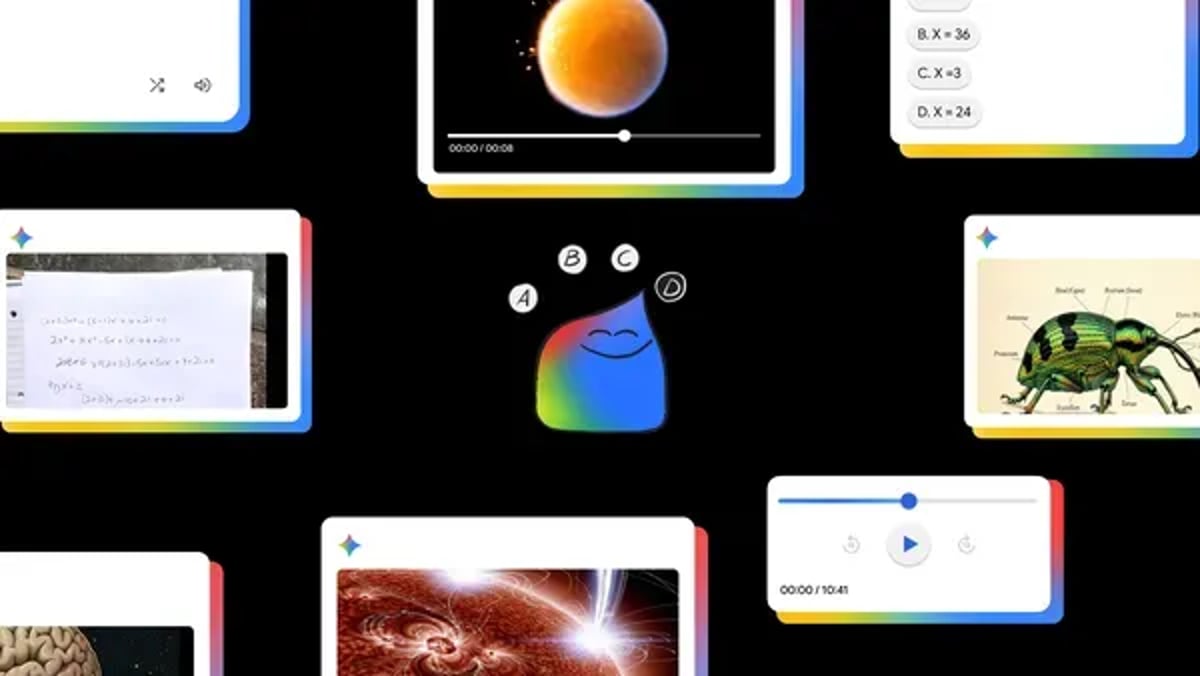
Google just launched a comprehensive suite of AI-powered educational tools in its Gemini app across Europe, the Middle East, and Africa, targeting the back-to-school season with features designed to revolutionize how students learn. The rollout includes Guided Learning, integrated visuals, and exam prep tools, coming as new research reveals two-thirds of European teens already use AI for learning weekly.
Google is making its biggest play yet for the global education market, rolling out a suite of AI-powered learning tools in its Gemini app across Europe, the Middle East, and Africa just as students return to classrooms. The timing isn't coincidental – internal research commissioned by Google surveying 7,000 European teenagers reveals that more than two-thirds are already using AI tools for learning every week.
[embedded image]
The centerpiece of Google's educational offensive is Guided Learning, a new mode that transforms Gemini from a simple Q&A bot into what Jennifer Shen, Director of Product Management for the Gemini App, calls "your personal AI learning companion." Unlike traditional chatbots that provide direct answers, Guided Learning breaks down complex problems step-by-step and adapts explanations based on individual learning patterns.
"Guided Learning helps you build a deep understanding instead of just getting quick answers," Shen explained in Google's official announcement. The feature can create study guides from course files and explain difficult concepts using videos and visual aids, positioning itself as a comprehensive learning ecosystem rather than just an answer machine.
The regional rollout represents a significant strategic shift for Google, which has historically focused its AI educational tools primarily on English-speaking markets. By expanding to Europe, the Middle East, and Africa simultaneously, Google is clearly positioning itself to compete with Microsoft's Copilot in Education and emerging AI tutoring platforms before they can establish footholds in these markets.
Google's second major addition automatically integrates high-quality images, diagrams, and YouTube videos directly into Gemini's responses. When students ask about complex topics like photosynthesis or cellular biology, the AI proactively weaves in visual elements without requiring additional prompts. This multimodal approach signals Google's confidence in its visual AI capabilities, an area where it's been racing to match OpenAI's GPT-4 Vision.
[video iframe]
The third pillar focuses on exam preparation, allowing students to generate flashcards and study guides instantly from quiz results or class materials. This feature directly targets the lucrative test prep market, where companies like Quizlet have built substantial businesses around similar functionality.
The timing of this launch coincides with growing concerns about AI's role in education. While Google's research shows widespread adoption among European teens, educators across the region have expressed mixed feelings about AI in classrooms. Some school districts have banned AI tools entirely, while others are scrambling to develop policies for their appropriate use.
"It's more important than ever that AI tools are purpose-built for learning to support the next generation of students who will enter the workforce," Shen noted, acknowledging the responsibility that comes with building educational AI systems. The emphasis on "purpose-built" appears designed to differentiate Gemini's educational features from general-purpose chatbots that students might use inappropriately for homework completion.
Google's expansion into international education markets puts additional pressure on Meta, which has yet to announce comprehensive AI educational tools despite its significant investment in AI research. Apple remains notably absent from the AI education space, though its dominance in school device markets through iPads gives it potential leverage for future moves.
The competitive landscape is heating up rapidly. Microsoft has already integrated Copilot into its Office 365 Education suite, while startups like Khan Academy's Khanmigo and Duolingo's AI features are gaining traction with specific learning applications.
For Google, success in education represents more than just another product vertical – it's about capturing the next generation of users before they develop preferences for competing platforms. As these students graduate and enter the workforce, their familiarity with Gemini's learning tools could translate into broader adoption of Google's AI ecosystem across enterprise applications.
The European expansion also serves Google's broader regulatory strategy. By demonstrating responsible AI deployment in education across diverse international markets, the company may be attempting to preempt potential regulatory restrictions on AI in schools, similar to privacy regulations that have emerged around student data protection.
Google's aggressive expansion of Gemini's educational capabilities across Europe, the Middle East, and Africa signals the company's recognition that capturing student users early could determine the next decade of AI platform competition. With research showing widespread teen adoption of AI learning tools already happening, Google is racing to provide purpose-built educational experiences before competitors can establish dominance. The success of these regional launches will likely determine whether Google can translate its search and productivity advantages into lasting leadership in the rapidly evolving AI education market.