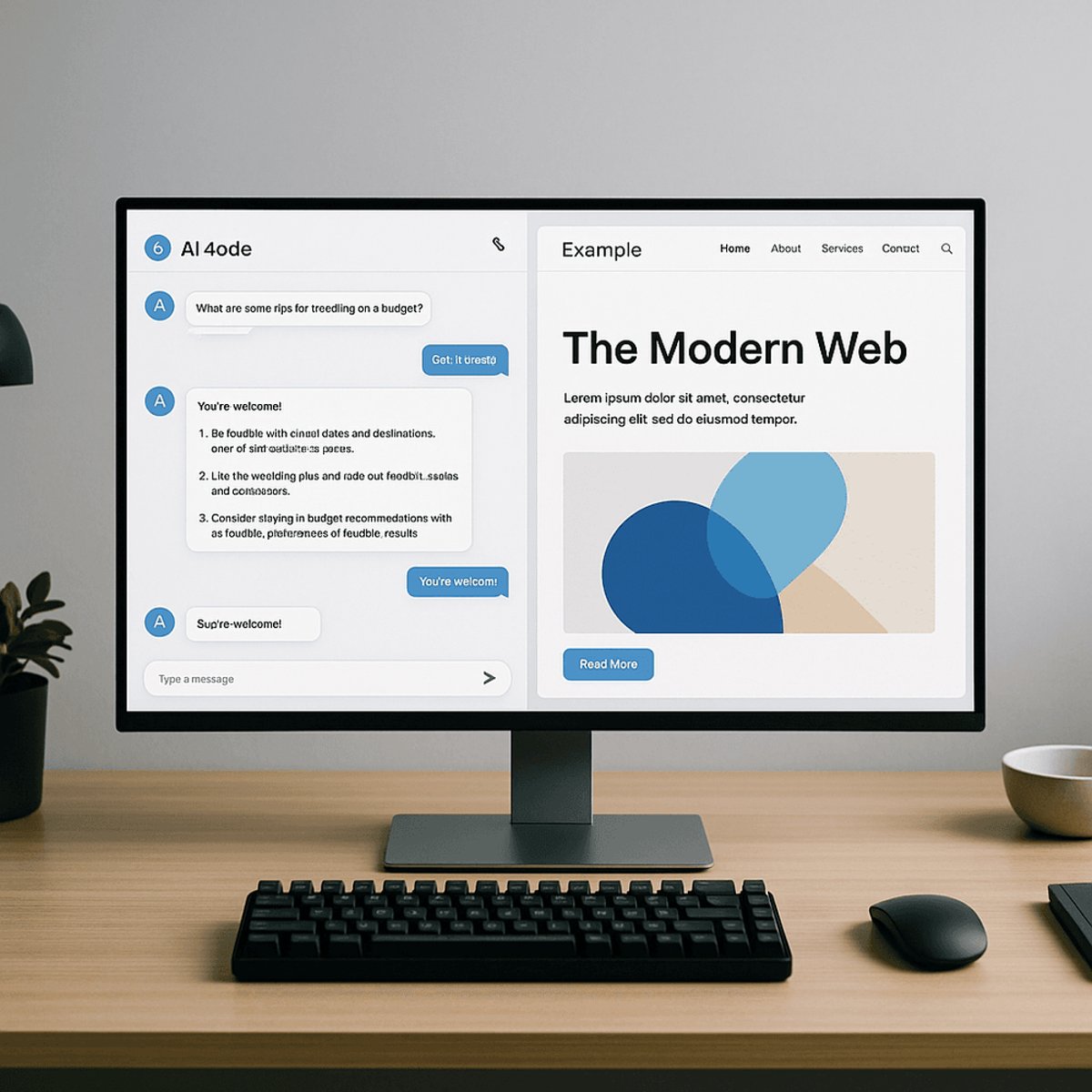
Google just rolled out a significant update to AI Mode in Chrome that fundamentally changes how users interact with search. The update makes the chatbot-style search interface persistent throughout your browsing session, effectively trying to eliminate the constant tab-switching that's become synonymous with online research. According to Wired, the move signals Google's bet that conversational AI should be a constant companion, not a destination you visit and leave.
Google is making a bold play to change how billions of people search the web. The company's latest update to AI Mode in Chrome transforms the chatbot-style search tool from a one-off destination into a persistent sidebar companion that sticks around as you navigate the web.
The shift addresses one of the internet's most universal frustrations - that endless cycle of opening new tabs, reading snippets, backtracking to search results, and starting over. Google's bet is simple: keep the AI conversation going instead of forcing users to restart their queries every time they click a link.
Chrome commands roughly 65% of the global browser market, giving Google an unmatched distribution channel for its AI ambitions. While competitors like Microsoft embedded similar AI features into Edge, Chrome's dominance means this update instantly reaches more than 3 billion active users. That scale matters when you're trying to reshape decades-old search behavior.
The update comes as Google races to defend its search monopoly against AI-powered upstarts. OpenAI launched SearchGPT last year, while Perplexity has been steadily chipping away at Google's dominance with its answer-first approach. By embedding AI Mode directly into the browsing experience rather than keeping it siloed in search results, Google's essentially making it harder to ignore.
What's interesting is the UX philosophy shift here. Traditional search treated each query as discrete - you asked a question, got results, and that transaction ended. AI Mode's persistent presence suggests Google believes search should be continuous and contextual, building on previous questions as you explore topics deeper. It's conversational search taken to its logical extreme.
The timing aligns with Google's broader AI integration strategy. The company recently baked Gemini into Gmail, Docs, and Meet, following the playbook of making AI ubiquitous rather than optional. Chrome's AI Mode update fits that pattern - instead of asking users to opt into AI features, Google's designing interfaces where AI is simply always there.
But there's a risk in this always-on approach. Browser real estate is precious, and a persistent AI sidebar competes with the actual content users are trying to consume. Google's walking a fine line between helpful and intrusive, especially given Chrome's history of memory consumption issues.
The update also raises questions about data collection and user privacy. A persistent AI Mode that follows you across tabs inherently sees more of your browsing behavior than discrete search queries. Google hasn't detailed what data this new implementation collects or how it uses browsing context to improve responses, which privacy advocates will likely scrutinize.
For developers and SEO professionals, this represents another seismic shift in how content gets discovered and consumed. If users increasingly stay in AI-mediated conversations rather than clicking through to individual sites, traditional traffic patterns could collapse. It's the same concern that's driven publishers to block AI crawlers - except now the AI isn't just training on their content, it's actively replacing the need to visit their sites.
The competitive dynamics get even more interesting when you consider mobile. Chrome on Android powers the majority of mobile browsing worldwide, and a persistent AI Mode on smaller screens could completely reshape mobile search behavior. Google hasn't confirmed whether this update extends to mobile Chrome yet, but the implications would be massive.
What we're watching unfold is Google's attempt to make AI search feel inevitable rather than optional. By embedding it into the browser itself and keeping it persistently visible, the company's betting that familiarity will drive adoption faster than any marketing campaign could. It's the same strategy that made Chrome dominant in the first place - make the browser so useful and omnipresent that switching becomes unthinkable.
Google's AI Mode update represents more than a browser tweak - it's a fundamental reimagining of how search integrates into browsing. By making conversational AI persistent rather than transactional, Google's betting that users will embrace an always-on research assistant over the chaos of tab management. Whether that gamble pays off depends on whether the convenience outweighs concerns about screen clutter, privacy, and the slow disappearance of the open web. For now, Chrome's massive user base means billions will experience this shift whether they asked for it or not, giving Google an unparalleled testing ground for the future of AI-mediated browsing.