TL;DR
- - Google's Gemini introduces Guided Learning.
- - Empowers users with interactive tools, shifting from mere answers.
- - Positions Google against OpenAI in educational AI.
- - Watch Google's educational dominance potential.
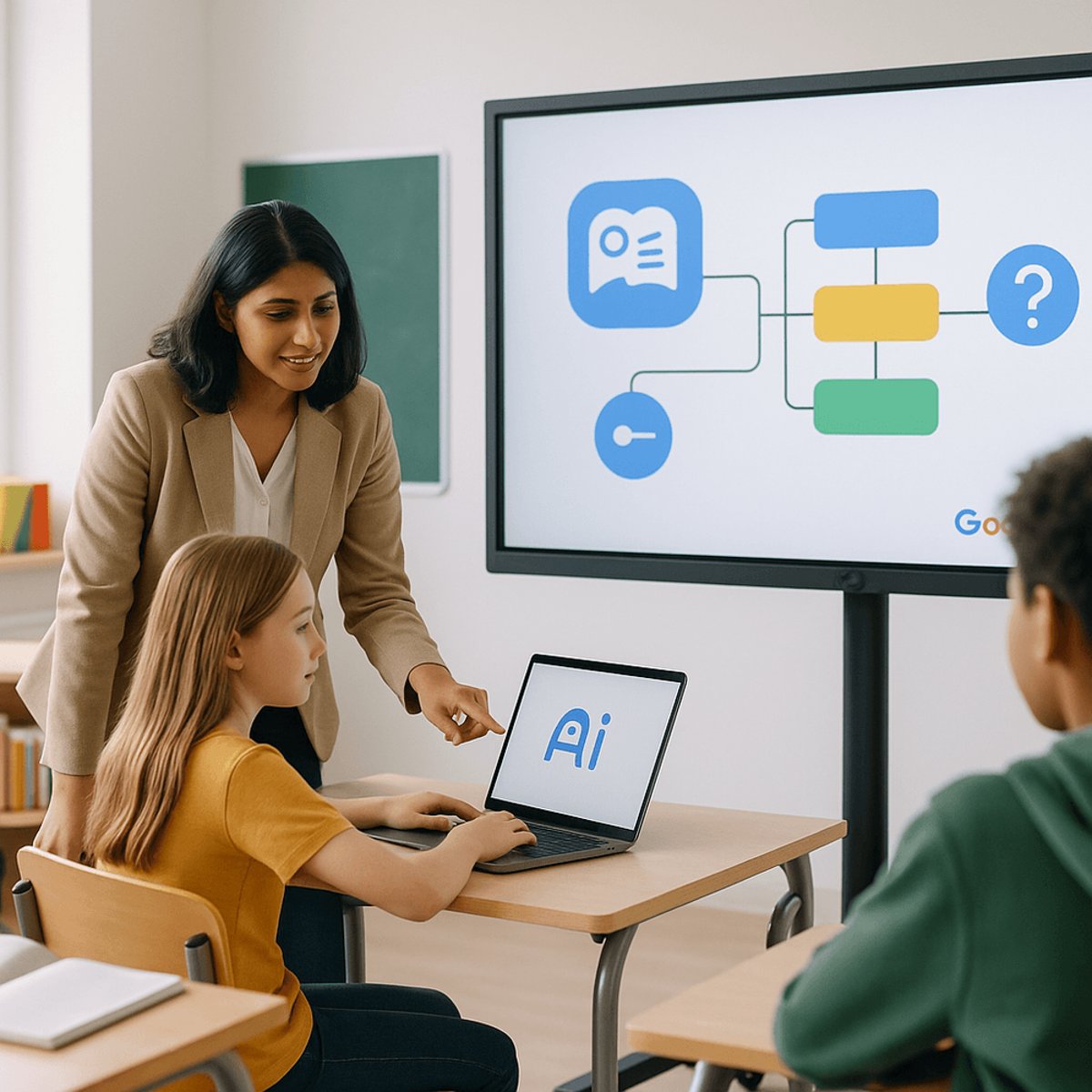
With Google launching its new 'Guided Learning' tool within Gemini, the company is taking a direct aim at OpenAI’s ChatGPT Study Mode. Unveiled just as the academic year begins, this feature is designed to deepen users' understanding beyond surface-level answers. What's at stake? Google's potential dominance in AI-driven education, and possibly, a redefined student learning experience globally.
Opening Analysis
As the educational sector pivots towards integrating technology that's not just supplemental but central to learning, Google's Gemini introduction of 'Guided Learning' escalates the competition with OpenAI. This move, strategically timed with the academic calendar, signifies an arms race in AI-powered education tools. Gemini aims to make learning immersive by providing resources that adapt to user needs, countering criticism of AI as an answer-providing crutch.
Market Dynamics: Competitive Landscape Shifts
Google’s move underscores a dynamic shift in AI application, from traditional business solutions to educational empowerment. With OpenAI already establishing a foothold with ChatGPT's Study Mode, Google's Gemini is poised to aggressively compete by offering AI that not just instructs but interacts in real time, potentially re-tasking AI’s role in classrooms worldwide.
Technical Innovation: Breakthrough Implications
By merging multimedia tools with its existing platform, Gemini differentiates itself by emphasizing the 'why' and 'how' in subject comprehension. With interdisciplinary functionalities such as rendering real-time quizzes and interactive simulations, this innovation is set to redefine user engagement. Google takes a step forward by adding personalized learning components, fostering critical thinking.
Financial Analysis: Metrics, Valuations, Growth Trajectories
Although the direct financial impact on Google isn't immediate, the educational sector holds substantial growth potential. Providing free subscriptions in strategic markets like the U.S., Japan, and Brazil could bolster future adoption rates and translate to increased long-term revenues. The intersection of AI educational tools and advanced data analytics promises not only revenue but transformative market positioning.
Strategic Outlook: Winners, Risks, Opportunities
Winners could include educational institutions that adopt early and tech-savvy students leveraging these tools beyond traditional curricula. However, there are significant risks including data privacy concerns and potential backlash from traditional educators wary of AI replacing human interaction. Nonetheless, opportunities abound in refining AI models to increasingly personalize content, driving engagement, and improving learning outcomes.
From a strategic standpoint, Google's aggressive educational push not only positions it alongside OpenAI but also as potentially setting new standards in digital learning globally.
The next 3–6 months will be critical in seeing how well Google's solution is adopted; if successful, the next 1–2 years could witness exponential growth in AI’s role in education, especially in emerging markets.
Key Takeaways:
- Google's strategic entry into educational AI could shift market dynamics.
- Technical innovation in AI presents risks but also immense growth potential.
- Long-term success hinges on adoption rates and educational enhancements.