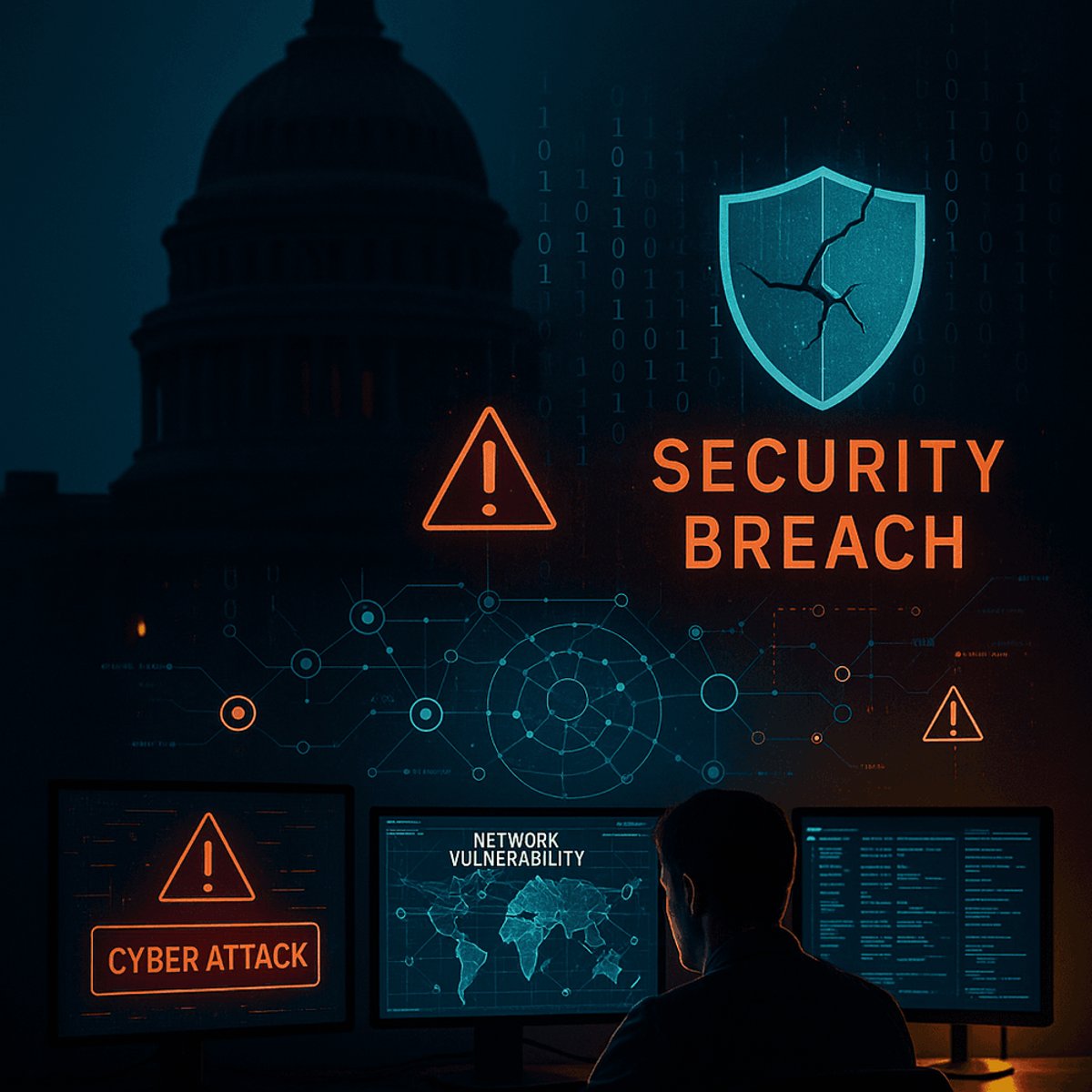
The five-week government shutdown just claimed its first major cybersecurity casualty. The Congressional Budget Office confirmed it was breached by what The Washington Post reports as a suspected foreign actor, highlighting growing concerns that reduced staffing and delayed security maintenance are creating dangerous vulnerabilities across federal systems.
The timing couldn't be worse. Just as the five-week government shutdown reaches crisis levels across multiple agencies, the Congressional Budget Office drops news that it's been hacked. CBO spokesperson Caitlin Emma confirmed to WIRED that the agency "implemented additional monitoring and new security controls" after the breach, but notably dodged questions about whether the shutdown impacted their cybersecurity operations.
The hack represents exactly what security experts have been warning about. "A lot of federal digital systems are still just running in the cloud throughout the shutdown, even if the office is empty," explains Safi Mojidi, a longtime cybersecurity researcher who previously worked for NASA and as a federal security contractor. "If everything was set up properly, then the cloud offers an important baseline of security, but it's hard to rest easy during a shutdown knowing that even in the best of times there are problems getting security right."
But here's where it gets really concerning - this isn't just about systems running on autopilot. Critical security maintenance tasks like vulnerability patching, threat monitoring, and device management require human oversight. When those humans are furloughed or stretched thin covering multiple roles, things start slipping through the cracks.
The Department of Homeland Security's Cybersecurity and Infrastructure Security Agency, which coordinates digital defense across the federal government, was already dealing with staff reductions before the shutdown hit. Now CISA is continuing to cut staff even during the shutdown, according to court documents. When asked about the impact, CISA spokesperson Marci McCarthy offered only that "CISA continues to execute on its mission" while blaming Democrats for the shutdown.
The reality is more nuanced than either political talking point suggests. The federal government's decade-long migration to cloud infrastructure does provide crucial automated protections that keep systems running even when offices are empty. Amazon, Microsoft, and Google all provide enterprise-grade security baselines that are far more robust than what most agencies could maintain internally.
But cybersecurity isn't just about having good infrastructure - it's about continuous monitoring and rapid response. "It makes things worse and adds even more work down the road, because then they have to catch up," one former national security official told WIRED, speaking anonymously since they're not authorized to discuss the matter. "The people who are left right now are working on the most critical stuff, which is great and necessary. But even so, I think there should be some worry from the public."
That official hit on something crucial - this creates what security experts call "technical debt." Every missed patch, every delayed security update, every monitoring gap that goes unaddressed doesn't just disappear when the government reopens. It accumulates into a massive backlog that could take months or even years to fully address.
The CBO hack illustrates this perfectly. Here's an agency that handles sensitive financial and economic data for Congress, getting breached during a period when normal security protocols might be disrupted. The Washington Post reports foreign involvement, which suggests this wasn't just opportunistic - someone was specifically targeting federal systems while they knew defenses might be weakened.
What's particularly troubling is how this echoes broader patterns in government cybersecurity failures. When agencies get breached years after a vulnerability was discovered, it's often because routine maintenance got deferred during budget crunches or staffing shortages. "When you hear about a hack at a government agency and you think, 'Why didn't they patch this moderate severity vulnerability for three years?' Well, this is how that happens," the former official explained.
The federal cybersecurity landscape isn't uniform either. Some agencies have invested heavily in modernizing their digital defenses and could weather a shutdown better than others. But the interconnected nature of government systems means vulnerabilities at one agency can potentially provide access to others.
Meanwhile, the shutdown's impacts keep cascading. Air traffic control shortages are disrupting flights, SNAP benefits are creating food insecurity, and federal workers are facing financial devastation. Adding cybersecurity vulnerabilities to this mix creates a perfect storm where foreign adversaries might see an opportunity to exploit weakened defenses while the government is distracted by operational crises.
The CBO hack during this extended shutdown isn't just another security incident - it's a warning sign of systemic vulnerabilities that could have lasting consequences. While cloud infrastructure provides some protection, the accumulation of deferred security maintenance creates risks that will persist long after the government reopens. As foreign adversaries look for opportunities to exploit weakened defenses, the true cost of this shutdown may be measured not just in immediate operational disruptions, but in years of compromised federal cybersecurity posture.