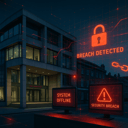
Telecom infrastructure giant Ribbon Communications just disclosed that nation-state hackers had unfettered access to its corporate network for nearly a year before detection. The breach, revealed in SEC filings, potentially exposed customer data from Fortune 500 companies and government agencies including the Department of Defense. With hundreds of enterprise clients relying on Ribbon's critical communications infrastructure, this represents one of the most significant supply chain security incidents of 2025.
Ribbon Communications just became the latest telecom infrastructure provider to fall victim to a sophisticated nation-state campaign that's been systematically targeting America's communications backbone. The Texas-based company confirmed in SEC filings that government-backed hackers maintained persistent access to its corporate network from December 2024 through October 2025 - a staggering 10-month infiltration that went undetected.
The breach disclosure, buried in a routine 10-Q filing with securities regulators, reveals the scope of vulnerability in America's telecom supply chain. Ribbon provides critical phone, networking, and internet services to hundreds of enterprise customers, including Fortune 500 companies and sensitive government agencies like the Department of Defense. The company's infrastructure touches virtually every major communications network in the country.
According to Reuters' initial reporting, at least three of Ribbon's corporate customers were directly impacted by the intrusion, though the companies haven't been publicly identified. The hackers managed to access "several customer files saved outside of the main network on two laptops," suggesting they had moved beyond initial network access to target specific client data.
Ribbon's disclosure comes as Chinese-backed hacking groups continue their aggressive campaign against U.S. telecommunications infrastructure. The Salt Typhoon operation has already compromised at least 200 American companies, including major carriers like AT&T, Verizon, and Lumen. These coordinated attacks represent what U.S. officials describe as preparation for a potential future conflict over Taiwan.
The timing raises serious questions about detection capabilities across the telecom sector. How does a nation-state actor maintain access to critical infrastructure for nearly a year without triggering security alerts? Ribbon's network monitoring apparently failed to identify suspicious activity for months, despite the company serving some of America's most security-conscious organizations.
Ribbon has notified law enforcement and claims the hackers no longer have network access, but the damage assessment continues. The company's spokesperson Catherine Berthier hasn't responded to media inquiries, leaving key questions unanswered about the scope of data exposure and remediation efforts.
This breach highlights the vulnerability of the telecom supply chain, where infrastructure providers like Ribbon serve as critical chokepoints. When these companies get compromised, the ripple effects cascade across hundreds of downstream customers. The hackers didn't just breach Ribbon - they potentially gained insight into the communications infrastructure of Fortune 500 companies and government agencies.
The incident also underscores the sophistication of current nation-state campaigns. These aren't opportunistic attacks but carefully orchestrated operations designed to establish persistent access for intelligence gathering and potential future disruption. The 10-month dwell time suggests the attackers were methodically mapping network architecture and identifying high-value targets.
Industry experts are now questioning whether current cybersecurity frameworks are adequate for defending critical telecom infrastructure. The repeated success of these campaigns suggests that traditional perimeter security and monitoring tools are insufficient against advanced persistent threats with nation-state resources and patience.
The Ribbon breach represents more than just another cybersecurity incident - it's a stark reminder that America's telecom infrastructure remains vulnerable to sustained nation-state campaigns. With critical communications providers serving as gateways to hundreds of enterprise and government customers, these supply chain attacks pose systemic risks that traditional security measures struggle to address. As the Salt Typhoon campaign continues targeting U.S. infrastructure, the telecom sector faces an urgent need to rethink its security posture and detection capabilities before the next 10-month intrusion goes unnoticed.