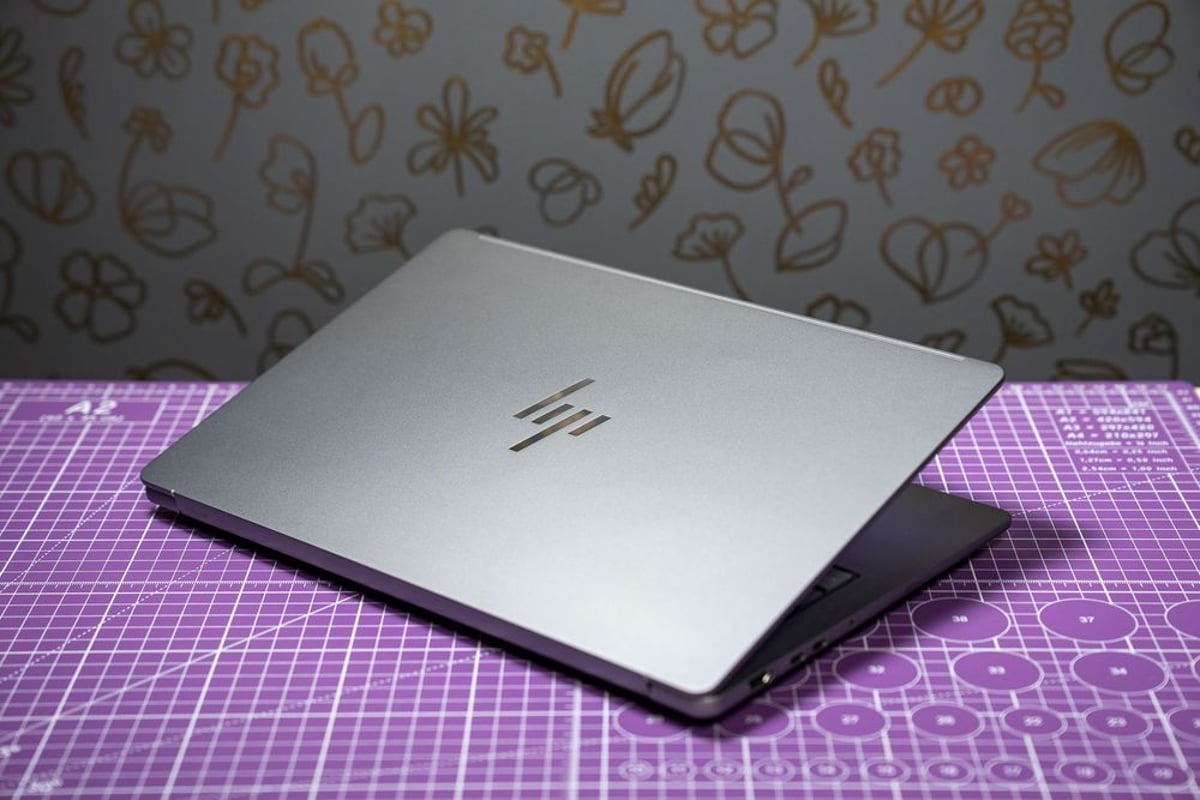
HP just blurred the line between boring business laptop and performance powerhouse. The company's new ZBook Ultra G1a workstation packs AMD's high-end Strix Halo APU - the same Ryzen AI Max chip that powers gaming rigs - into a subdued gray chassis aimed at enterprise buyers. But with Thunderbolt 4 ports (a rarity on AMD machines), generous RAM, and an OLED display, this 'sleeper laptop' might attract enthusiasts willing to overlook its corporate camouflage.
HP doesn't usually make headlines with its enterprise laptops, but the ZBook Ultra G1a is different. This isn't another cookie-cutter ThinkPad competitor destined for IT department bulk orders. Under that plain gray lid sits AMD's Strix Halo APU - the Ryzen AI Max series that's been turning heads in gaming laptops and experimental desktop builds.
The specs tell the real story. The Verge's Antonio G. Di Benedetto got his hands on a review unit and immediately noticed what sets it apart from typical corporate workstations. The AMD Ryzen AI Max chip delivers serious compute power, while the OLED display brings visual quality that rivals consumer flagships. Then there's the Thunderbolt 4 ports - a feature AMD laptops rarely get due to Intel's long-standing grip on the standard.
That last detail matters more than it might seem. Thunderbolt 4 on an AMD machine signals HP's commitment to making this workstation genuinely versatile. Enterprise users get fast external storage and docking station compatibility, while power users get the bandwidth needed for external GPUs or high-resolution displays. It's the kind of flexibility that makes a business laptop appealing beyond the conference room.
Di Benedetto draws comparisons to two other Strix Halo machines he's tested - the Asus ROG Flow Z13 gaming tablet and Framework's Desktop system. Both confirmed that AMD's high-end Ryzen AI Max chips deliver performance that competes with discrete GPU setups in certain workloads. The ZBook Ultra G1a channels that same silicon into a form factor that won't raise eyebrows in a corporate environment.
This is where enterprise tech gets interesting. Business workstations used to mean compromised performance in exchange for IT manageability and support contracts. But AMD's push into AI-capable processors changed the equation. The Strix Halo architecture combines CPU cores with beefed-up integrated graphics and neural processing units, creating chips that handle everything from 3D rendering to machine learning inference without discrete GPUs.
HP's timing here is strategic. Companies are hunting for hardware that can run AI workloads locally without sending sensitive data to cloud services. The Ryzen AI Max chips in the ZBook Ultra G1a provide exactly that - on-device AI processing that keeps data inside corporate networks while delivering performance that rivals cloud-based alternatives for many tasks.
The laptop's RAM capacity (which HP loads up generously in their workstation configs) also matters for the kind of work this machine targets. Large language models, complex simulations, and multi-layer design files all demand memory bandwidth that typical business laptops can't provide. By pairing AMD's AI-focused silicon with substantial RAM, HP created a portable workstation that handles workloads previously reserved for desktop towers.
But there's a wrinkle. As Di Benedetto points out in his review, these high-end enterprise workstations occupy weird market territory. They're priced for corporate procurement budgets, not enthusiast wallets. Yet the specs appeal directly to power users who'd normally never consider a business laptop. HP seems aware of this tension - the ZBook Ultra's subdued design works equally well in boardrooms or home offices.
The competitive landscape shows similar convergence. Dell's Precision workstations and Lenovo's ThinkPad P-series have both started offering consumer-grade features alongside enterprise reliability. But AMD's Strix Halo chips give HP a performance angle that Intel-based competitors struggle to match without adding discrete GPUs and the extra bulk they require.
What to watch: Whether enterprise buyers actually need this much performance, or if HP's betting on a wave of AI adoption that hasn't quite arrived yet. The ZBook Ultra G1a positions HP to capture demand if on-device AI processing becomes standard for business workflows. But if companies stick with cloud-based AI tools, all this local silicon power might be overkill wrapped in a boring gray box.
The ZBook Ultra G1a represents a broader shift in enterprise computing - business laptops are starting to match or exceed consumer machines in raw capability. By stuffing AMD's AI-focused Ryzen AI Max chips into a workstation chassis and adding features like Thunderbolt 4 and OLED, HP created something that straddles two worlds. It's a glimpse at where corporate tech is heading as AI workloads move from cloud servers back to local devices. Whether businesses actually deploy these machines for on-device AI, or enthusiasts find ways to snag them for personal use, the ZBook Ultra proves boring gray boxes aren't so boring anymore when you look at what's inside.