TL;DR
- - Autonomous VTOL craft can pilot manually or autonomously.
- - Military applications include surveillance and logistics.
- - Rise in agile, tech-based defense strategies.
- - Investment in VTOL tech suggests significant market shifts.
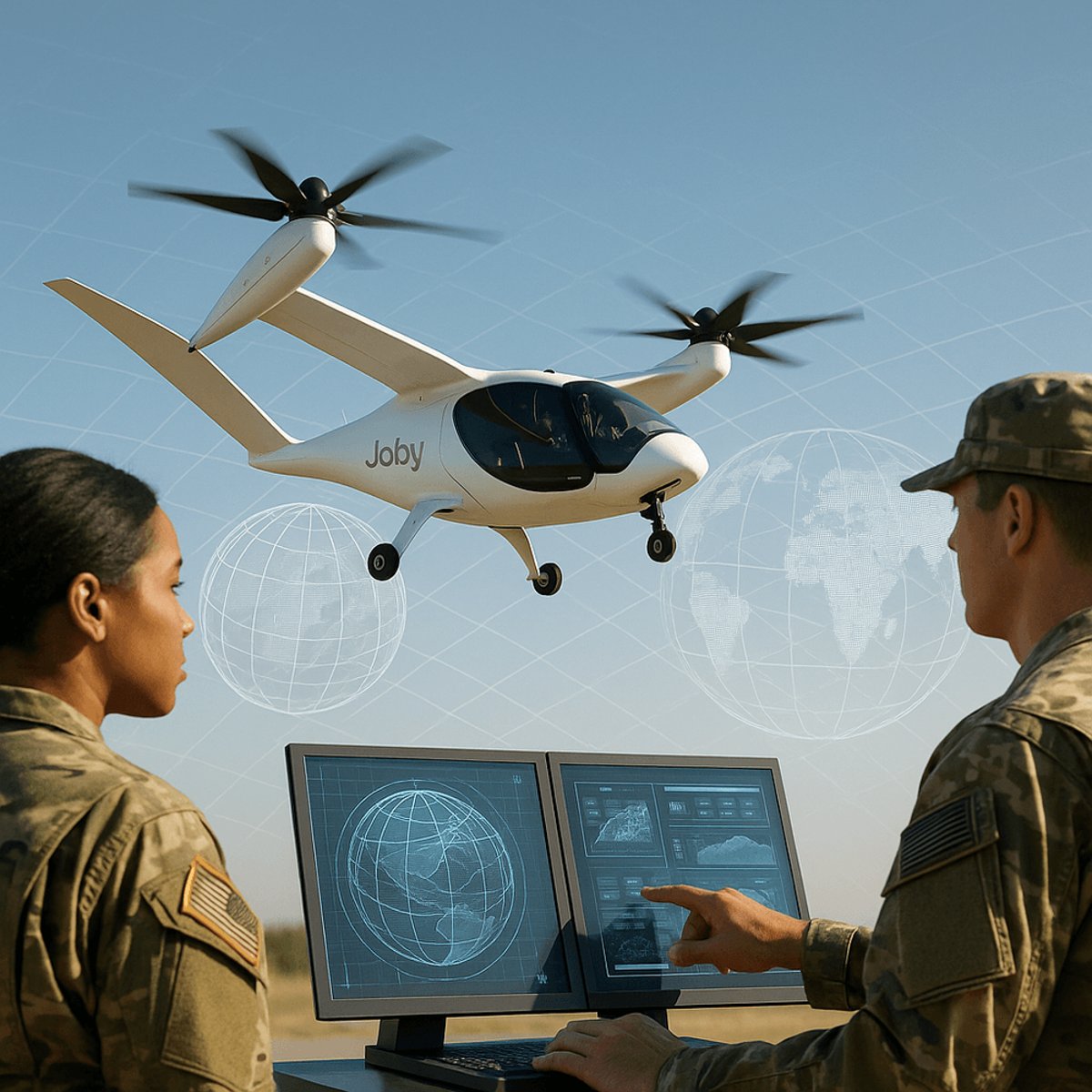
Joby Aviation and L3Harris team up to create a hybrid aircraft that can pilot autonomously or manually. This groundbreaking venture arises at a time of increasing military reliance on agile tech solutions, aiming to transform defense strategies globally. The partnership offers a scalable, versatile tool for military engagements, promising to redefine aerial capabilities through rapid deployment and adaptability.
Opening Analysis
The collaboration between Joby Aviation and L3Harris signifies a profound leap in military aviation technology. By integrating Joby's hybrid vertical take-off and landing (VTOL) aircraft with L3Harris's expertise in military systems, the partnership is set to innovate aerial defense strategies. With geopolitical tensions accentuating the need for swift, adaptable combat tools, this VTOL craft serves as a timely development. The hybrid vehicles are poised for testing in the upcoming months, aligning with a projected 2026 operational rollout.
Market Dynamics
The defense landscape is rapidly evolving as military strategies pivot towards automation and adaptability. Joby's VTOL craft, capable of autonomous flight, presents a valuable solution amidst current debates surrounding traditional, cost-prohibitive defense vehicles. This shift highlights a move towards leaner, more flexible military capabilities, evident as global powers reassess their defense needs.
Technical Innovation
The unique selling point of Joby's VTOL craft lies in its dual-capability of autonomous and piloted flight. This flexibility enables it to fulfill diverse military requirements from surveillance to contested logistics, effectively bridging gaps in current aerial systems. Joby's foray into military applications extends its commercial successes, previously spotlighted via its electric air taxis deployed in the UAE.
Financial Analysis
Public enthusiasm for Joby has been mirrored in its stock surge, with shares rising by over 100% in 2025. The company is strategically enhancing its manufacturing capacity, anticipating expanded production to meet defense demands. L3Harris also enjoys a healthy stock performance, indicative of investor confidence in its collaboration with Joby.
Strategic Outlook
Looking ahead, the deployment of VTOLs promises to reshape military tactical doctrines. The technology's adaptability might set new standards for cost-effective military support and surveillance, potentially influencing procurement and budget allocations. Risks, while encompassing technical challenges and regulatory hurdles, are balanced by substantial growth prospects.
Three-to-Six-Month Projection: Initial testing will likely validate the model’s feasibility, sharpening focus towards operational readiness.
One-to-Two-Year Projection: By 2026, expect VTOLs to be operationally deployed, marking Joby's maturity in defense sectors.
Key Takeaways:
- Joby's VTOL aircraft combines flexibility with cutting-edge automation.
- Strategic implications for military agility and cost-efficiency.
- Future opportunity in expanding autonomous tech within defense systems.