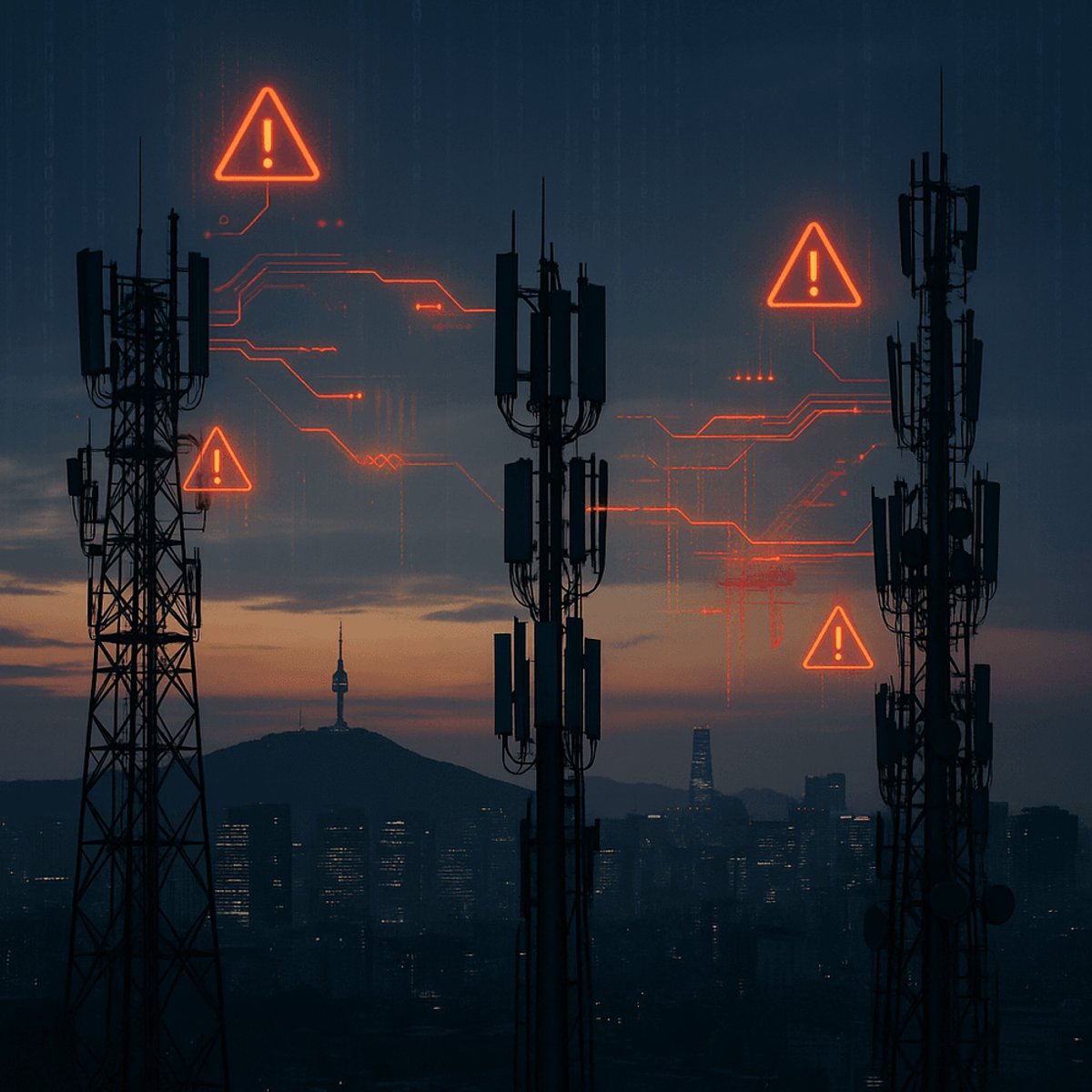
LG Uplus just became the third major South Korean telecom provider to confirm a cybersecurity incident in six months, completing a troubling pattern that's exposed the country's digital infrastructure vulnerabilities. The breach affects one of Asia's largest telecom operators and follows similar incidents at SK Telecom and KT Corp, suggesting coordinated attacks on critical infrastructure.
LG Uplus has officially joined an unwelcome club. The telecom giant confirmed to TechCrunch that it reported a suspected data breach to Korea's national cybersecurity watchdog KISA, making it the third major Korean carrier to face cyberattacks in just six months.
The timing couldn't be more concerning. All three of South Korea's telecom titans - SK Telecom, KT Corp, and now LG Uplus - have reported cybersecurity incidents since May, painting a picture of systematic targeting of the country's most critical digital infrastructure.
South Korea's Ministry of Science and ICT told reporters that investigations into both KT and LG Uplus launched last month are still ongoing, with officials examining whether the companies faced cyberattacks similar to the recent breach at SK Telecom. The ministry's acknowledgment suggests these aren't isolated incidents but part of a coordinated campaign.
The LG Uplus situation has been brewing since July, when KISA reportedly spotted signs of a possible hack and requested the company file a formal report. Initially, LG's telecom division denied any breach in August, even as KT Corp was confirming that unauthorized micro base stations had been connected to its network, exposing user data.
The scope of the LG Uplus breach became clearer two months ago when security researchers at Phrack magazine claimed hackers from China or North Korea had accessed data from close to 9,000 LG Uplus servers. If confirmed, this would represent one of the largest telecom breaches in Asian history.
What's particularly alarming is how these attacks have evolved. Unlike traditional data breaches targeting customer databases, these incidents appear to focus on network infrastructure itself. KT's breach involved physical manipulation of base stations - the cellular towers that route calls and data. This suggests attackers aren't just after personal information but seeking control over communications networks.
The pattern reveals systematic weaknesses in South Korea's cyber defenses. Despite being one of the world's most connected countries, with 95% broadband penetration and leading 5G deployment, the nation's cybersecurity architecture has struggled to keep pace. A fragmented system split between multiple agencies and a critical shortage of cybersecurity experts has hampered response efforts.
For consumers, the implications extend beyond privacy concerns. Telecom infrastructure attacks can disrupt emergency services, financial transactions, and government communications. With North Korea's sophisticated cyber capabilities and China's growing digital influence, South Korea finds itself on the front lines of cyberwarfare.
The telecom sector's vulnerabilities also raise questions about other critical infrastructure. If attackers can systematically breach all three major carriers, what does this mean for banks, power grids, and government networks? South Korean officials have remained tight-lipped about whether other sectors are seeing similar coordinated attacks.
Industry analysts point to the challenge of securing legacy infrastructure while rapidly deploying new technologies like 5G. "These companies are trying to modernize decades-old systems while under constant attack," one Seoul-based cybersecurity expert told local media. "It's like changing the engine while the car is moving."
The timing also coincides with heightened geopolitical tensions. As South Korea strengthens ties with the US on semiconductor and defense technology, cyber attacks on critical infrastructure could be seen as warnings or attempts to gather intelligence on these partnerships.
LG Uplus's breach confirmation completes a troubling six-month cycle that's exposed South Korea's digital infrastructure to unprecedented risk. With all three major telecoms now compromised, the country faces a critical moment in cybersecurity policy. The systematic nature of these attacks suggests this isn't just about data theft - it's about testing the resilience of one of the world's most connected societies. How South Korea responds will shape not just its own digital future, but set precedents for defending critical infrastructure globally.