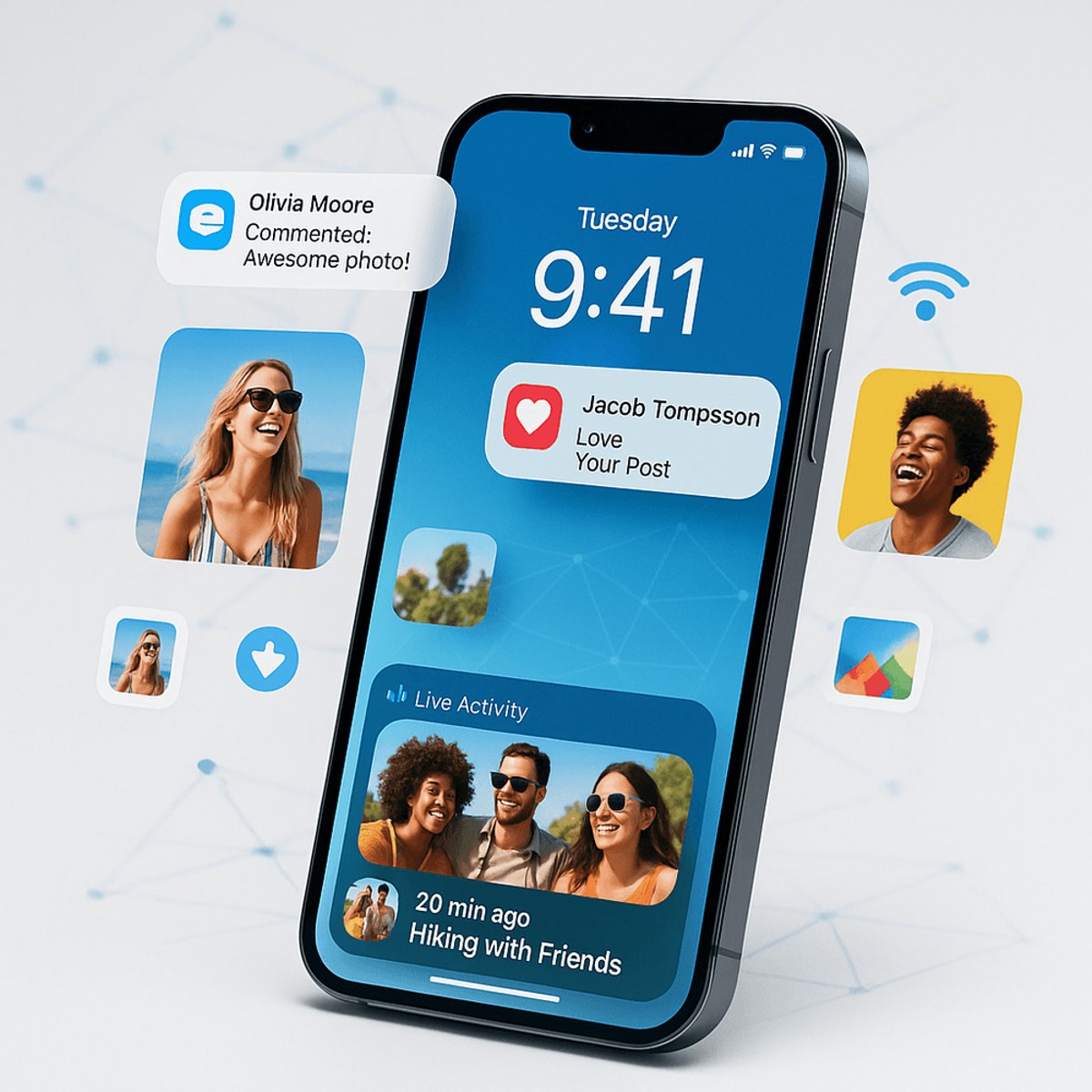
Locket just figured out how to win Gen Alpha's attention - by literally taking over their iPhone Lock Screens. The social photo app's new Rollcall feature uses Apple's Live Activities to push weekly photo prompts directly to users' most sacred digital real estate, driving over a million shares in its first week alone.
Locket just cracked the code on reaching Gen Alpha, and it's happening right on their iPhone Lock Screens. The social photo app's latest feature, Rollcall, is using Apple's Live Activities technology to literally take over users' most valuable digital real estate - and Gen Alpha can't get enough of it.
The numbers tell the story. In Rollcall's first week, Locket saw over a million shares driven by the feature, with well over 25% of active users now posting weekly. But here's the kicker - roughly 80% of those early Rollcall users are Gen Alpha kids who've made Locket their primary way of connecting with friends, not just a side app.
"Every Sunday, we'll take over your Lock Screen and you'll get this nice Live Activity that pops up right on the homepage of the iPhone," CEO Matt Moss told TechCrunch at Disrupt last week. The former Apple WWDC scholarship winner knows how to leverage platform features - he did it before when Locket first hit the top of the App Store charts in early 2022 by turning Apple's widget system into a social network.
Rollcall works by prompting users to share their favorite photos from the past week through iOS Live Activities, the feature Apple introduced in iOS 18 for real-time updates on Lock Screens and the Dynamic Island. While Apple originally designed Live Activities for things like Uber arrivals or pizza delivery tracking, creative developers have found unique uses - from virtual pets frolicking in the Dynamic Island to real-time song lyrics on Lock Screens.
For Locket, Live Activities became the modern push notification. "It's similar to the widget [as it's] using Apple technology to get in front of people and then let you share those moments that you wouldn't have shared," Moss explained. The approach mirrors Locket's original strategy of hijacking Apple's home screen widgets to create intimate photo-sharing circles among close friends.
The Gen Alpha adoption reveals something fascinating about how this generation uses social apps differently than Gen Z. "I think the big difference is being the companion piece versus the primary," Moss noted. "We have so many more users now [for whom] Locket is like their main way of connecting with their friends. Sending photos directly. Sharing photos with 10 or 20 of their best friends."
That shift from companion to primary social hub is reflected in Locket's business metrics. The company now boasts north of 91 million lifetime installs across iOS and Android, according to Appfigures estimates. More importantly for a 15-person startup, Locket has been profitable since last year thanks to its subscription monetization model.
"The Live Activity pulls people in a lot more," Moss said. "And it's fun, because as your friends are sharing, they'll feel like we're all doing this together." That communal feeling seems particularly resonant with Gen Alpha users, who are treating Locket less like Instagram's younger sibling and more like their primary social lifeline.
Moss is already planning Rollcall's evolution beyond photos. Video support is the obvious next step, but he's thinking bigger - incorporating music, favorite places, or memory prompts to help users remember weekly highlights. "Even if it's something as simple as reminding users to call or text a friend," he said, positioning Locket as a bridge between digital connection and real-world relationships.
While the company won't chase AI-generated content like Meta's AI or OpenAI's Sora, Moss sees AI playing a supporting role in collage creation or photo memory compilation. "There's something so fundamental and basic about communicating and connecting with real people in the world," he argued. "There will always be a role for that, and there will always be a demand that people have."
The Lock Screen strategy represents a broader trend of apps finding creative ways to break through the noise. As social platforms saturate feeds with algorithmic content, Locket's approach of literally commandeering the iPhone's most prominent real estate feels both bold and necessary. For Gen Alpha users who've grown up with smartphones as extensions of themselves, having friends' photos appear on their Lock Screens creates an intimacy that traditional social networks can't match.
Locket's Lock Screen takeover shows how smart startups can turn platform features into competitive advantages. By making itself essential to Gen Alpha's daily phone experience, the app has evolved from a widget novelty into a primary social hub. As Moss expands Rollcall beyond photos and explores AI-powered features, Locket is positioning itself as the anti-algorithm social network - a place where real connections happen between people who actually know each other. In an era of infinite scroll and synthetic content, that authenticity might be exactly what the next generation is looking for.