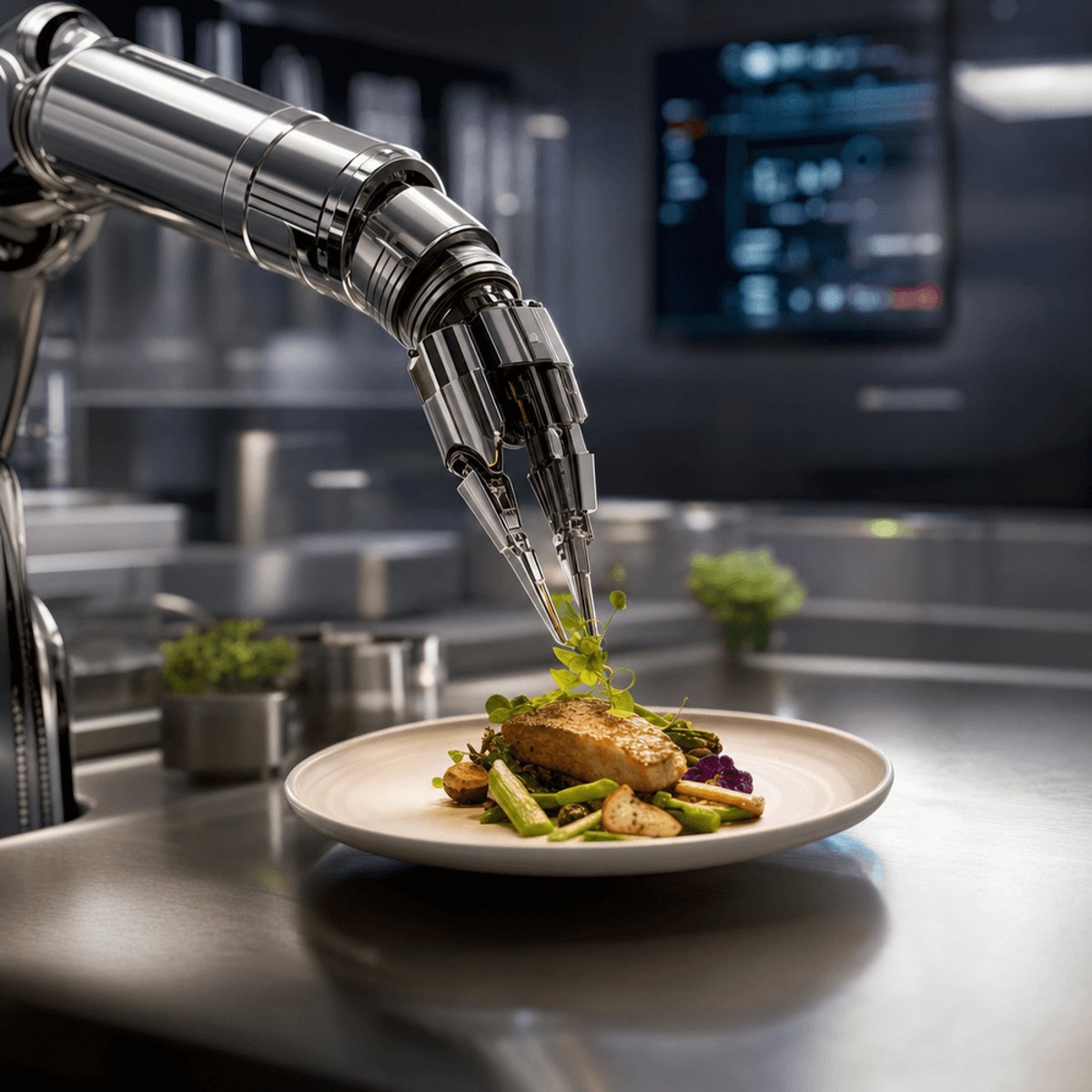
Marc Lore is betting that AI can democratize the restaurant industry. The serial entrepreneur's latest venture, Wonder, is building what he calls 'restaurant factories' - robotic kitchens powered by artificial intelligence that could let anyone launch a virtual food brand with nothing more than a text prompt. It's an audacious vision that blends automation, AI, and the ghost kitchen trend into something entirely new, and it could reshape how Americans think about opening restaurants.
Wonder just unveiled the most radical vision yet for AI in the food industry. Marc Lore, the entrepreneur who sold Jet.com to Walmart for $3.3 billion and previously founded Diapers.com, told reporters this week that his latest company is building robotic kitchens that will function as AI-powered 'restaurant factories' - letting aspiring restaurateurs spin up entirely new food brands with simple text prompts.
The concept sounds like science fiction, but Wonder's already laying the groundwork. The company operates a network of high-tech food halls and delivery hubs that combine multiple restaurant brands under one roof, all prepared by robotic cooking systems and human staff working in tandem. Now Lore wants to take it further, using AI to handle everything from menu design to recipe creation to brand identity.
'You could type in something like 'Korean-Mexican fusion with a focus on fermented ingredients' and the system would generate a full concept - recipes, pricing, branding, even marketing copy,' Lore explained, according to TechCrunch. The AI would then program Wonder's robotic kitchens to actually cook the dishes, creating a turnkey virtual restaurant that exists only on delivery apps.
It's a bold expansion of the ghost kitchen model that exploded during the pandemic. Traditional ghost kitchens still require chefs, recipes, and significant culinary expertise. Wonder's vision eliminates most of those requirements, potentially opening restaurant ownership to software developers, marketers, or anyone with an idea and access to Wonder's platform.
The timing isn't coincidental. Wonder dropped $3.5 billion to acquire GrubHub earlier this year, giving Lore control over both the production infrastructure and a massive distribution network. That vertical integration is critical - Wonder can test new AI-generated concepts on GrubHub's existing customer base, using real-world data to refine recipes and positioning before scaling up.
The technology itself represents a significant leap in food automation. Wonder's kitchens already use robotics for tasks like precision cooking, plating, and inventory management. Adding AI into the mix means the system could theoretically optimize recipes based on ingredient costs, dietary trends, customer feedback, and even weather patterns that affect ordering behavior. The company's been quietly testing machine learning models for menu optimization for several months, according to industry sources.
But the move raises obvious questions about quality, authenticity, and what happens to human chefs in this equation. Virtual restaurants have already drawn criticism for flooding delivery apps with low-quality concepts that exist only as algorithmic experiments. Wonder's platform could accelerate that trend exponentially, creating hundreds or thousands of AI-generated brands that compete with traditional restaurants.
Lore's betting that democratization outweighs those concerns. He's argued that the current restaurant industry has massive barriers to entry - commercial real estate, equipment costs, staffing challenges, and the simple reality that most restaurants fail within their first year. If AI can eliminate those friction points, it could unlock a wave of culinary innovation from people who'd never otherwise enter the industry.
The competitive implications are significant. Companies like CloudKitchens, backed by former Uber CEO Travis Kalanick, have built empires around ghost kitchen real estate. Wonder's approach could make that infrastructure obsolete if restaurants become purely software products running on shared robotic hardware. Traditional chains like Chipotle and Sweetgreen, which have invested heavily in automation, might find themselves competing with an endless stream of AI-native brands that can test and iterate faster than human-led operations.
There's also the data angle. Every AI-generated restaurant concept that runs through Wonder's system produces massive amounts of information about consumer preferences, ingredient combinations, and pricing sensitivity. That data becomes incredibly valuable for optimizing not just individual brands but the entire platform - a flywheel effect that could make Wonder's AI progressively better at predicting hits.
The technology still faces real limitations. Robotic kitchens excel at repetitive tasks and precise execution, but they struggle with the kind of improvisation and creativity that defines great cooking. An AI might generate a theoretically sound recipe, but translating that to actual food that people want to eat repeatedly is a different challenge. Wonder will need to prove its systems can produce consistent quality at scale.
Lore hasn't announced a timeline for when the AI restaurant platform might launch publicly, but Wonder's been aggressively expanding its physical footprint and hiring AI talent. The company's job listings include positions for machine learning engineers focused specifically on recipe generation and culinary AI, suggesting the project's already in active development.
If Wonder succeeds, it won't just disrupt restaurants - it'll fundamentally change what a restaurant is. Instead of physical places built around a chef's vision, they become software products that exist in the cloud and manifest temporarily in robotic kitchens when someone places an order. It's the ultimate expression of the on-demand economy, applied to food in a way that's never been possible before.
Wonder's AI restaurant vision represents either the ultimate democratization of food entrepreneurship or a dystopian future where algorithms replace culinary creativity - probably some of both. Marc Lore's built a track record of seeing around corners in e-commerce, and his $3.5 billion bet on GrubHub gives him the distribution to actually test this theory at scale. Whether consumers will embrace AI-generated restaurants the way they've adopted other forms of automation remains the big unknown, but the infrastructure's being built either way. Traditional restaurateurs might want to start thinking about what happens when their competition can launch a new concept in the time it takes to write a prompt.