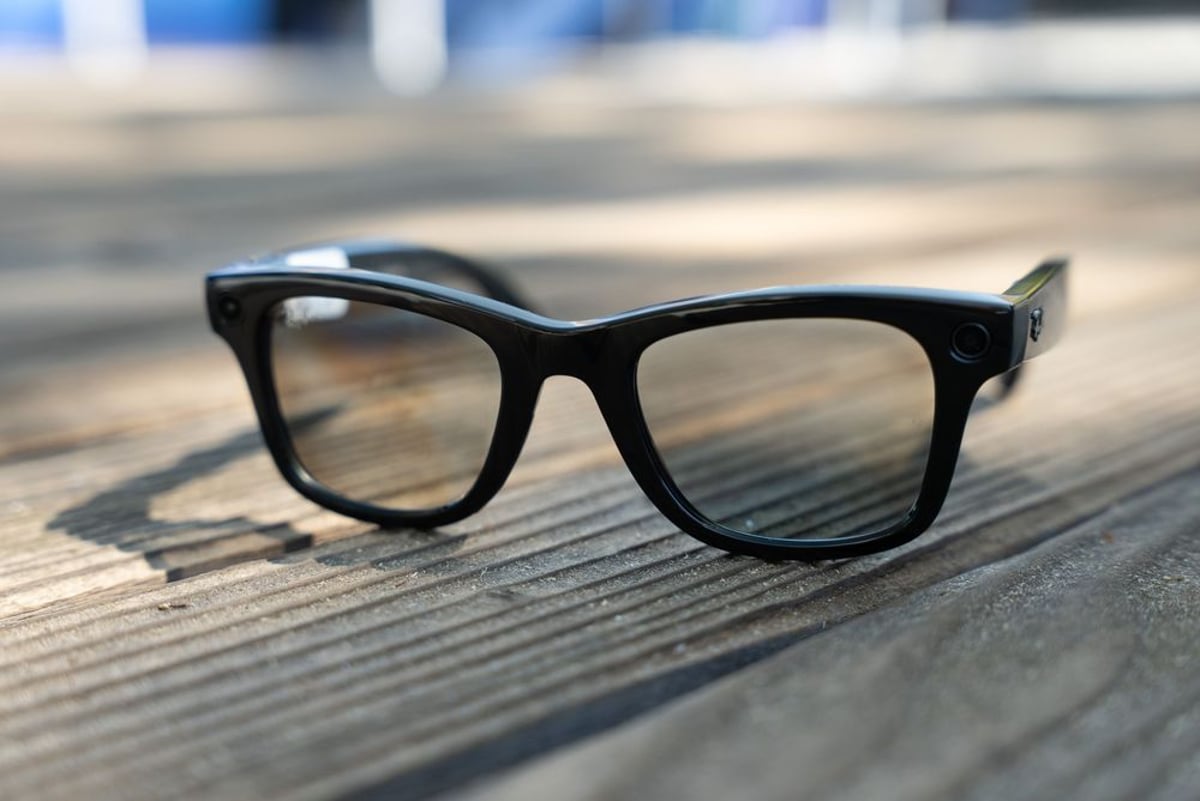
Meta is facing a fresh privacy crisis after an investigation revealed its AI-powered smart glasses are reportedly sending highly sensitive footage - including bathroom visits and intimate moments - to human reviewers in Nairobi, Kenya. The bombshell report from Swedish outlets Svenska Dagbladet and Göteborgs-Posten has already triggered at least one class action lawsuit, accusing the company of violating privacy and false advertising laws while marketing the Ray-Ban Meta glasses as privacy-focused devices.
Meta just walked into a privacy nightmare. The company's Ray-Ban Meta smart glasses, marketed as the future of AI-powered wearables, are reportedly routing some of the most intimate moments users capture straight to contract workers in Nairobi, Kenya.
According to an investigation published last week by Swedish newspapers Svenska Dagbladet and Göteborgs-Posten, Meta contractors have viewed footage showing "bathroom visits, sex and other intimate moments" recorded through the AI glasses. The workers told investigators they've seen essentially everything users capture, raising serious questions about what happens to footage when people ask Meta's AI assistant for help.
The timing couldn't be worse for Meta. The company has spent millions positioning its Ray-Ban collaboration as a privacy-conscious alternative to earlier failed attempts at smart glasses. But the Swedish investigation suggests that when users engage with the AI features, their footage may be sent to human reviewers for training and quality control purposes without clear disclosure.
"We see everything," one worker told the Swedish outlets, describing the scope of footage flowing through their review queues. The revelation directly contradicts Meta's public messaging around the product, which emphasizes built-in privacy features like a visible LED light that activates during recording.
The backlash arrived swiftly. At least one proposed class action lawsuit has already been filed, accusing Meta of violating false advertising and privacy laws. The complaint specifically cites Meta's marketing claims that the glasses are "designed for privacy" - language that now looks problematic given the Swedish findings.
This isn't Meta's first rodeo with outsourced content moderation creating privacy headaches. The company has long relied on contractors in Kenya, the Philippines, and other countries to review flagged content on Facebook and Instagram. But those workers typically handle content users explicitly posted to social platforms. Smart glasses footage feels different because it captures ambient life, often including bystanders who never consented to being recorded.
The Kenya connection matters too. Meta and other tech giants have increasingly shifted AI training and content review work to East Africa, where labor costs are lower and English proficiency is high. But the practice has drawn criticism from labor advocates who argue workers face traumatic content exposure without adequate mental health support or fair compensation.
For Meta, this scandal arrives at a delicate moment. The company has been racing to catch up with competitors in AI, positioning its multimodal AI assistant as a key differentiator for its hardware products. The Ray-Ban Meta glasses, which let users ask AI questions about what they're seeing, represent a crucial test case for ambient AI computing.
But the Swedish investigation exposes the uncomfortable truth behind AI systems that promise to "see" and "understand" the world: someone, somewhere, often needs to look at your data to train and refine those models. And when your product sits on someone's face all day, the data it collects is inherently more sensitive than a typical social media post.
Meta hasn't directly addressed the specific allegations about Kenyan reviewers viewing intimate footage. The company typically argues that human review is necessary for improving AI systems and that all data handling complies with its privacy policies. But whether users understand that trade-off when they buy $300 smart glasses is another question entirely.
The legal exposure could get messy. Privacy laws vary wildly by jurisdiction, but false advertising claims are often easier to prove than privacy violations. If Meta's marketing materials promised privacy protections that don't actually exist in practice, plaintiffs may have a straightforward case.
Competitors are watching closely. Apple and Google have both explored smart glasses, while Snap continues iterating on its Spectacles. Any company building AI-powered wearables now has to answer hard questions about where footage goes, who sees it, and whether users truly understand the privacy implications.
The broader issue is how AI companies handle training data. Most users probably assume their interactions with AI assistants are processed by algorithms, not reviewed by workers in overseas call centers. The reality is far messier, involving vast networks of contractors who annotate, label, and quality-check the data that makes AI systems work.
Meta's smart glasses privacy scandal cuts to the heart of ambient AI computing. As wearables get smarter and more capable, the line between helpful AI assistance and invasive surveillance grows thinner. Companies building these products need to be radically transparent about where data goes and who sees it. For Meta, the Swedish investigation and resulting lawsuit suggest the company hasn't cleared that bar. Users bought glasses thinking they controlled their footage, but the reality appears far more complicated. The question now is whether this becomes an isolated controversy or the beginning of broader scrutiny around how AI wearables actually work behind the scenes.