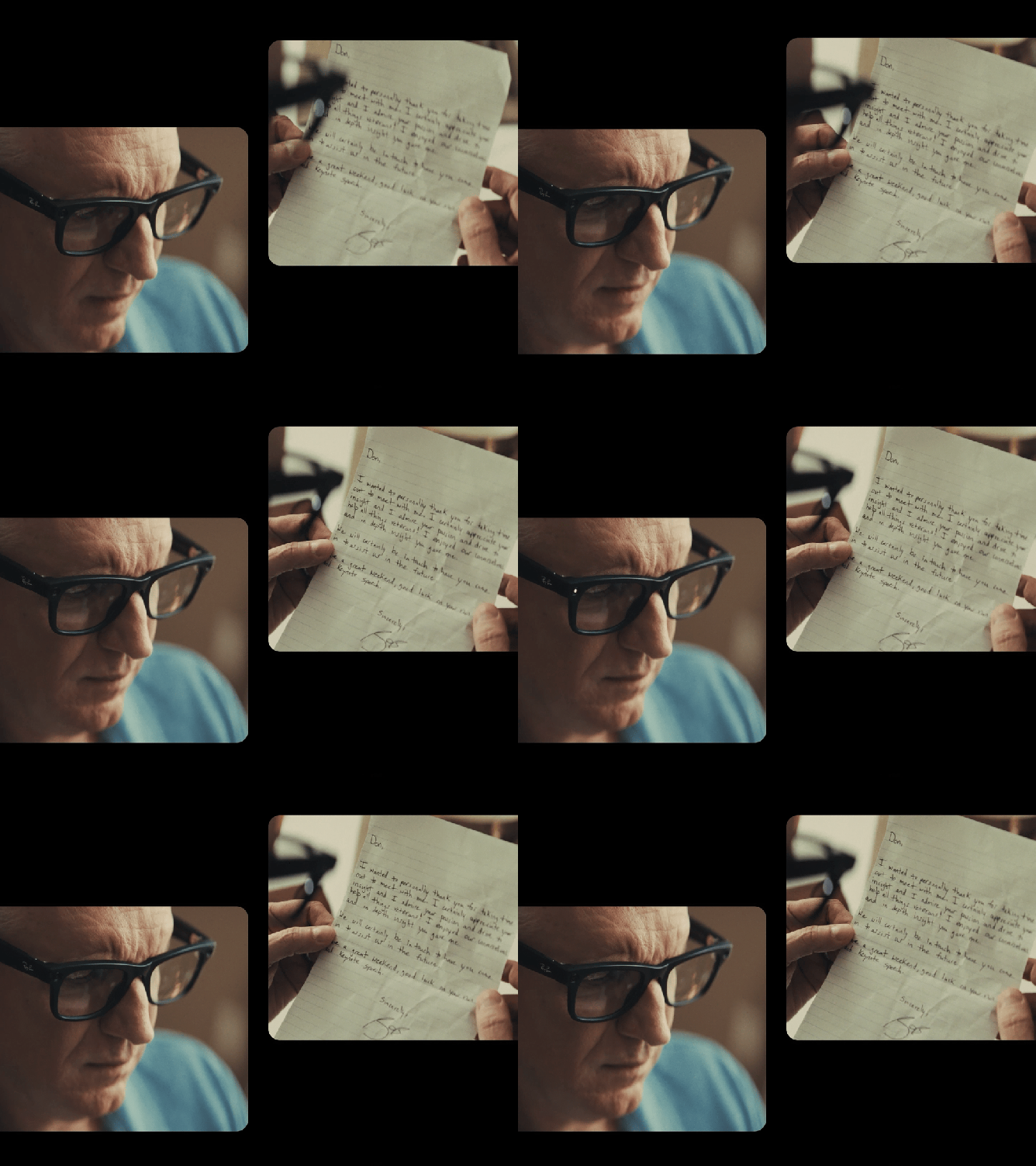
Meta just announced it's giving away Ray-Ban Meta AI glasses to all 130,000 legally blind veterans in America, marking one of the biggest assistive technology deployments in history. The program, built in partnership with the Blinded Veterans Association and multiple veteran organizations, aims to restore independence to veterans who lost their sight in service. Don Overton, who lost his vision in Desert Storm, says the glasses gave him back what he lost decades ago.
Meta is betting its AI-powered glasses can change lives at scale. The company announced it's donating Ray-Ban Meta smart glasses to every legally blind veteran in America - about 130,000 people - in what amounts to a massive real-world deployment of assistive AI technology.
The move comes as tech companies race to prove their AI innovations have tangible benefits beyond chatbots and productivity tools. For Meta, which has invested billions in wearables through its Reality Labs division, the veteran program offers both a humanitarian mission and a high-profile showcase for what CEO Mark Zuckerberg has called the future of computing.
"When I lost my eyesight in Desert Storm from a bunker explosion, I also lost my independence," Don Overton, a blind veteran from the 82nd Airborne Division, said in Meta's announcement. "The moment I put on my Ray-Ban Meta glasses, I got my independence back."
Overton worked directly with Meta's wearables team to develop features tailored for blind users. The glasses use voice commands to identify objects in view, read documents aloud, answer phone calls, and help users navigate spaces they can't see. It's the kind of ambient AI assistance that tech companies have promised for years but rarely delivered at this scale.
Eligible veterans can request their glasses through the Blinded Veterans Association website, while veteran organizations can apply through TechSoup to distribute devices to their members. Every pair comes with comprehensive training resources - a crucial detail given that wearable tech adoption often stumbles on the learning curve.
The training infrastructure mirrors a product launch. The Blinded Veterans Association hosts monthly webinars where veterans can troubleshoot issues in real time. Meta and partner organizations are running in-person events nationwide where veterans receive their glasses, get hands-on guidance, and connect with others in the program. BVA developed a specialized training guide covering everything from activating voice commands to managing daily tasks.
"The Blinded Veterans Association was built on a simple, powerful promise: blinded veterans helping blinded veterans," Lea Rowe, BVA's National Executive Director, told Meta. "Our partnership with Meta brings that mission to life at an unprecedented scale."
The program pulls together an unusually broad coalition. Partners include Tunnel to Towers Foundation, Homes for Our Troops, Lighthouse Guild, American Council of the Blind, National Industries for the Blind, and Oscar Mike. Each organization brings different touchpoints with the veteran community, helping Meta reach users who might not typically adopt consumer tech.
"These veterans sacrificed their sight in service to our country," Andrew Bosworth, Meta's Chief Technology Officer, said in the company's statement. "Giving them technology that can meaningfully navigate the world around them is a profound honor for us and underscores the importance of why we build."
For Meta, the initiative addresses two challenges at once. The company has struggled to find mainstream use cases for its Ray-Ban smart glasses beyond social media enthusiasts and early adopters. Meanwhile, its AI investments have faced scrutiny over real-world utility. A program that puts AI glasses in the hands of 130,000 users with clear, measurable needs could generate valuable data on how people actually use ambient AI.
Thomas Panek, President and CEO of Lighthouse Guild, framed it more simply. "As a person who is blind, aside from my white cane and guide dog, I never leave home without my Meta glasses," he said in Meta's announcement. "They are not only the most useful technology ever developed for the blind, they look pretty cool too."
The scale matters. While assistive technology has made huge strides, distribution and cost often limit who benefits. By committing to reach every eligible veteran, Meta is essentially conducting one of the largest assistive AI pilots in history. How well it works - and whether veterans actually adopt the technology - will offer rare insight into whether AI wearables can break out of the enthusiast niche.
Dina Powell McCormick, Meta's President and Vice-Chairman, connected the program back to the company's broader ambitions. "When Don Overton worked with our wearables team to build features that made the Ray-Ban Meta glasses more meaningful to the everyday lives of veterans, we at Meta knew we had to find a way to reach every blind veteran in America," she said.
Frank Siller, Chairman and CEO of Tunnel to Towers Foundation, emphasized what's at stake for recipients. "For the more than 130,000 veterans living with blindness, this extraordinary gift from Meta is far more than a pair of glasses - it's the ability to read a letter, navigate the world, and reclaim their independence," he told Meta.
The question now is execution. Large-scale tech donations often struggle with training, support, and actual usage. Meta is betting that its partnership approach - veteran organizations providing training while the company handles hardware and AI - can avoid those pitfalls. If it works, it could redefine how tech companies think about deploying emerging technologies to underserved communities.
Meta's veteran program is a test case for whether AI wearables can deliver on their promise beyond the tech-savvy early adopter crowd. By targeting 130,000 users with clear, urgent needs and building extensive training infrastructure, the company is essentially running a large-scale pilot for ambient AI assistance. If blind veterans adopt the glasses and find them genuinely useful, it could validate Meta's years of investment in wearables and prove that AI glasses have a place beyond novelty gadgets. If the program stumbles on training, support, or actual usage, it'll be another reminder that hardware is only half the battle. Either way, 130,000 veterans are about to become one of the most important user groups in the history of consumer AI.